
Diabetic Ketoacidosis: Warning Signs and Hospital Treatment

Jan, 6 2026
Diabetic ketoacidosis, or DKA, isn’t just a complication-it’s a medical emergency that can kill someone in hours if ignored. It doesn’t care if you’ve had diabetes for 20 years or just got diagnosed yesterday. If your body doesn’t have enough insulin, it starts burning fat for fuel, flooding your blood with toxic acids called ketones. The result? A dangerous chemical imbalance that can knock you out, stop your breathing, or worse. And the scary part? Many people don’t realize they’re in danger until it’s too late.
What DKA Actually Feels Like
Most people think high blood sugar is the main problem. But DKA is more than that. It’s a cascade. It starts quietly. You’re thirsty-so thirsty you’re drinking a whole jug of water by noon. You’re peeing every 20 minutes. Your mouth feels like cotton. These aren’t just inconveniences. They’re your body screaming for help. By the 12-hour mark, nausea hits. Then vomiting. Not the kind from bad sushi-the kind that won’t stop, even when there’s nothing left to throw up. Abdominal pain follows, sharp and deep, often mistaken for appendicitis or food poisoning. You feel exhausted, like you’ve run a marathon while sleeping. Your muscles weaken. You can’t lift your arm to check your phone. This isn’t laziness. It’s your cells starving. Then comes the breath. A sweet, fruity smell, like nail polish remover or overripe apples. Clinicians call it acetone breath. It’s unmistakable once you’ve smelled it. And then the breathing changes-deep, fast, gasping. That’s Kussmaul respirations. Your body is trying to blow off acid through your lungs. It’s a last-ditch effort to survive. If you’re still awake at this point, confusion sets in. You forget where you are. You can’t focus. Your vision blurs. You might feel dizzy or disoriented. In severe cases, you pass out. This isn’t a bad day. This is your body shutting down. And if you don’t get help now, you won’t wake up.When to Call 911
You don’t need to wait for all the symptoms. If you have two or more of these-extreme thirst, frequent urination, nausea, vomiting, abdominal pain, fruity breath, or rapid breathing-and your blood sugar is above 250 mg/dL, you’re in danger. Even if your sugar is below 250, you could still have DKA. That’s called euglycemic DKA, and it’s becoming more common, especially in people taking SGLT2 inhibitors like Jardiance or Farxiga. If you use a continuous glucose monitor (CGM), pay attention to ketone alerts. Modern devices like Dexcom G7 and Abbott Libre 3 can now track blood ketones in real time. If your ketones hit 1.5 mmol/L or higher, treat it like a red flag. Don’t wait. Don’t call your doctor tomorrow. Go to the ER now. Parents of kids with type 1 diabetes need to be extra vigilant. In fact, one in three pediatric DKA cases is the first sign of diabetes. A child who’s suddenly drinking more, peeing nonstop, and acting lethargic might not look sick-but they could be hours from collapse. Don’t assume it’s a virus. Check glucose and ketones.What Happens in the Hospital
When you arrive at the emergency room, time is everything. Every hour you wait increases your risk of death by 15%. That’s not a guess. That’s from the American Diabetes Association’s own data. The first thing they do is start IV fluids. You’ll get 1 to 1.5 liters of saline in the first hour. This isn’t just to rehydrate you-it’s to flush out the ketones and restore your blood pressure. After that, fluids continue slowly, usually 250-500 mL per hour, to avoid swelling the brain-a deadly side effect called cerebral edema, especially dangerous in children. Then comes insulin. Not a shot. Not pills. A steady drip through an IV. The dose? About 0.1 units per kilogram of body weight per hour. It’s carefully controlled. Too much insulin too fast can crash your blood sugar or cause brain swelling. Too little, and the ketones keep rising. Blood sugar is checked every hour. The goal? Lower it by 50 to 75 mg/dL per hour. Not faster. Not slower. Just right. Potassium is another silent killer. Even if your blood test shows normal potassium, your body is completely depleted. You lose it through urine when you’re in DKA. So they start replacing it-usually 20 to 30 mEq per hour-right away. Without it, your heart can stop. Bicarbonate? Rarely used. Only if your blood pH drops below 6.9. Most hospitals still give it out of habit, but the evidence is clear: it doesn’t help and can make things worse. The American Diabetes Association says no. Most smart ERs follow that now. They’ll also look for what triggered the DKA. In half the cases, it’s an infection-pneumonia, a UTI, even a bad cold. In 30%, it’s someone skipping insulin because they ran out, couldn’t afford it, or got scared of low blood sugar. In 20%, it’s undiagnosed type 1 diabetes. Treating the trigger is just as important as fixing the acidosis.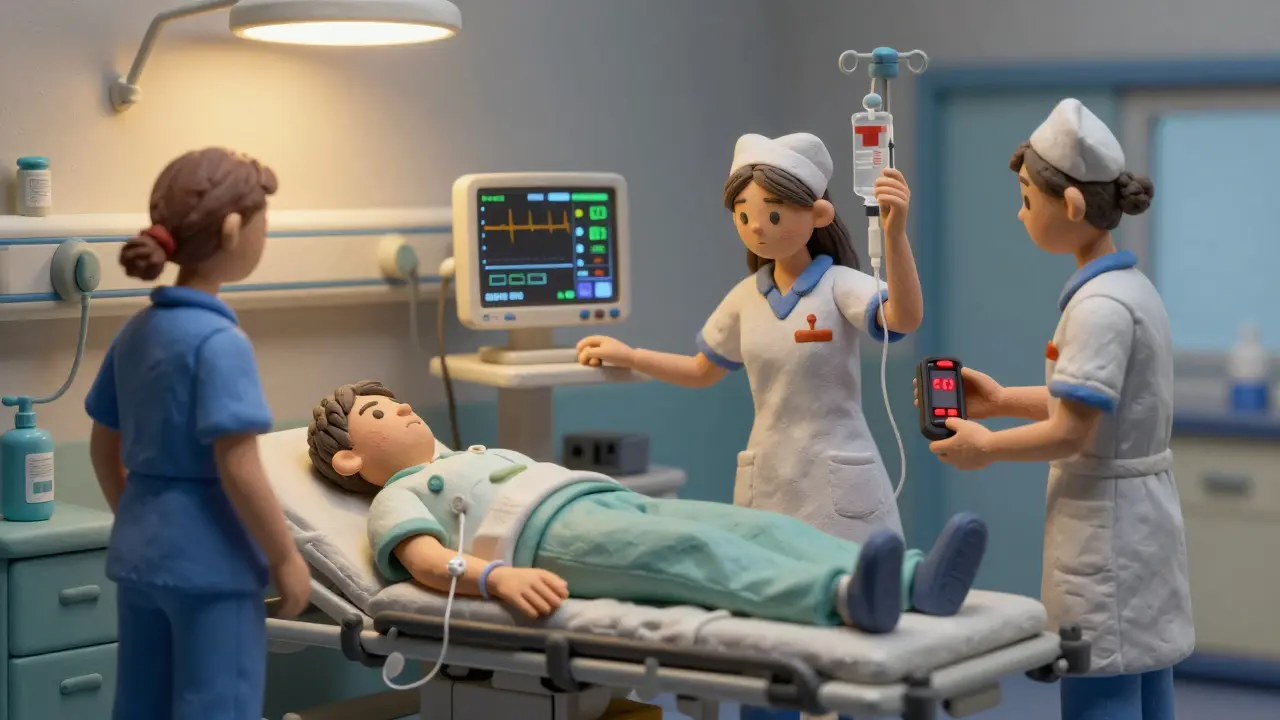
How Long Do You Stay?
Most people stay in the hospital for 2.5 to 4 days. But it’s not about the calendar. It’s about the numbers. You won’t be discharged until your blood ketones drop below 0.6 mmol/L, your bicarbonate rises above 18 mmol/L, and your pH is back above 7.3-for two checks in a row. If they send you home too soon, you’ll likely come back within 72 hours. That happens in 12% of cases. Your initial pH tells you how long you’ll be there. If you come in with a pH of 7.0 to 7.2, you’ll probably go home in 2 days. If it’s below 7.0, expect 4 days or more. That’s because the deeper the acidosis, the longer it takes your body to recover.What Happens After You Leave
Going home doesn’t mean you’re out of danger. DKA can come back. That’s why your diabetes team will sit down with you and rebuild your plan. Did you run out of insulin? Did you stop taking it when you were sick? Did you switch to a new medication without understanding the risks? If you use an insulin pump, you’ll be told to switch to injections during illness. About 35% of pump-related DKA cases happen because the infusion set got clogged or disconnected-often without the person realizing it. CGMs are your best defense. Studies show people using them reduce DKA by 76%. Why? Because they alert you before you crash. You get a notification when ketones rise, even before your sugar spikes. That’s early warning you can’t get from finger pricks. And if cost is the reason you’re skipping insulin? Talk to your doctor. There are programs-like insulin assistance plans, manufacturer coupons, and community health clinics-that can cut your monthly cost from $374 to under $35. You don’t have to choose between food and life.
Why This Keeps Happening
Despite all the advances, DKA rates are still rising in the U.S.-up 5.3% a year. Why? Because access to care is broken. Uninsured patients are 3.2 times more likely to end up in the hospital with DKA than those with insurance. People wait too long because they don’t know the signs. Or they’re afraid of the bill. Or they think it’s just a bad flu. Emergency rooms still misdiagnose DKA as gastroenteritis in 18% of cases-especially in adults who don’t look obviously diabetic. That’s deadly. A patient with abdominal pain and vomiting gets sent home with anti-nausea meds. Two hours later, they’re unconscious. New tools are coming. In 2023, the FDA approved the first AI-powered DKA prediction system-DiaMonTech’s DKA Risk Score. It analyzes CGM patterns and warns you 12 hours before DKA starts. It’s not everywhere yet, but it’s coming to Tidepool Loop and other systems soon. In low-income countries, simple changes have saved lives. WHO now recommends subcutaneous insulin injections instead of IV drips in places without ICU access. In sub-Saharan Africa, that one change cut DKA deaths from 15% to 6%.What You Can Do Today
If you have diabetes, here’s what you need to do right now:- Keep ketone strips or a blood ketone meter at home. Test when your sugar is above 240 mg/dL.
- Know your warning signs. Don’t wait for vomiting or confusion.
- If you’re sick, check glucose and ketones every 4 hours-even if you feel fine.
- If you use an insulin pump, have backup injections ready. Switch to shots when you’re ill.
- Make sure your CGM is set to alert you for high ketones.
- Never skip insulin because you’re scared of lows. Talk to your doctor about adjusting doses during illness.
- If you can’t afford insulin, ask for help. There are options. You don’t have to suffer.


