
Drug Reactions: What They Are, Why They Happen, and How to Stay Safe
When your body responds badly to a medication, that’s a drug reaction, an unintended and harmful response to a medicine at normal doses. Also known as adverse drug events, these reactions aren’t always obvious — they can be a strange rash, dizziness, nausea, or even a sudden heart rhythm problem. And they’re more common than you think. One in five people on multiple medications will experience at least one serious reaction in their lifetime.
Not all drug reactions are the same. Some are predictable — like stomach upset from NSAIDs — and show up in the drug’s label. Others are hidden, tied to your genes. That’s where pharmacogenomics, how your DNA affects how your body processes drugs comes in. For example, if you’re of East Asian descent, you might process certain antidepressants slower, raising your risk of side effects. Or if you carry a specific CYP2D6 gene variant, a common painkiller might turn toxic in your system. These aren’t rare oddities — they’re biological facts built into your DNA.
Then there are drug interactions, when two or more medications clash in your body, changing how they work or increasing side effects. Think of it like traffic jam in your bloodstream. A common antibiotic might stop your blood thinner from working. Fiber supplements can block your thyroid med. Even grapefruit juice can turn a cholesterol drug into a danger. These aren’t just warnings on a label — they’re real, life-altering risks that happen every day because people don’t know what to ask.
Some reactions hit fast — like anaphylaxis after a penicillin shot. Others creep up over months — liver damage from long-term use of a painkiller, or muscle pain from statins that no one connects to the drug. Kids, older adults, and people on five or more meds are at highest risk. But anyone can be affected. The key isn’t avoiding medicine — it’s knowing what to watch for and when to speak up.
You don’t need to memorize every possible side effect. But you should know your own red flags. Did you start a new drug and suddenly feel off? Did your skin break out after switching pills? Did your doctor add another med and your balance got worse? These aren’t "just aging" or "stress" — they could be your body signaling a reaction. The best defense? Keep a simple list of everything you take — including supplements and OTC meds — and bring it to every appointment. Ask: "Could this interact with anything else I’m on?" and "What side effects should I call you about?"
The posts below cover real cases, real data, and real solutions. You’ll find what causes dangerous heart rhythms with common antibiotics, how ethnicity changes your drug response, why your fiber supplement might be canceling out your thyroid med, and how to get the full side effect details straight from the FDA. No fluff. No guesswork. Just what you need to recognize, prevent, and respond to drug reactions before they escalate.

Home Emergency Kit for Medication Side Effects: What to Include
Harrison Greywell Dec, 28 2025 14A home emergency kit for medication side effects can prevent minor reactions from becoming emergencies. Learn what to include - from antihistamines to emergency contacts - and how to keep it ready.
More Detail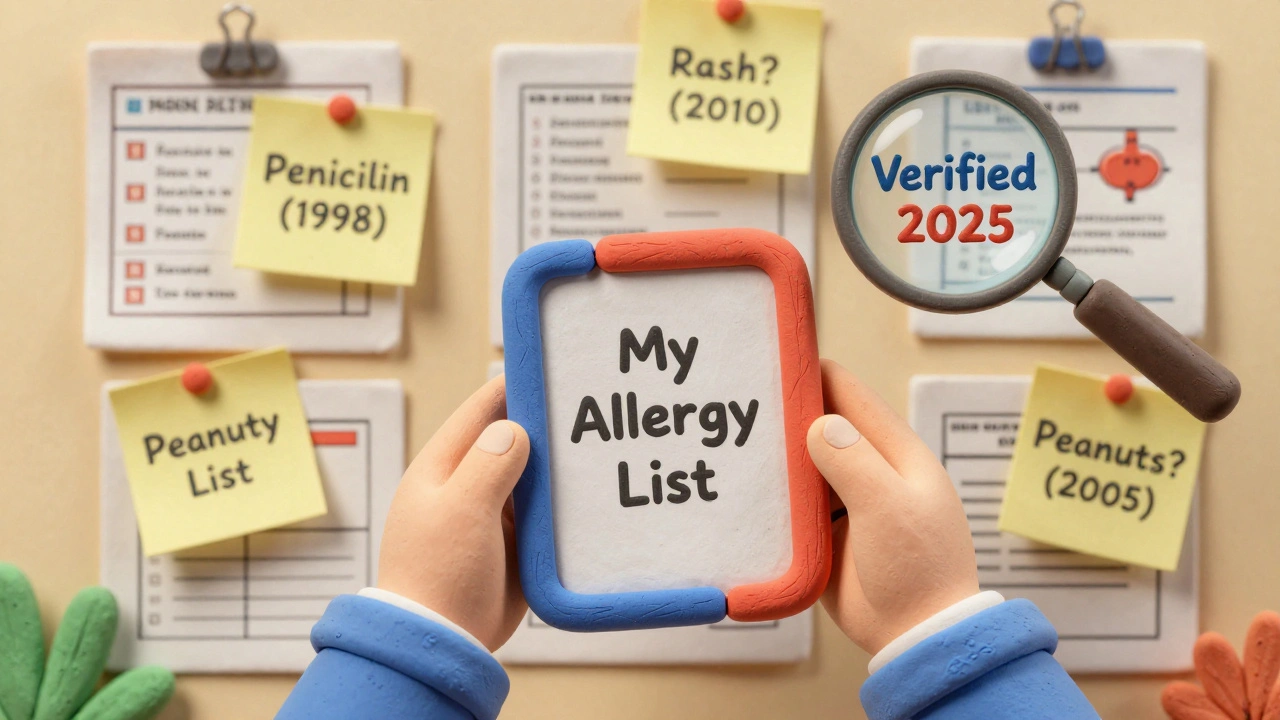
How to Update Your Allergy List Across All Healthcare Providers
Harrison Greywell Dec, 1 2025 13Learn how to accurately update your allergy list across all healthcare providers to prevent dangerous drug reactions. Step-by-step guide for patients to verify, remove, and lock in correct allergy information in electronic records.
More Detail