
Cancer Survivorship: Managing Long-Term Effects and Recurrence
Jan, 20 2026
Living beyond cancer doesn’t mean the fight is over. For millions of people, the real challenge begins after treatment ends. Many survivors face ongoing physical problems, emotional strain, and the constant worry that cancer might come back. This isn’t just about checking boxes on a follow-up appointment-it’s about rebuilding a life while managing risks that can show up years later. The truth is, most survivors will deal with at least one long-term side effect, and nearly one in three will face a second cancer or serious health issue linked to their original treatment.
What Happens After Treatment Ends?
When your last chemotherapy session or radiation treatment is done, you might expect relief. But for many, it’s the start of a new chapter filled with uncertainty. The body doesn’t bounce back overnight. Chemotherapy can damage nerves, leading to numbness or tingling that lasts for years. Radiation can cause scarring in the lungs or heart, increasing the risk of breathing problems or heart disease decades later. Hormone therapies for breast or prostate cancer can trigger early menopause, bone loss, or sexual dysfunction. These aren’t rare side effects-they’re common. A 2018 study found that 75% of cancer survivors report at least one chronic health issue directly tied to their treatment.
It’s not just physical. Memory problems, often called "chemo brain," affect up to 70% of survivors. Fatigue doesn’t go away after a good night’s sleep-it lingers, making it hard to work, care for kids, or even enjoy hobbies. Depression and anxiety are twice as common in survivors compared to the general population. And then there’s the fear: the dread that a new pain, a strange lump, or an unexplained fever could mean cancer is back.
Knowing Your Risks: Late Effects by Treatment Type
Not all survivors face the same risks. What you got treated with matters a lot. If you had anthracycline-based chemo for breast cancer, your risk of heart damage is 15-20%. You’ll need regular echocardiograms every 6 to 12 months, even if you feel fine. If you had chest radiation for Hodgkin lymphoma, your lifetime risk of developing breast cancer jumps to 30%. That means starting annual mammograms and MRIs eight years after treatment-even if you’re in your 30s.
Radiation to the neck can cause thyroid problems. About 25% of survivors develop hypothyroidism within five years. It’s easy to miss-symptoms like weight gain, fatigue, and depression look like normal aging. But a simple blood test can catch it early. Chemo and steroids can also weaken bones. Survivors are 30-50% more likely to develop osteoporosis than people their age who never had cancer.
And then there’s the risk of second cancers. Some treatments damage DNA in healthy cells. Survivors of childhood leukemia, for example, have a higher chance of developing bone or skin cancers later. Those treated with alkylating agents or radiation to the chest, abdomen, or pelvis need lifelong monitoring. The key isn’t panic-it’s awareness. Keep a detailed record of every drug, dose, and radiation field. If you don’t have one, ask your oncology team for a treatment summary. That document is your roadmap for future care.
The Survivorship Care Plan: Your Personal Health Blueprint
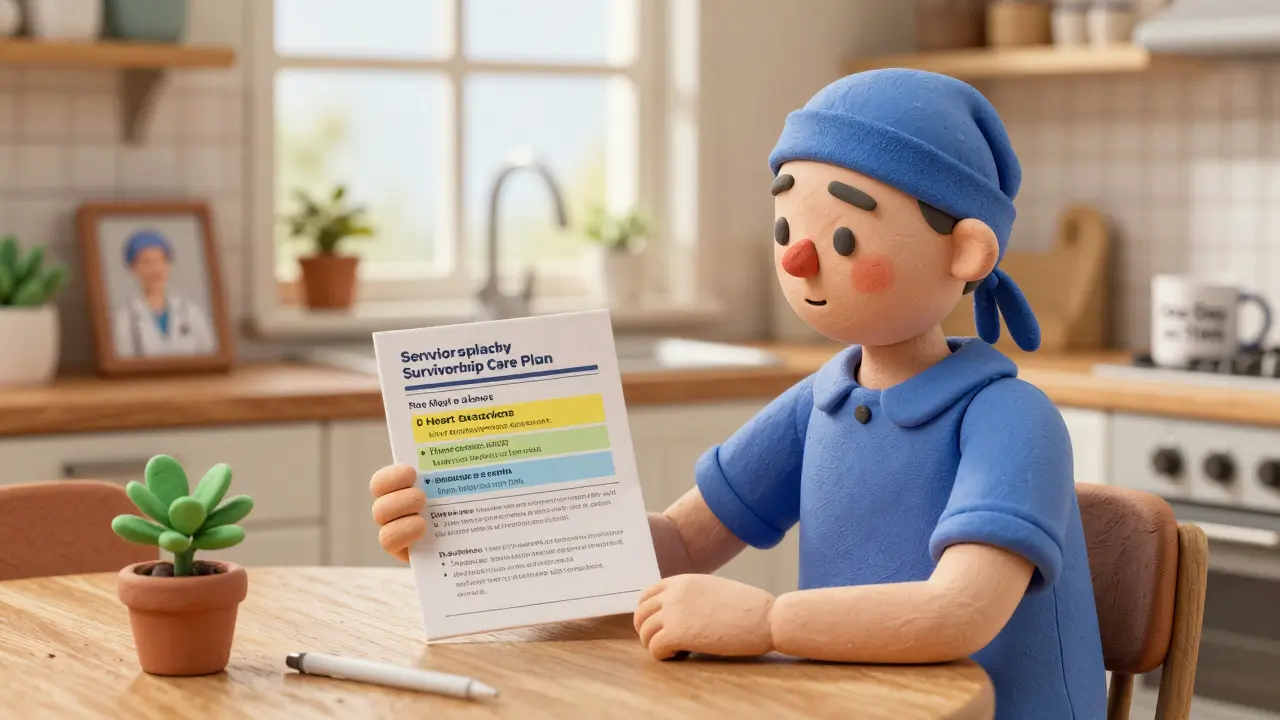
A survivorship care plan isn’t just a form you sign and file away. It’s your personal guide to staying healthy after cancer. The best ones include three critical parts: a summary of your treatment, a list of possible late effects you’re at risk for, and a clear plan for follow-up care.
For example, if you had colon cancer and got FOLFOX chemo, your plan should say: "Risk of nerve damage (peripheral neuropathy)-monitor for numbness or tingling in hands/feet. Risk of colon cancer recurrence-colonoscopy every 1-3 years. Risk of heart disease-check blood pressure and cholesterol annually. Lifestyle advice: avoid alcohol, eat high-fiber diet, exercise 150 minutes per week. Contact: oncology clinic for new symptoms, PCP for general health."
Studies show survivors who use these plans are 85% more likely to stick to their follow-up schedule. They’re 32% less likely to get unnecessary scans. And they report 22% better quality of life. Yet, only about half of survivors actually receive one. The Commission on Cancer now requires accredited centers to provide these plans to every patient-but that doesn’t mean every hospital does it well. If you didn’t get one, ask for it. Don’t wait.
Who Should Be in Charge of Your Care?
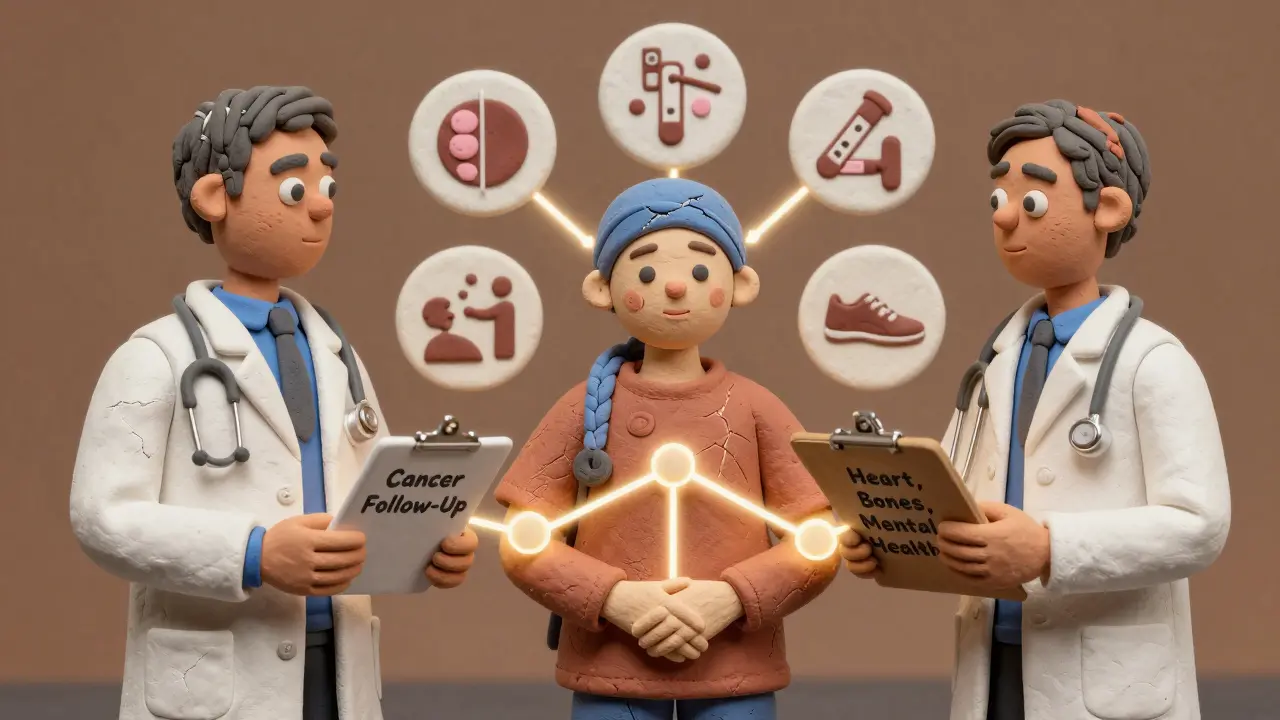
There’s a big gap in survivorship care: who’s responsible? Oncologists are experts at treating cancer, but not always at managing heart disease, osteoporosis, or depression. Meanwhile, your primary care doctor may not know the long-term risks of your specific treatment. This disconnect leads to missed screenings, delayed diagnoses, and duplicated tests.
Here’s what works: a shared-care model. Your oncologist handles cancer-specific follow-ups-like checking for recurrence or managing chemo-related nerve damage. Your primary care provider takes care of the rest: blood pressure, cholesterol, flu shots, bone density scans, mental health. The two teams communicate. A 2022 study found that survivors with this setup had 40% fewer duplicate tests and 27% lower hospital readmissions.
But here’s the problem: most primary care doctors haven’t been trained in cancer survivorship. A 2015 study showed that 78% of older survivors had a regular doctor, but only 22% of those doctors felt confident managing cancer-related late effects. That’s why your care plan needs to be clear, simple, and handed directly to your PCP. If they don’t understand it, ask your oncology team to call them or send a summary letter.
How to Manage Fatigue, Pain, and "Chemo Brain"
Chronic fatigue is one of the most frustrating and misunderstood symptoms. It’s not laziness. It’s not just being tired. It’s a deep, bone-weary exhaustion that doesn’t go away with rest. The good news? Exercise helps-even light walking. A 2014 study found that survivors who walked 30 minutes, five days a week, cut their fatigue by 40-50%. Strength training twice a week also improves muscle loss and balance.
For "chemo brain," simple strategies make a big difference. Use a planner or phone reminders. Do important tasks when you feel most alert-often in the morning. Get enough sleep. Cut back on alcohol. Try mindfulness or yoga. The Osher Center at Northwestern University found that survivors using mind-body techniques reported 82% better quality of life.
Pain management is another area where survivors are often left on their own. Neuropathic pain from chemo doesn’t respond to regular painkillers. It needs specific medications like gabapentin or duloxetine. Don’t suffer in silence. Ask your doctor for a referral to a pain specialist. Physical therapy can also help with joint stiffness, scar tissue, and mobility issues. The Shirley Ryan AbilityLab saw a 35-45% improvement in function within 12 weeks of starting rehab programs for survivors.
Preventing Recurrence and Second Cancers
You can’t control everything, but you can reduce your risk. The biggest tools you have are lifestyle changes. Don’t smoke. Limit alcohol. Eat more vegetables, fruits, and whole grains. Stay at a healthy weight. Exercise regularly. These aren’t just "good ideas"-they’re proven. Survivors who follow these habits cut their risk of recurrence by 30-50% and lower their chance of a second cancer by up to 40%.
Screening is equally important. If you had breast cancer and got radiation, you need annual mammograms and MRIs. If you had Hodgkin lymphoma, you need lung cancer screening if you smoked. If you had colon cancer, you need regular colonoscopies. Don’t skip them because you feel fine. Early detection saves lives.
For high-risk survivors-those with genetic syndromes like BRCA or Lynch syndrome-follow-up is even more intense. Some need blood tests every 3-6 months, imaging scans yearly, and genetic counseling for family members. Your oncologist should help you understand your personal risk level. If they don’t, ask for a referral to a high-risk clinic.

Emotional and Financial Stress: The Hidden Burdens
Survivorship isn’t just physical. A 2022 Livestrong survey found that 73% of survivors faced financial stress. Medical bills, lost wages, and insurance issues pile up. One in three couldn’t get life insurance. Nearly half said cancer hurt their self-esteem. Over half said relationships changed-sometimes for the worse.
Financial counseling is often available through cancer centers. The Lurie Cancer Center’s program helped 92% of patients resolve billing issues within 30 days. Don’t be afraid to ask. Social workers can help with disability applications, transportation, or childcare.
Emotional support matters too. Support groups, therapy, and even online forums can make a difference. Many survivors say talking to others who "get it" is the most helpful thing they’ve done. If you’re struggling, reach out. You’re not alone.
What’s Next for Survivorship Care?
The system is changing. Telehealth survivorship clinics are growing fast. The Mayo Clinic reported 75% satisfaction among patients using virtual follow-ups. Precision survivorship is the next frontier-using your genes, treatment history, and lifestyle to predict your risks and tailor your care. Imagine a plan that says: "Based on your BRCA mutation, treatment with doxorubicin, and BMI, your risk of heart failure is 24%. Here’s your personalized monitoring schedule."
But progress depends on you. Ask for your care plan. Know your treatment history. Speak up about fatigue, pain, or fear. Demand coordination between your oncologist and primary care doctor. Push for better access to rehab, counseling, and financial help. Survivorship care isn’t perfect-but it can be better. And you have the power to make it so.
How long do I need to keep seeing my oncologist after cancer treatment?
Most survivors see their oncologist every 3-6 months for the first 2-5 years after treatment, then switch to annual visits. But this depends on your cancer type and risk level. High-risk survivors (like those with BRCA mutations or who had certain chemo drugs) may need more frequent checkups. After five years, many can transition to their primary care doctor, but your oncologist should still be available if cancer-related issues arise.
Can lifestyle changes really lower my risk of cancer coming back?
Yes. Studies show survivors who don’t smoke, stay physically active, eat a plant-based diet, and maintain a healthy weight reduce their risk of recurrence by 30-50%. Exercise also lowers inflammation and improves immune function. For example, breast cancer survivors who walked 3-5 hours a week had a 40% lower risk of dying from cancer compared to those who were inactive.
What should I do if I notice a new symptom years after treatment?
Don’t wait or assume it’s just aging. Contact your oncologist or primary care provider right away. Keep a log: when the symptom started, how often it happens, and what makes it better or worse. Some late effects-like heart problems or thyroid issues-can be treated easily if caught early. Even if it’s not cancer, it could be something serious that needs attention.
Is it safe to get vaccinated after cancer treatment?
Yes, most vaccines are safe and recommended. In fact, survivors are at higher risk for infections due to past treatments. Get the flu shot every year, the pneumonia vaccine, and the COVID-19 boosters as advised. Avoid live vaccines (like the old shingles shot) if your immune system is still weak. Always check with your doctor before getting any vaccine, especially if you had a stem cell transplant.
Why do I feel so different even though I’m "in remission"?
Cancer and its treatment change your body and mind in lasting ways. Fatigue, memory issues, nerve pain, and emotional shifts are common. You’re not broken-you’re healing. Many survivors describe it as living in a new normal. It’s okay to grieve the person you were before cancer. Support groups, counseling, and physical rehab can help you adapt. You’re not alone in feeling this way.
Next Steps: What You Can Do Today
Start by asking for your treatment summary and survivorship care plan. If you don’t have one, call your oncology clinic and request it. Make a list of your treatments: names of chemo drugs, radiation doses, surgeries, and dates. Keep this in a folder or digital file.
Schedule a visit with your primary care doctor. Bring your care plan. Ask: "What screenings do I need based on my cancer treatment?" Then, start small: walk 20 minutes three times this week. Cut out one sugary drink a day. Write down one worry you have about your health-and plan to talk about it at your next appointment.
Survivorship isn’t about going back to who you were. It’s about building a new life-one that’s informed, intentional, and full of care. You’ve already survived cancer. Now it’s time to thrive.


