
FDA List of Authorized Generics: Where to Find the Official Database
Jan, 10 2026
If you're trying to find out which generic versions of brand-name drugs are actually made by the original manufacturer, you're looking for authorized generics. These aren't the same as regular generics. They're identical to the brand-name drug-same active ingredient, same dose, same factory-but sold under a different label, usually at a lower price. The problem? Most people don't know where to find a reliable list of them. And the FDA has the only official one.
What Exactly Is an Authorized Generic?
An authorized generic is a brand-name drug that gets sold without the brand name on the bottle. The company that made the original drug-say, Pfizer or Cephalon-also makes a version of it, but labels it as a generic. It’s the exact same pill, same coating, same everything. The only difference? No fancy logo. No marketing. Just the drug.
This isn’t a loophole. It’s legal. Under Section 505(t) of the Federal Food, Drug, and Cosmetic Act, the FDA is required to keep a public list of these drugs. The law was passed in 2003, and since then, manufacturers have had to report when they launch an authorized generic. That’s how the FDA gets the data.
Why do companies do this? Simple: to stay competitive. When a brand-name drug loses patent protection, a generic version usually hits the market. But if the brand company launches its own generic version right away, it can capture part of that market before other generics even get started. It’s a business move-but it also gives patients a cheaper option that’s guaranteed to be identical to the brand.
Where to Find the Official FDA List
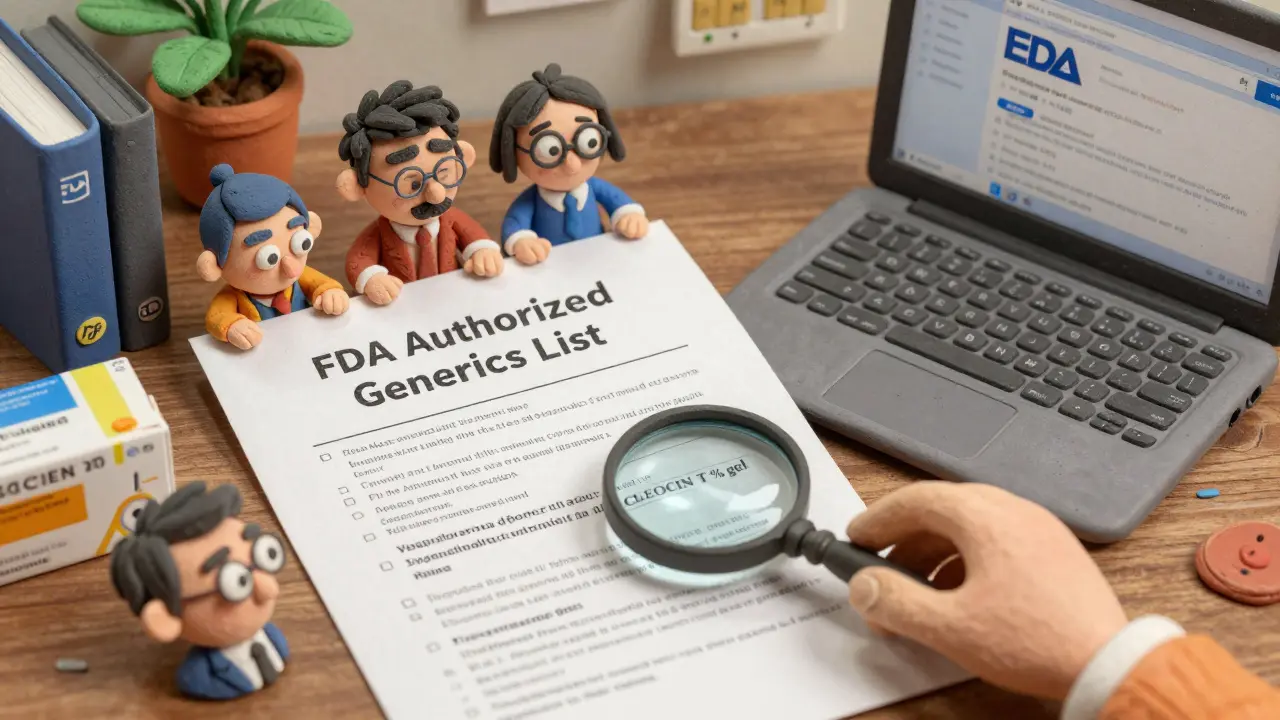
The only place to get the complete, government-mandated list of authorized generics is on the FDA’s website. Go to: fda.gov/drugs/abbreviated-new-drug-application-anda/fda-list-authorized-generic-drugs.
There, you’ll find a downloadable PDF file-usually around 1.09 MB-that lists every authorized generic the FDA knows about. Each entry includes:
- The brand name (like ACTIQ or ARTHROTEC)
- The dosage form (tablet, gel, capsule, etc.)
- The strength (e.g., 1200 mcg, 1% lotion)
- The name of the brand manufacturer (like Pfizer Inc. or Cephalon, LLC)
- The date the authorized generic entered the market
For example, you’ll see that CLEOCIN T 1% gel was launched as an authorized generic on June 11, 2003, made by Pfizer. You’ll also see ACTIQ lozenges at 1200 mcg and 800 mcg, both authorized generics from Cephalon.
The list is updated every three months. The most recent version as of October 10, 2025, includes over 850 unique authorized generics launched between 2010 and 2019 alone. Pfizer leads with 47 entries, Teva with 32, and Mylan (now Viatris) with 28.
Why This List Is Different From the Orange Book
People often confuse the FDA’s authorized generics list with the Orange Book. They’re not the same. The Orange Book lists generic drugs approved through the Abbreviated New Drug Application (ANDA) process. These are made by different companies-like Teva or Sandoz-and are considered therapeutically equivalent to the brand, but they’re not the same physical product.
Authorized generics aren’t in the Orange Book at all. They’re approved under the original brand’s New Drug Application (NDA). That means they’re not subject to the 180-day exclusivity period that traditional generics get. A brand company can launch its own generic version the day after patent expiry, no waiting.
So if you’re looking for the exact same pill as the brand, but cheaper, the authorized generics list is your only source. The Orange Book won’t help you find it.
What the List Doesn’t Tell You
Here’s the catch: the FDA list is not real-time. It’s based on annual reports from drug companies. That means:
- The "date entered the market" isn’t the exact day the drug hit shelves. It’s the period covered by the annual report.
- The FDA doesn’t track whether the drug is still being sold. An authorized generic might have been discontinued months ago, but it still shows up on the list.
- Some authorized generics are never reported. The FDA admits that up to 15% may be missing because companies don’t always report them.
Pharmacists and pharmacy buyers know this. A 2023 survey by the National Community Pharmacists Association found that 68% of independent pharmacists found the list "somewhat or very difficult" to use for actual purchasing because it doesn’t show current availability.
One pharmacy owner in Ohio checked eight authorized generics from the list. Five weren’t available from his wholesaler-even though the FDA said they were recently launched. He had to call distributors to confirm.
How to Use the List in Real Life
If you’re a patient, you can use the list to ask your pharmacist: "Is there an authorized generic for this brand?" Show them the entry. They can check if it’s available through their supplier. Some wholesalers carry authorized generics, others don’t.
If you’re a pharmacy buyer or health system purchaser, pair the FDA list with the National Drug Code (NDC) Directory. The NDC tells you the exact product code. Cross-reference it with your distributor’s catalog. You’ll find out if the drug is actually in stock.
For industry analysts, the list is gold. It shows which brands are using authorized generics to protect market share. Pfizer, for instance, uses them on 47 different products. That’s a strategy. And now you can see it.

What’s Coming Next
The FDA knows the PDF list is outdated. In 2025, they announced plans to replace it with a searchable, dynamic database by mid-2026. That means you’ll be able to search by drug name, manufacturer, or date-no downloading a 100-page PDF.
They’re also working with the Drug Shortage Portal and considering linking the list to price transparency rules under the Inflation Reduction Act. That could help patients see not just if an authorized generic exists-but how much it costs.
For now, though, the PDF is all you’ve got. And it’s the only official source.
Common Mistakes to Avoid
- Don’t assume the "date entered the market" is the exact launch date. It’s not.
- Don’t mix up authorized generics with regular generics. They’re not the same.
- Don’t rely on the list for real-time availability. Always check with your supplier.
- Don’t skip cross-referencing with the NDC Directory. It’s your best tool for verification.
And if you spot a drug on the list that’s no longer sold? You can email the FDA at [email protected]. They’ll review it-but don’t expect a quick fix. The system moves slowly.
Why This Matters to You
Authorized generics are one of the few places where brand-name drug companies lower their prices to compete with generics. That’s rare. Most companies just raise prices. But with authorized generics, you get the same drug, same quality, same safety-just without the brand markup.
For patients on tight budgets, that can mean hundreds of dollars saved a year. For pharmacists, it’s a tool to help patients afford their meds. For policymakers, it’s a way to understand how drug markets really work.
The FDA’s list isn’t perfect. But it’s the only place you can see the full picture. And if you’re trying to find a cheaper version of your prescription, it’s the first place you should look.


