
How to Update Your Allergy List Across All Healthcare Providers
Dec, 1 2025
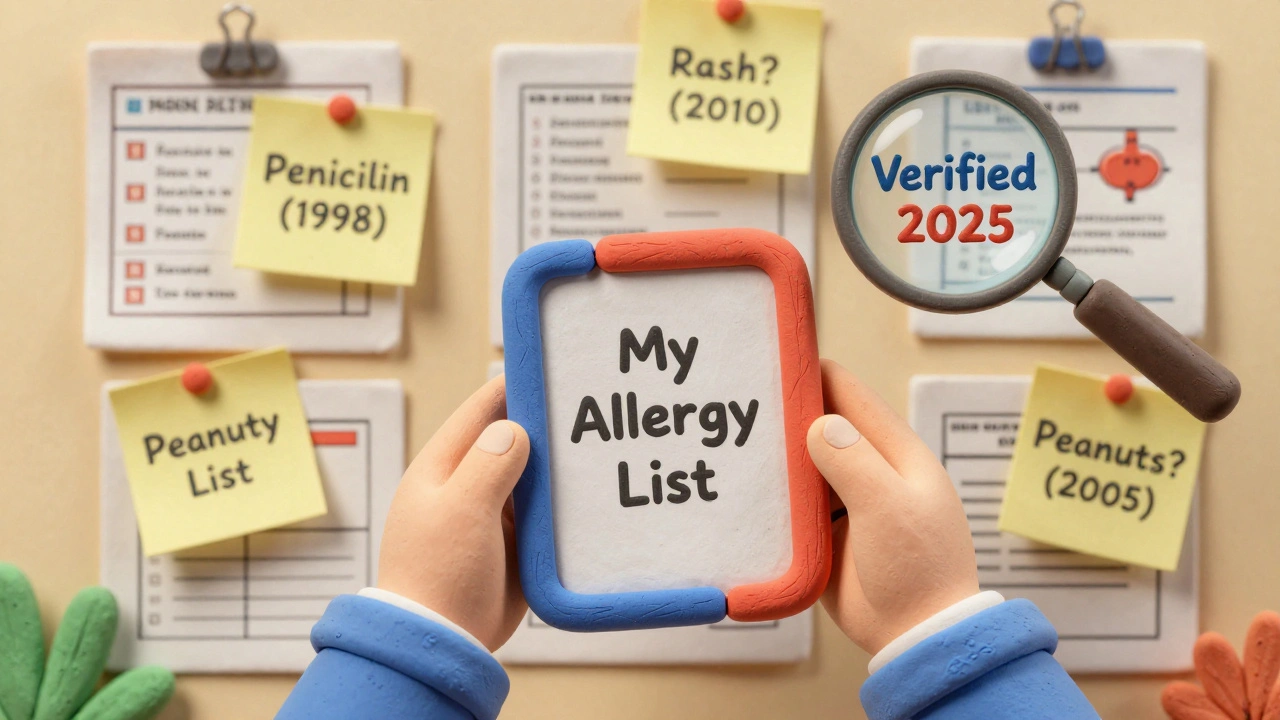
Did you know that allergy list errors are one of the top five causes of preventable harm in hospitals? If you’ve ever been told you’re allergic to penicillin but never had a real reaction, or if your allergy list says "peanuts" but you’ve eaten them without issue for years-you’re not alone. About 1 in 10 people have an incorrect allergy label in their medical records. And when different doctors, clinics, or hospitals don’t know the real story, it can lead to dangerous delays in treatment, unnecessary antibiotics, or even life-threatening reactions.
Why Your Allergy List Matters More Than You Think
Your allergy list isn’t just a note in your chart. It’s a live safety signal that tells every doctor, nurse, and pharmacist what drugs or substances could hurt you. But here’s the problem: that list often gets outdated. You might’ve outgrown a childhood allergy. Or maybe a doctor wrote down "rash" after a viral infection and labeled it as a penicillin allergy. Years later, that label sticks-even if you’ve never had a real reaction since. The stakes are high. According to the Agency for Healthcare Research and Quality (AHRQ), inaccurate allergy documentation contributes to 5% of all hospital adverse drug events. For people who have true anaphylaxis, the death rate can hit 10% if they’re given the wrong drug. And it’s not just drugs-food allergies, latex, or even contrast dye used in imaging scans can be mislabeled too. The good news? You have control. You don’t have to wait for your doctor to catch up. You can fix this yourself.Step 1: Get Your Current Allergy List
Start by pulling every version of your allergy list from every provider you’ve seen in the last five years. That includes your GP, specialists, urgent care centers, hospitals, and even your pharmacy records. Most major providers in the U.S. and Australia now use electronic health records (EHRs) like Epic, Cerner, or My Health Record (Australia’s national system). Log into your patient portal-this is your direct access to your official records. Look for sections labeled "Allergies," "Medication Reactions," or "Problem List."- Write down every item listed, even if you think it’s wrong.
- For each one, note the reaction: "hives," "swelling," "anaphylaxis," "nausea," "rash after 2 days," etc.
- Include the date you think it happened-or when it was first recorded.
Step 2: Identify What’s Outdated or Wrong
Now compare all your lists. Look for:- Duplicates (same allergy listed twice with different names)
- Unclear labels like "drug reaction" without details
- Allergies you haven’t had a reaction to in 10+ years
- Items you’ve safely taken multiple times since the label was added
Step 3: Talk to an Allergist or Immunologist
Don’t just delete an allergy from your list. Get it verified. If you suspect a drug allergy is wrong-especially penicillin, cephalosporins, or insulin-ask your doctor for a referral to an allergist. They can perform a safe, controlled challenge test or skin test. These are quick, low-risk, and often covered by insurance. For food allergies, a board-certified allergist can run blood tests or oral challenges. Environmental allergies (like pollen or dust) are harder to verify with tests, but if you’ve never had symptoms in years, it’s worth discussing whether the label still applies. Important: Never test yourself at home. A reaction can escalate fast. Always do this under medical supervision.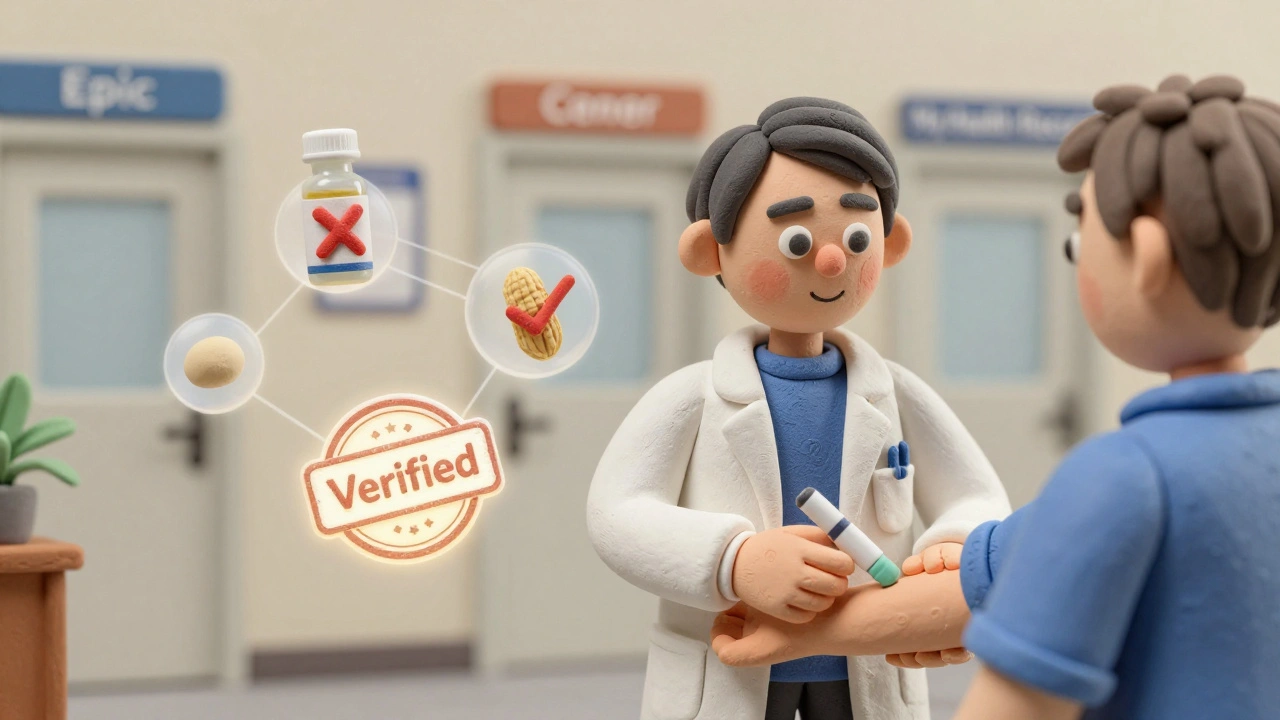
Step 4: Update Your Records-One Provider at a Time
Once you have proof that an allergy is outdated or incorrect, update your records. Start with your primary care provider-they’re your central hub. Bring your documentation: test results, notes from your allergist, or even a letter explaining why the allergy should be removed or changed. Ask them to:- Remove the allergy entirely if it’s been ruled out
- Change the status from "allergy" to "intolerance" or "no reaction"
- Add the date of verification and the source (e.g., "verified by skin test, Dr. Lee, 10/2025")
Step 5: Use Your Patient Portal to Lock It In
After your provider updates your record, log into your portal and verify the change. Some portals let you flag discrepancies or send messages directly to your care team. Use that feature. In Australia, My Health Record lets you view and add your own allergy information. Go to the "Allergies and Adverse Reactions" section. You can upload documents, add notes, and even set alerts. Make sure your updates appear there too.Step 6: Educate Every New Provider You See
Even after you’ve updated everything, you still need to speak up at every new appointment. Say this: "I’ve had my allergies reviewed and verified. My current list is [list them]. I’ve had [drug] safely multiple times since [year], and my allergist confirmed I’m not allergic. Here’s my documentation if you need it." Most doctors won’t dig into your records unless you prompt them. Don’t let them assume the old label is still valid.What About Non-Drug Allergies?
Food, latex, and environmental allergies are trickier. Unlike drugs, there’s no standard way to "remove" them from your record unless you’ve had formal testing and a doctor confirms they’re no longer active. If you’ve outgrown a food allergy, get tested. If you had a rash from latex gloves years ago but haven’t had issues since, ask your doctor if it’s still relevant. Many hospitals now use non-latex gloves anyway, so the risk is low. The problem? Only about 33% of EHRs properly document non-drug allergies with enough detail. So be extra clear: write "milk allergy-resolved at age 12, confirmed by allergist in 2023" instead of just "milk."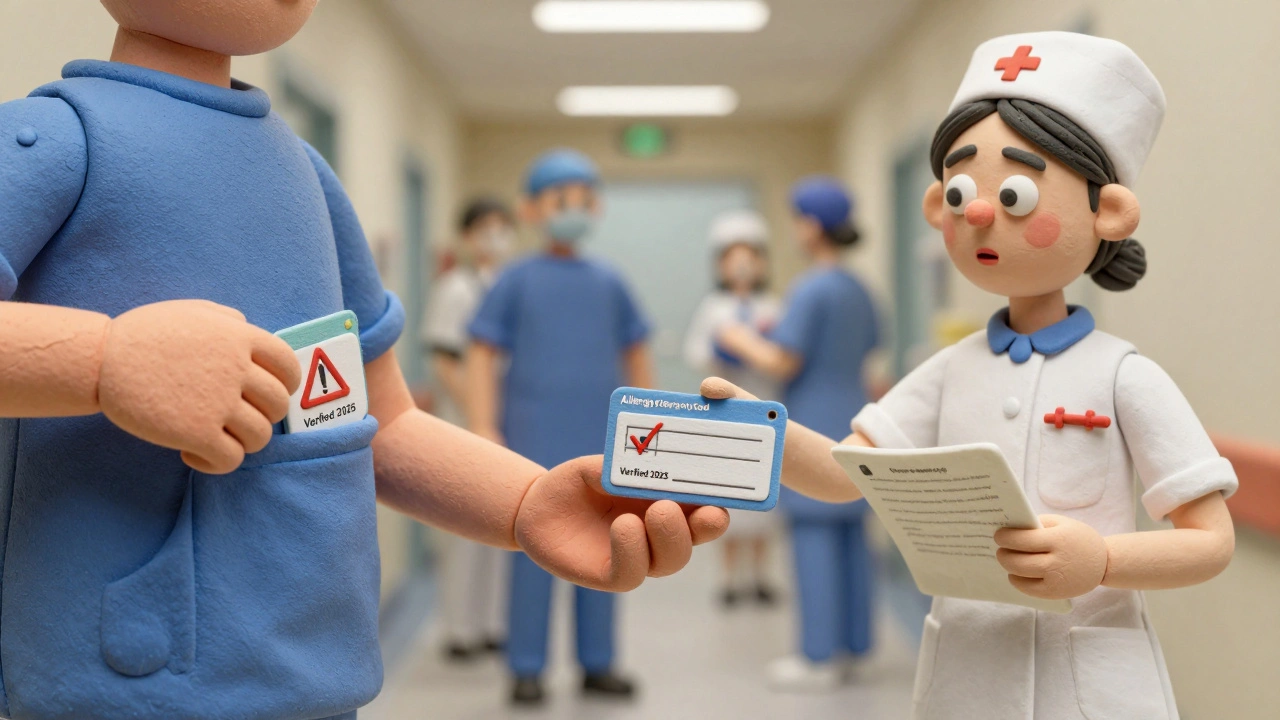
What If Your Provider Refuses to Update It?
Sometimes, doctors or nurses are hesitant to remove an allergy because they’re afraid of liability. If that happens:- Ask them to change the status to "history of reaction" or "resolved" instead of deleting it
- Request a written note in your chart explaining why it was removed
- If they still refuse, escalate to the medical records department or patient advocate
How Often Should You Check?
Treat your allergy list like your driver’s license-update it when something changes.- After any new reaction, even if it’s mild
- After seeing a specialist or being hospitalized
- Every 2-3 years, even if nothing’s changed
- Before any major surgery or procedure
What’s Changing in 2025?
New rules took effect in January 2025. All certified EHR systems in the U.S. and Australia must now use standardized allergy fields:- Verification status: "verified," "unverified," or "patient-reported"
- SNOMED CT codes: precise medical terminology (e.g., "Penicillin G allergy, confirmed")
- Reaction details: onset, severity, duration
Final Tip: Keep a Personal Allergy Wallet Card
No matter how good the system is, emergencies don’t wait. Carry a small card in your wallet or phone notes with:- Your confirmed allergies
- What reaction you had
- The date it was verified
- Your allergist’s contact info
Can I remove an allergy from my record without seeing a doctor?
No. Only a licensed healthcare provider can officially update your allergy status in your medical record. Even if you’re sure you’re no longer allergic, you need verification-like a skin test, challenge test, or documented safe exposure-before a provider will remove it. Self-removal isn’t allowed because of liability and safety risks.
What if I have allergies to multiple drugs? Do I need to get tested for all of them?
Not necessarily. Focus first on the ones that matter most-especially if they limit your treatment options. Penicillin is the #1 priority because it’s commonly mislabeled and alternatives are less effective. For others, like sulfa drugs or NSAIDs, your doctor can help you decide based on your history. If you’ve taken a drug safely multiple times since the label was added, you may not need a test. But if you’ve avoided it for years and it’s critical for your condition, testing is worth it.
Do all hospitals and clinics share my updated allergy list automatically?
Not always. While major systems like Epic and Cerner can share data, many smaller clinics or private practices still use older systems that don’t communicate well. Even within large networks, updates can take days to sync. Always confirm your allergy list at each new visit. Don’t assume it’s been updated elsewhere.
Is it safe to try a drug I’m labeled allergic to, just to see what happens?
No. Even mild reactions can become severe. A rash from penicillin might seem harmless, but the next time could trigger anaphylaxis. Always get tested under medical supervision. Allergists use controlled, monitored environments with emergency equipment ready. Never self-test.
Can I update my allergy list in My Health Record myself?
Yes. In Australia, My Health Record lets you add or edit your own allergies. You can upload documents, add notes, and mark them as "patient-entered." But your provider must still verify and confirm them in their system for it to be official. Use your portal to initiate the update, then follow up with your doctor to get it properly documented.


