
Home Emergency Kit for Medication Side Effects: What to Include

Dec, 28 2025
Medication Reaction Response Guide
What's Happening?
Select the most prominent symptoms you're experiencing:
Recommended Action
Important: This indicates a medical emergency requiring immediate attention.
Why You Need a Home Emergency Kit for Medication Side Effects
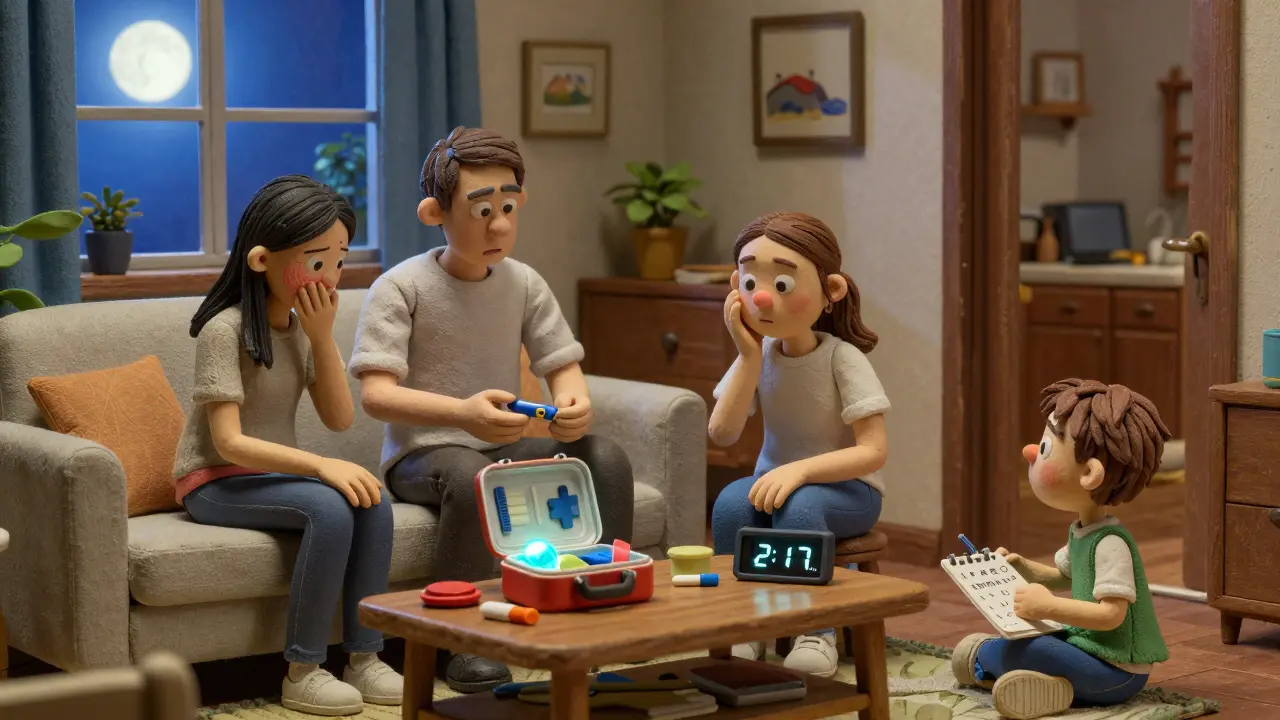
Most people keep a first-aid kit for cuts, burns, or sprains. But what happens when a pill causes a rash, nausea, or trouble breathing? Medication side effects aren’t rare - they’re common. Around 70% of American adults take at least one prescription drug, and nearly one in five will experience an unexpected reaction. These reactions don’t always happen in a doctor’s office. They strike at 2 a.m., on weekends, or while traveling. A home emergency kit tailored for medication side effects can turn panic into control.
This isn’t about replacing emergency care. It’s about buying time. Calling 911 or heading to urgent care takes minutes. In that time, knowing what to do - and having the right tools - can prevent a mild reaction from becoming life-threatening.
Essential Medications to Keep on Hand
Your kit should include targeted OTC medicines for the most common reactions. Don’t guess. Be specific.
- Antihistamines (like diphenhydramine/Benadryl): For itching, hives, or swelling. About 5-10% of people have allergic reactions to medications. Benadryl works fast - usually within 30 minutes. Keep it in its original bottle with the label visible.
- Hydrocortisone cream (1%): For skin rashes, redness, or irritation caused by drugs. Topical steroids like this are safe for short-term use and can calm inflamed skin before you see a doctor.
- Antacids (like calcium carbonate or magnesium hydroxide): One in three medication reactions involves stomach upset. If you’re on antibiotics, NSAIDs, or iron supplements, this is non-negotiable. Take it at the first sign of heartburn or nausea - don’t wait.
- Loperamide (Imodium): Diarrhea from antibiotics is so common, it affects 25% of users. Imodium slows things down enough to stay hydrated and get to a clinic. Don’t use it for fever or bloody stool - that’s a red flag.
- Epinephrine auto-injector (EpiPen): Only if prescribed. If you’ve ever had anaphylaxis from a drug, this is your lifeline. Anaphylaxis can start in under five minutes. Don’t wait for symptoms to worsen. Use it, then call 911.
- Glucose tablets: If you take insulin or diabetes meds, low blood sugar can be triggered by other drugs. Keep 3-4 tablets in the kit. Chew one at the first sign of shakiness, sweating, or confusion.
Critical Documentation: Your Medical Lifeline
A kit without paperwork is like a fire extinguisher without instructions. Include these for every household member:
- Current medication list: Write down every pill, patch, or injection - name, dose, frequency, and reason. Include vitamins and supplements. Use a printed form, not a phone note. Power outages happen.
- Allergies and past reactions: Note what caused a reaction, what symptoms appeared, and when. Example: “Amoxicillin - rash + swelling on day 3, 2022.” This helps doctors avoid repeating mistakes.
- 5 Rights of Medication Safety: Write these on a sticky note and tape it to the kit: Right Patient, Right Drug, Right Dose, Right Route, Right Time. It’s a simple checklist that prevents deadly mix-ups.
- Emergency contacts: Family doctor, pharmacist, pediatrician (if kids are in the house), and poison control. Save the number for 1-800-222-1222 - it’s free, 24/7, and staffed by toxicology experts.
Storage and Maintenance: Keep It Ready
Expired medicine is useless. Wet bandages are dangerous. Store your kit where it’s easy to grab - not in the back of a closet.
- Location: A cool, dry place. Avoid bathrooms - humidity kills pills. A kitchen cabinet or bedroom drawer works best. Keep it out of children’s reach - over 60,000 kids end up in ERs each year from accidental poisoning.
- Check every three months: Look at expiration dates. If a pill is expired, toss it. Don’t rely on the printed date - heat and light degrade potency faster than you think. Some meds lose up to 50% of their strength before they expire.
- Replace used items immediately: If you use an antacid during a stomach flare-up, buy a new one that day. Don’t wait until next month.
- Keep original packaging: Never transfer pills to pill organizers for long-term storage. Labels have dosage info, expiration dates, and warnings. If you need to give meds to a caregiver, bring the bottle.
What NOT to Include
Some things seem helpful but can do more harm than good.
- Activated charcoal: Older guides recommended it for poisonings. Today, experts say it doesn’t work for most drugs and can cause vomiting or lung damage if inhaled. Leave it out.
- Aspirin for children: Never give aspirin to anyone under 18. It can trigger Reye’s syndrome - a rare but deadly condition that affects the liver and brain. Use acetaminophen or ibuprofen instead.
- Multiple painkillers: Don’t stock Tylenol, Advil, and Excedrin together. Many contain acetaminophen. Taking two at once can lead to liver failure. Stick to one type and know the max daily dose (no more than 3,000 mg of acetaminophen per day).
- Prescription meds you don’t use: If you stopped taking a drug, don’t keep it in the kit. Outdated prescriptions can confuse emergency responders.
Special Needs: Kids, Seniors, and Chronic Conditions
One size doesn’t fit all.
- For children: Use weight-based dosing. Acetaminophen is 10-15 mg per kg. Ibuprofen is 5-10 mg per kg. Keep a small dosing syringe in the kit - not a spoon. Label it clearly.
- For seniors: Many take 4-5 meds daily. Include a printed weekly schedule with large print. Add a pill splitter if needed. Keep a list of all prescribers - some side effects happen when drugs interact.
- For heart or diabetes patients: If you’re on beta-blockers or antidepressants, stopping suddenly can cause dangerous withdrawal. Include a note saying: “Do not stop without medical advice.” Keep glucose tablets or juice boxes for hypoglycemia.
When to Call 911 - and When to Wait
Your kit helps you manage. But some things need immediate help.
Call 911 if:
- Swelling of the tongue, lips, or throat
- Difficulty breathing or wheezing
- Chest pain or sudden dizziness
- Seizures or loss of consciousness
- Signs of a stroke (slurred speech, one-sided weakness)
Use your kit and call your doctor if:
- Mild rash or itching
- Upset stomach or diarrhea
- Headache or dizziness that doesn’t improve
- You’re unsure what’s happening
When in doubt, call poison control. They’ve seen it all. They won’t judge. They’ll tell you what to do next.
Document Everything
Keep a small notepad and waterproof pen in the kit. When a reaction happens, write down:
- What medication was taken
- When it was taken
- What symptoms started and when
- What you did (e.g., “gave 25 mg Benadryl at 10:15 p.m.”)
- How symptoms changed
This info cuts emergency room wait times. Doctors say detailed notes improve diagnosis accuracy by 40%. It turns you from a confused patient into a reliable source of critical data.
Final Tip: Talk to Your Pharmacist
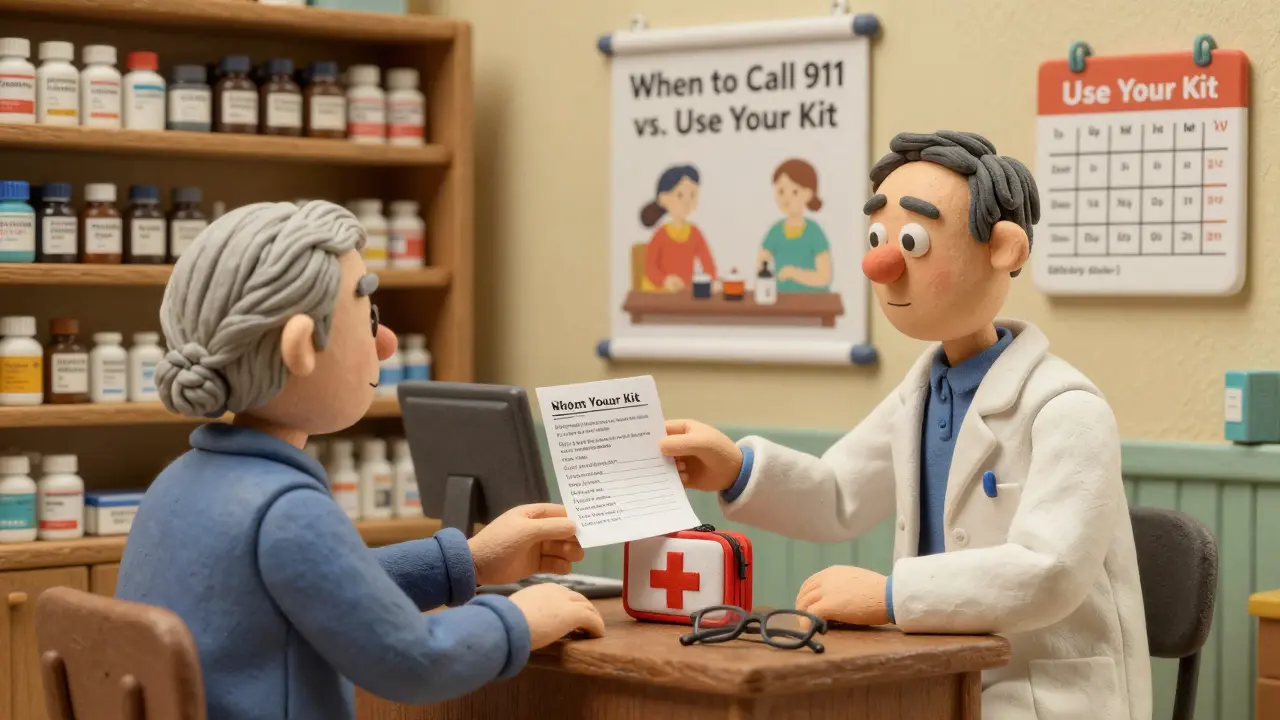
Pharmacists are medication experts - not just pill dispensers. Ask them:
- “What side effects should I watch for with this new drug?”
- “Can I take this OTC medicine with my prescription?”
- “Is there a safer alternative if I’ve had a reaction before?”
Pharmacist advice reduces medication errors by 35%. A 10-minute chat could save you a hospital trip.
Build It. Check It. Know It.
You don’t need to be a medical professional to prepare for medication side effects. You just need to be ready. This kit isn’t about fear. It’s about confidence. When your body reacts unexpectedly, you won’t be scrambling. You’ll know what’s in the box, where it is, and what to do next.
Start today. Gather the basics. Write down the names. Check the dates. Keep it simple. Your family’s safety doesn’t require perfection - just preparation.
What should I do if someone has a severe allergic reaction to medication?
If someone shows signs of a severe allergic reaction - like swelling of the face or throat, trouble breathing, or a rapid drop in blood pressure - use an epinephrine auto-injector if one is available. Then call 911 immediately. Even if symptoms improve after the injection, they still need emergency care. Anaphylaxis can return hours later. Never delay calling for help.
Can I use my home emergency kit instead of going to the hospital?
No. The kit is for temporary support, not treatment. Its purpose is to stabilize symptoms and buy time until professional care arrives. If symptoms are serious - chest pain, breathing trouble, confusion, or loss of consciousness - call 911 right away. The kit helps you manage until help gets there, but it doesn’t replace emergency medical services.
How often should I check my home emergency kit?
Check every three months. Look for expired medications, damp or damaged supplies, and missing items. Medications lose potency over time, especially if stored in heat or humidity. Replace anything that’s expired or looks off. Set a reminder on your phone for the first day of each season to make it easy.
Is it safe to keep medications in a pill organizer in the emergency kit?
Only for short-term use. For long-term storage, keep all medications in their original bottles. The labels contain vital info: dosage, expiration date, warnings, and the pharmacy’s contact number. If you’re using a pill organizer for daily use, keep the original bottles in the emergency kit. In an emergency, responders need to know exactly what was taken.
Should I include activated charcoal in my kit?
No. Activated charcoal is no longer recommended for home use in medication overdoses. Studies show it’s ineffective for most drugs and can cause vomiting or lung damage if accidentally inhaled. Only trained professionals should use it in a hospital setting. Skip it - it’s not worth the risk.
What’s the most common mistake people make with these kits?
The biggest mistake is assuming the kit will work if it’s never been used. Many people build one and forget about it. Then, when a reaction happens, they can’t find the antihistamine, the epinephrine is expired, or they don’t know what’s inside. The kit only helps if you’ve practiced using it - and if you’ve kept it updated.
Can I make one kit for the whole family?
You can, but it’s risky. Each person’s medications, allergies, and needs are different. A child’s dose of ibuprofen isn’t the same as an adult’s. An EpiPen prescribed for one person won’t help another. Make one main kit with shared items like antacids and hydrocortisone, but keep individual medical records and prescriptions separate. Label each person’s section clearly.
What if I can’t afford to buy everything for the kit?
Start small. Buy one item at a time. Antacids and hydrocortisone cream are cheap and useful. Write down your medication list and emergency numbers - that costs nothing. Keep the list in your wallet or phone. When you get your next prescription, ask your pharmacist: “What side effect should I prepare for?” They’ll tell you what’s most likely. Build it gradually. Even a basic version is better than nothing.


