
Shellfish Allergy: Cross-Reactivity and Dining Out Safely
Mar, 25 2026
Imagine sitting at a nice dinner table, hungry and ready to enjoy a meal, but scanning the menu with a knot in your stomach. For the millions of people living with a Shellfish Allergy is a severe immune reaction to proteins found in marine invertebrates like shrimp, crab, and lobster, this isn't just a moment of hesitation-it's a safety calculation. You aren't just worried about the main ingredient; you're worried about the oil in the fryer, the sauce on the side, or even the air in the kitchen. It is one of the most common food allergies globally, affecting about 2% of the population, and it gets trickier as you get older. By the time you reach your 40s, that number jumps to nearly 4%.
The real challenge isn't just knowing you can't eat shrimp. It's understanding the invisible web of connections between different types of seafood and even things like dust mites. This is where the concept of cross-reactivity comes in. If you've ever had a positive blood test for shellfish but never actually reacted to eating it, you might be dealing with this exact phenomenon. Let's break down what is actually happening in your body and how you can navigate the restaurant world without ending up in the ER.
Understanding the Science of Cross-Reactivity
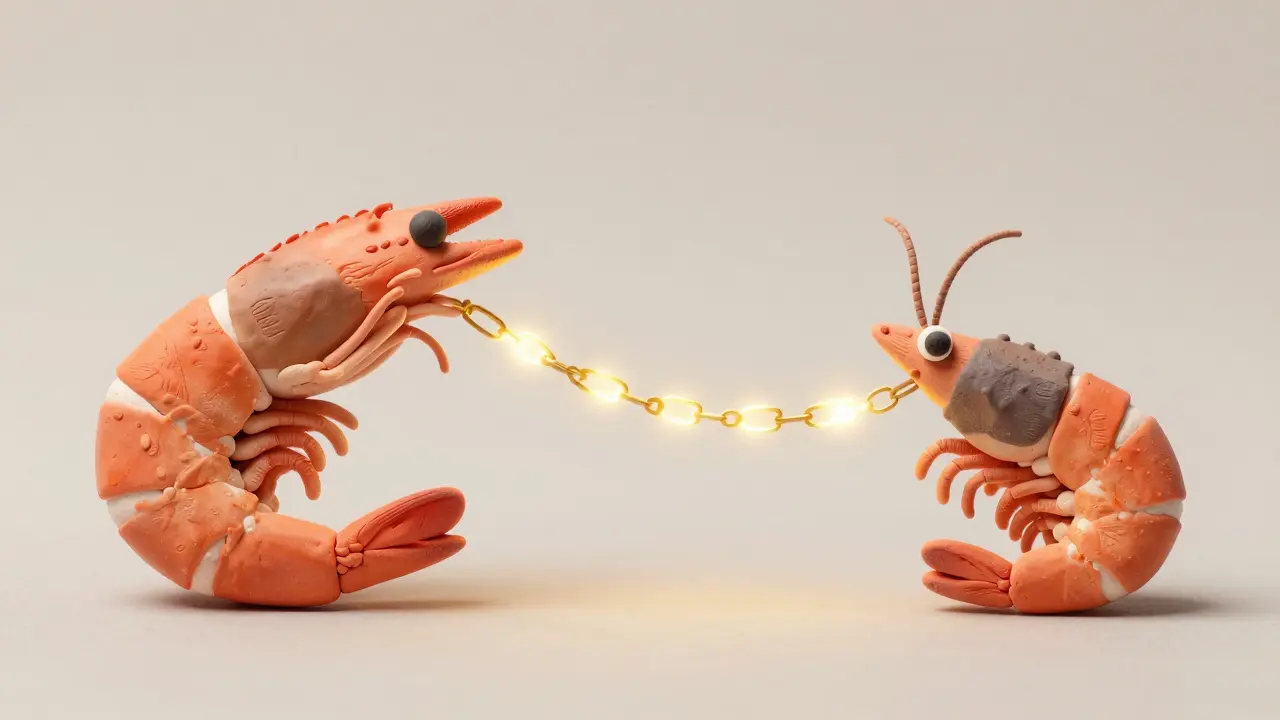
To eat safely, you need to know what you are allergic to. In most shellfish allergies, your immune system is latching onto a specific protein called Tropomyosin is a muscle protein found in invertebrates that triggers allergic reactions. Think of tropomyosin as a universal key that fits into many different locks across the animal kingdom. It is incredibly stable, meaning cooking it doesn't break it down like it does with some other proteins. That is why a boiled shrimp can still cause a reaction just as easily as a raw one.
This stability explains why cross-reactivity is so high within certain groups. If you are allergic to shrimp, there is a 75% chance you will also react to crab or lobster. This is because the tropomyosin in these crustaceans is almost identical, sharing up to 95% of its amino acid sequence. However, the story changes when you look at mollusks like clams, oysters, and scallops. These belong to a different biological group. While the risk isn't zero, cross-reactivity between crustaceans and mollusks drops significantly to about 15-20%. This distinction is vital because it means some people who must avoid shrimp might actually be able to tolerate oysters, but only under strict medical guidance.
Here is where it gets even more confusing. Tropomyosin isn't just in the sea. It is also found in dust mites and cockroaches. Studies from 2025 showed that up to 68% of people who are sensitized to dust mites also have antibodies in their blood that react to shellfish proteins. This is a classic case of false positives. You might have a blood test that screams "shellfish allergy," but if you've eaten shrimp your whole life without issue, your body might just be reacting to the dust mite protein similarity. This is why a positive blood test alone doesn't always mean you have a clinical allergy.
Getting the Right Diagnosis
Because of the dust mite confusion, getting a clear diagnosis is the first step to freedom. Standard skin prick tests or generic blood tests often can't tell the difference between a true allergy and cross-reactivity. This is why modern allergists are moving toward Component-Resolved Diagnostics is advanced testing that identifies specific protein allergens rather than whole extracts. This technology, which saw FDA approval for specific panels in 2024, allows doctors to measure your immune response to tropomyosin specifically.
If your test shows high levels of IgE antibodies to tropomyosin, the likelihood of a true allergy is much higher. Research indicates that combining tropomyosin testing with other protein markers like sarcoplasmic calcium-binding protein (SCBP) increases diagnostic accuracy to over 90%. However, even with these advanced tools, the gold standard remains the oral food challenge. This involves eating small, controlled amounts of the food in a clinic while doctors monitor you. It sounds scary, but it is the only way to be 100% sure if you can safely eat a specific type of shellfish. If you have a history of anaphylaxis, your doctor might skip this step to keep you safe.
| Primary Allergen | Related Food Group | Cross-Reactivity Risk | Key Protein |
|---|---|---|---|
| Shrimp | Crab, Lobster, Crawfish | High (75-92%) | Tropomyosin |
| Crab | Shrimp, Lobster | High (75-88%) | Tropomyosin |
| Shrimp/Crab | Clams, Oysters, Mussels | Low (15-20%) | Varying |
| Dust Mites | Shellfish (All Types) | False Positive (40-50%) | Tropomyosin |

Navigating Restaurants Safely
Once you know your limits, the real test begins outside the clinic. Dining out is where the risk spikes. Data from 2022 shows that nearly 70% of people with shellfish allergies had an accidental exposure while eating out in a single year. The most dangerous places aren't always the ones you expect. Seafood restaurants, ironically, are where 87% of reactions occur. Why? Because the kitchen environment is saturated with allergens. The air can carry steam from boiling lobster, and the fryers are often shared.
One of the biggest hidden dangers is the fryer. Many restaurants use the same oil to cook french fries and breaded shrimp. Even if you order a plain burger, if it was cooked on a grill that previously held crab cakes, you are at risk. This is called cross-contact. A 2019 study found that 63% of crustacean reactions were caused by shared cooking oil. When you call ahead, ask specifically about dedicated fryers. If they say they change the oil often, that is not the same as having a separate fryer. The proteins stick to the oil and survive the heat.
Communication is your best defense, but it needs to be precise. Servers are often well-meaning but not trained on allergen science. A 2023 survey found that only 37% of servers could correctly identify shellfish ingredients in a mystery dish. Don't just tell the server; ask to speak to the chef or manager. Use a Chef Card is a printed or digital card detailing specific allergen needs for kitchen staff. These cards are available in multiple languages and clearly state, "I have a life-threatening allergy to shellfish. Do not use shared fryers or surfaces." It removes the guesswork and puts the responsibility on paper.
Be extra cautious with Asian cuisine. While delicious, dishes like pad thai, sushi rolls, and dumplings often contain hidden shellfish in the form of shrimp paste, fish sauce, or dried scallops. A 2020 case series noted that 41% of reactions happened at Asian restaurants due to these hidden ingredients. Always ask about the broth and sauces. "Is this made with seafood stock?" is a question you need to ask for every soup and noodle dish.
Emergency Preparedness and Management
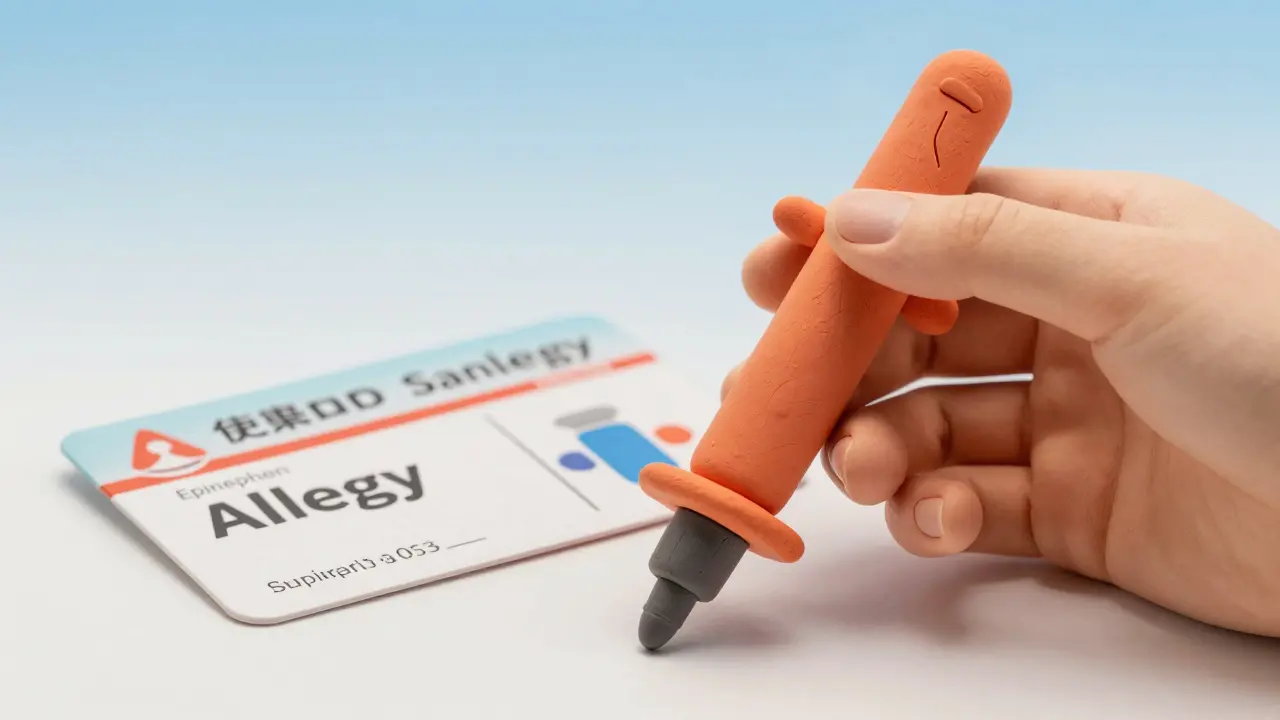
Prevention is key, but you must be ready for the worst-case scenario. If you have a history of severe reactions, you should always carry Epinephrine is the first-line treatment for anaphylaxis, a severe allergic reaction. This is not something to wait on. If you experience trouble breathing, swelling of the throat, or a drop in blood pressure, use it immediately. Studies show that 22% of dining-out reactions required epinephrine treatment. Do not rely on antihistamines alone; they are too slow to stop a systemic reaction.
Having an action plan written down helps everyone involved. Share this plan with your dining companions. They need to know what to do if you start choking or feel faint. In 2026, there are also new tools available to help. Apps like AllergyEats and Nosh List allow users to crowdsource safety ratings for restaurants. These platforms have thousands of reviews specifically noting which places are safe for shellfish allergies. However, treat these as recommendations, not guarantees. Always verify with the kitchen directly.
Future treatments offer hope, too. In early 2024, Phase 2 trials for peptide immunotherapy showed a 70% success rate in desensitizing patients to shrimp. While this isn't a cure available everywhere yet, it shows the medical field is moving toward tolerance rather than just avoidance. Until then, strict avoidance remains the only proven way to stay safe.
Frequently Asked Questions
Can I eat fish if I have a shellfish allergy?
Yes, usually. Fish allergy and shellfish allergy are different conditions. Fish allergy is typically triggered by a protein called parvalbumin, while shellfish allergy is triggered by tropomyosin. However, always check with your allergist, as some people can have both allergies.
Why did my blood test say I'm allergic to shellfish but I've eaten shrimp before?
This is likely due to cross-reactivity with dust mites. Your body might be recognizing the similar tropomyosin protein found in dust mites, leading to a false positive on the blood test. Component-resolved diagnostics can help clarify this.
Is it safe to eat mollusks if I'm allergic to shrimp?
The risk is lower, around 15-20%, but it is not zero. Mollusks (clams, oysters) and crustaceans (shrimp, crab) are biologically different. You should not try this at home. Consult your allergist for a supervised food challenge.
What are the symptoms of a shellfish reaction?
Symptoms can range from hives, itching, and stomach cramps to severe anaphylaxis. Anaphylaxis signs include difficulty breathing, swelling of the tongue or throat, dizziness, and a rapid drop in blood pressure. Seek immediate medical help if these occur.
Do I need to avoid seafood restaurants entirely?
It is highly recommended to avoid them. Seafood restaurants have the highest risk of cross-contact due to the high volume of shellfish prepared in the kitchen. Many reactions occur there because of shared air, fryers, and utensils.