
Fiber Supplements and Constipation: When to Take Them with Medications

Feb, 8 2026
Fiber Supplement Timing Calculator
Constipation is one of the most common digestive complaints, and fiber supplements are often the first thing doctors recommend. But here’s the catch: if you’re taking medications, fiber can mess with how well they work. It’s not just about taking more fiber - it’s about when you take it. Get the timing wrong, and you could be reducing the effectiveness of your blood pressure pills, diabetes meds, or even antidepressants.
Why Fiber Interferes with Medications
Fiber supplements, especially those made from psyllium husk (like Metamucil), turn into a thick gel when they hit water. That’s great for softening stool and easing constipation. But that same gel can also trap medications as they move through your gut, stopping them from being absorbed properly. Think of it like wrapping a pill in saran wrap before swallowing - it doesn’t disappear fast enough to do its job. This isn’t theoretical. A 2023 review by the American Gastroenterological Association confirmed that fiber changes how quickly your stomach empties and how fast things move through your intestines. That’s enough to alter how much of a drug actually gets into your bloodstream. For drugs with narrow therapeutic windows - like lithium, carbamazepine, or metformin - even a small drop in absorption can mean the difference between control and crisis.The Rule: Two Hours Before or After
Most experts agree on one thing: keep fiber and medications apart. The safest bet? Take your fiber supplement at least two hours before or after any medication. This isn’t just advice from supplement brands - it’s backed by clinical data. Metamucil’s official labeling says it clearly: “Bulk-forming fibers like psyllium husk may affect how well medicines work. Take this product at least 2 hours before or after medicines.” And for certain drugs, they’re even more specific. For lithium, carbamazepine, metformin, and olanzapine, they recommend spacing them by four hours. Why? Because these drugs are absorbed in the upper gut, and fiber can linger there long enough to interfere. But here’s where it gets messy. Not all sources agree. Nature Made suggests taking fiber before bed if you take meds in the morning. SAMPA Docs says late morning or afternoon is best. And FreeRx outright warns against nighttime fiber because bloating and gas can wreck your sleep.What the Data Shows: Real People, Real Results
Real-world user reports back up the science. On Reddit’s r/medication community, 67% of 142 people said their meds stopped working as well when taken with fiber. Nearly half specifically mentioned metformin - their blood sugar spiked because the fiber blocked absorption. On FreeRx’s patient forum, 217 people reported sleep problems from nighttime fiber. Eighty-two percent fixed it by switching to morning doses. Nature Made’s own customer reviews show a huge drop in satisfaction when fiber is taken before bed - 3.1 out of 5 stars versus 4.2 when taken 20-30 minutes before meals. The pattern? People who took fiber at the opposite time of their meds - morning fiber for evening meds, or evening fiber for morning meds - reported the best outcomes. In fact, 72% of positive experiences on SAMPA Docs’ patient portal followed this exact strategy.
How to Time It Right: A Simple Plan
You don’t need to be a pharmacist to get this right. Here’s a practical approach:- If you take medications in the morning (like thyroid pills, blood pressure meds, or metformin), take your fiber supplement in the late afternoon or early evening - at least two hours after your last dose.
- If you take meds at night (like sleep aids, antidepressants, or certain painkillers), take fiber in the morning - preferably before lunch, not right after waking up.
- Avoid fiber within two hours of any medication, no matter the time.
- Never take fiber with a glass of water right before bed. The gel forms slowly, and your gut stays active overnight. That’s a recipe for bloating, cramps, and midnight bathroom runs.
What Fiber Dose Should You Use?
Not all fiber is created equal. Psyllium husk is the gold standard for constipation. Studies show you need at least 10 grams per day to see real results - and it works better than some laxatives. One teaspoon of Metamucil powder gives you 5 grams of fiber (3 insoluble, 2 soluble). So you’ll need two servings a day minimum. But don’t jump in hard. Start with one serving a day. Wait a week. Then add another if needed. Your gut needs time to adjust. If you go from zero fiber to 15 grams overnight, you’ll be miserable - bloated, gassy, and worse off than before. Also, drink water. Always. At least 8 ounces (237 mL) with every dose. Without enough liquid, psyllium can swell and block your throat or esophagus. This is especially dangerous for older adults or anyone with swallowing issues.When to Stop - Red Flags
Fiber isn’t harmless. If you start having abdominal pain, nausea, vomiting, or rectal bleeding - stop immediately. These aren’t normal side effects. They could mean something serious: a bowel obstruction, diverticulitis flare, or even colon cancer. UCSF Health says: if constipation lasts more than seven days despite fiber, or if you notice blood in your stool, see a doctor. Don’t just take more fiber. That’s like pouring gasoline on a fire. And if you’ve had surgery - especially bariatric or colorectal - fiber timing gets even trickier. Your stomach capacity is smaller. Your gut moves slower. Talk to your dietitian. Don’t guess.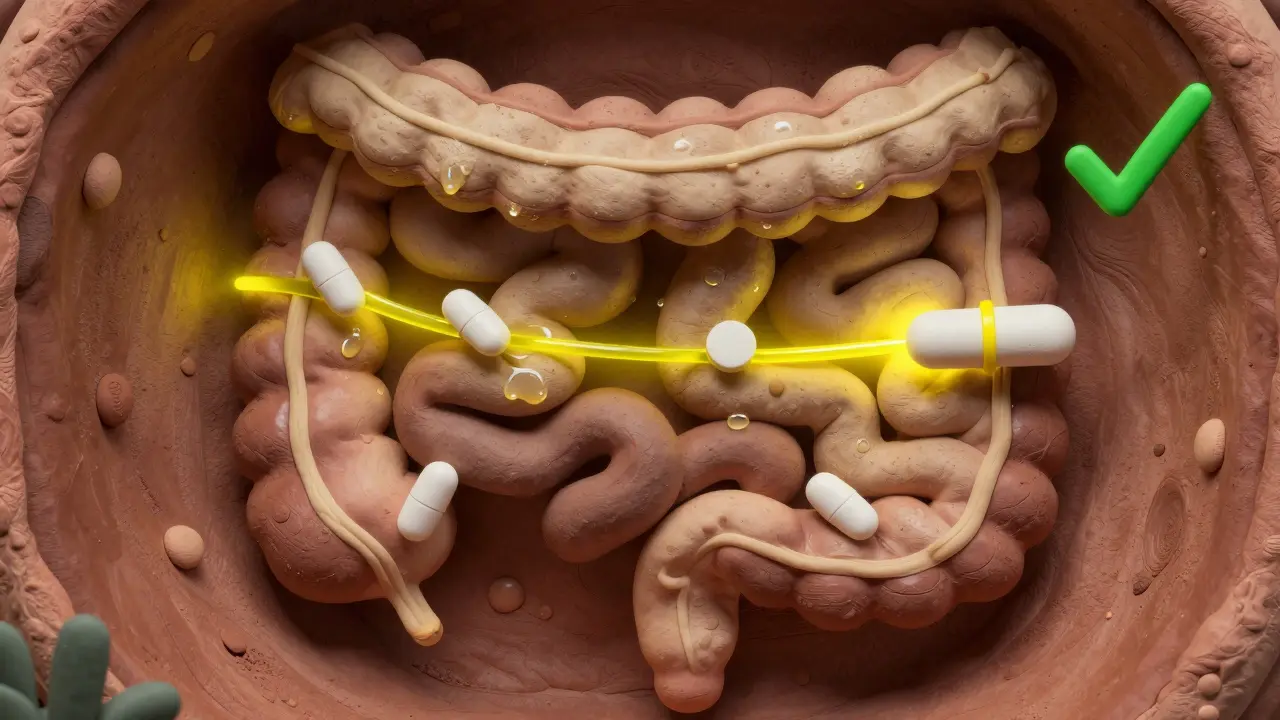
What About Other Supplements?
Fiber doesn’t just mess with prescription drugs. It can also reduce absorption of vitamins and minerals - especially iron, zinc, and calcium. If you take a multivitamin, take it at least two hours before or after your fiber. Same goes for thyroid supplements like levothyroxine. Many people don’t realize their low thyroid levels aren’t from underdosing - they’re from fiber interference.The Bigger Picture
Fiber supplements are the first-line treatment for chronic constipation - more effective than stimulant laxatives and with fewer side effects. The American College of Gastroenterology recommends them before any drug. But that doesn’t mean you can take them anytime. The $2.1 billion fiber supplement industry is growing fast. Psyllium makes up 43% of sales because it does double duty - helps constipation and lowers cholesterol. But companies aren’t always clear about timing. That’s why you need to read labels, talk to your pharmacist, and track your own routine. The future might solve this. Clinical trials are testing time-release psyllium that releases slowly over 12 hours, minimizing interaction. The European Medicines Agency calls this a “high-potential innovation.” But for now, the answer is simple: space it out.Final Checklist
- Use psyllium-based fiber (like Metamucil) - it’s the most proven.
- Take at least 10 grams daily - split into two doses.
- Always drink 8 oz of water with each dose.
- Wait at least 2 hours before or after any medication.
- Avoid taking fiber before bed - bloating and sleep disruption are common.
- Start low, go slow - increase fiber over 7-14 days.
- Stop and call your doctor if you have pain, bleeding, or constipation lasting over 7 days.
Can I take fiber supplements with my morning medications?
No - not if you take them at the same time. Fiber can block absorption of thyroid meds, blood pressure drugs, and metformin. Wait at least two hours after your meds before taking fiber, or take fiber in the late afternoon or evening instead.
Is it safe to take fiber before bed?
It’s not recommended. Many users report bloating, gas, and abdominal discomfort that disrupts sleep. Fiber takes hours to fully hydrate and move through your system, and lying down can make symptoms worse. Stick to morning or afternoon dosing.
How long does it take for fiber to work on constipation?
It usually takes 4-7 days to notice improvement, and up to 4 weeks for full effect. Don’t give up after a few days. Studies show fiber increases bowel movements by about 3 per week - but only if taken consistently at the right dose (10+ grams daily).
Can fiber cause diarrhea?
Yes - especially if you start too fast. Too much fiber too soon can cause loose stools, cramps, and urgency. Increase your dose slowly over 1-2 weeks. Drink plenty of water. If diarrhea lasts more than a few days, reduce the dose or stop and consult your doctor.
Do I need to stop fiber if I’m on antibiotics?
Not necessarily, but space them out. Antibiotics can be affected by fiber’s binding effect. Take fiber at least two hours after your antibiotic dose. Some studies suggest fiber may even help prevent antibiotic-related diarrhea - but only if timed correctly.


