
Orange Book Database: FDA's Approved Drug Products With Therapeutic Equivalence Evaluations
Feb, 2 2026
What Is the Orange Book Database?
The Orange Book is the U.S. Food and Drug Administration’s official list of drug products approved as safe and effective. Its full title is Approved Drug Products With Therapeutic Equivalence Evaluations, and it’s been around since 1979. But it wasn’t until the Hatch-Waxman Act of 1984 that it became the powerful tool it is today - a legal and practical bridge between brand-name drug companies and generic manufacturers.
Unlike a simple catalog, the Orange Book connects drugs to their patents and exclusivity periods. This isn’t just about names and dosages. It’s about timing. When does a patent expire? When can a generic version legally enter the market? That’s what pharmacists, lawyers, and drug companies check every day.
What’s in the Orange Book?
Every entry includes the brand name, generic name, dosage form, strength, and the application number - either an NDA (New Drug Application) for brand drugs or an ANDA (Abbreviated New Drug Application) for generics. But the real value lies in the three hidden layers:
- Patent information: Over 5,500 patents are listed, each with a number, expiration date, and a use code. These codes tell you which medical conditions the drug is approved to treat - not just the drug itself, but how it’s used. A drug might have multiple uses, and each use can be protected by a different patent.
- Regulatory exclusivity: This is separate from patents. Even if a patent expires, the FDA might still block generics for a set time. New Chemical Entity (NCE) exclusivity gives 5 years. Orphan drugs get 7 years. Pediatric extensions add 6 months. These aren’t guesses - they’re legally binding delays.
- Therapeutic equivalence ratings: These are the letters you see next to generic drugs: AB, BX, etc. AB means the generic is bioequivalent to the brand and can be substituted without a doctor’s permission. BX means it’s not interchangeable. Pharmacists rely on this daily to make substitutions safely.
Why Does It Matter to Pharmacists?
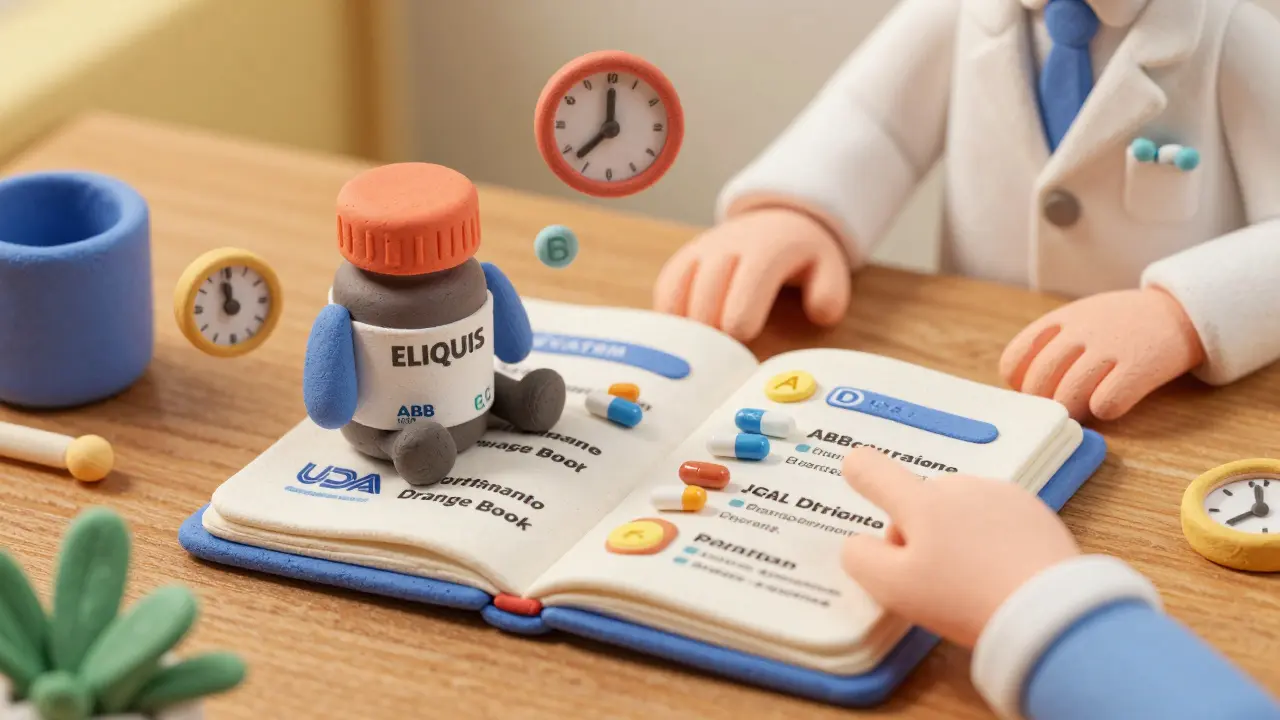
Imagine a patient walks in with a prescription for Eliquis (apixaban). The doctor didn’t specify “dispense as written.” The pharmacist checks the Orange Book. The brand patent expires in 2026, but there are three AB-rated generics already approved. The pharmacist can switch to the cheaper version without calling the doctor - saving the patient hundreds of dollars per year.
That’s not luck. It’s the Orange Book in action. A 2022 survey by the American Society of Health-System Pharmacists found that 92% of hospital pharmacists use the Orange Book daily. One pharmacist on Reddit said: “I check it before I even fill the script. If there’s an AB rating, I assume substitution is allowed unless the doctor says otherwise.”
It’s also a legal shield. If a pharmacist substitutes a drug without checking the Orange Book and something goes wrong, they could be liable. The database isn’t optional - it’s part of standard of care.
How Generic Drug Companies Use It
For generic manufacturers, the Orange Book is a roadmap to market entry. They don’t just wait for patents to expire - they watch it like a clock.
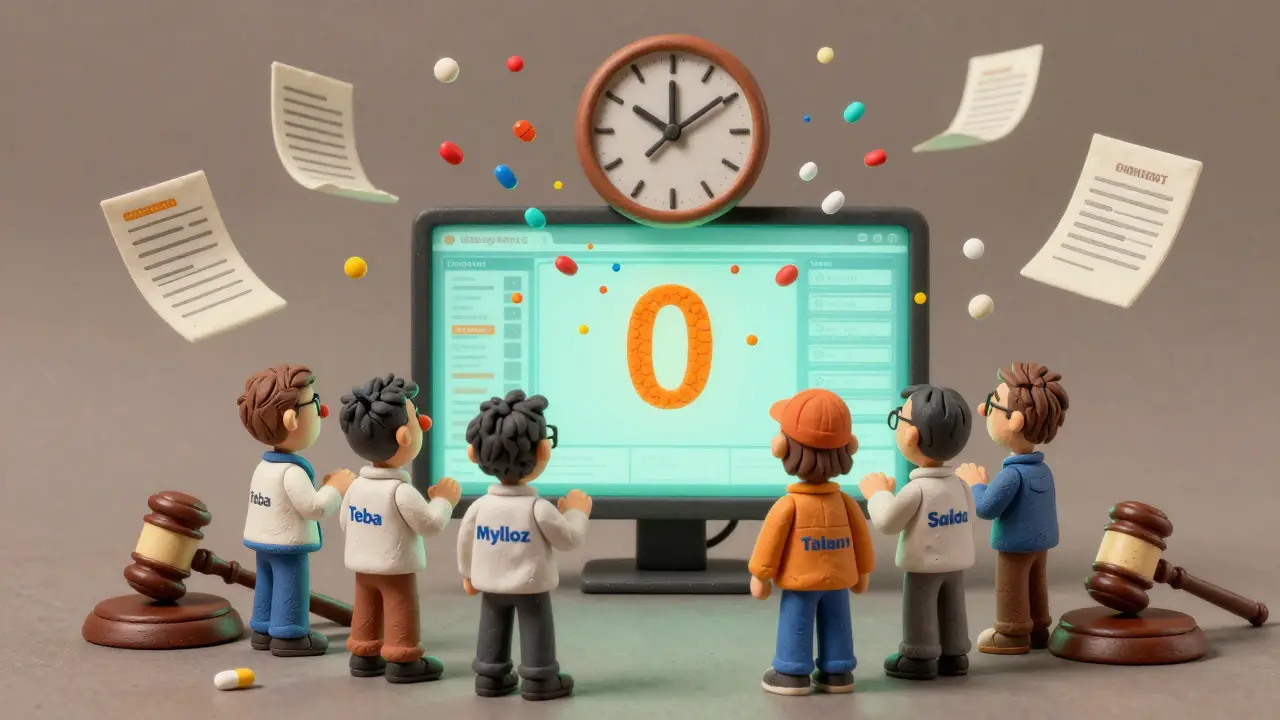
Every morning, legal teams at companies like Teva, Mylan, and Sandoz open the Electronic Orange Book. They look for:
- New patents listed after a drug’s approval
- Patents that expired yesterday
- Exclusivity periods ending in the next 90 days
One senior patent attorney at a top generic firm told IPWatchdog in 2022: “We have analysts monitoring it each morning. A single patent expiration can trigger a rush of ANDA filings. Miss it by a week, and you lose millions.”
The Hatch-Waxman Act lets generic companies file an ANDA before a patent expires - but they must certify against each patent. If they say the patent is invalid or won’t be infringed, the brand company can sue. The Orange Book gives them the exact patent numbers to challenge. It’s a legal game - and the Orange Book is the rulebook.
What’s Missing? The Limits of the Orange Book
It’s powerful - but it’s not perfect.
First, it only covers small-molecule drugs. Biologics - like Humira or Enbrel - are in the Purple Book. That one doesn’t have the same level of patent detail, and the rules are messier.
Second, it doesn’t list manufacturing patents. So a company could hold a patent on how a drug is made - not what it does - and still block generics without listing it. The FDA doesn’t require those.
Third, there’s “evergreening.” Some brand companies list patents for minor changes - like a new pill coating or a slightly different dose - just to delay generics. A 2021 congressional testimony from Harvard’s Aaron Kesselheim showed that over 40% of new patent listings in the Orange Book came from drugs already on the market for over 10 years.
The FDA knows this. In January 2024, they proposed new rules to require more specific patent descriptions and cut down on vague listings. But until those rules are final, the system still has loopholes.
How to Use the Orange Book (For Real People)
You don’t need to be a lawyer to use it. The FDA’s Electronic Orange Book is free, public, and updated daily.
Here’s how to find what you need:
- Go to accessdata.fda.gov/scripts/cder/ob/
- Search by brand name (e.g., “Lipitor”) or generic name (e.g., “atorvastatin”)
- Look at the “Therapeutic Equivalence” column - AB means interchangeable
- Click “Patents” to see expiration dates and use codes
- Check “Exclusivity” for any non-patent delays
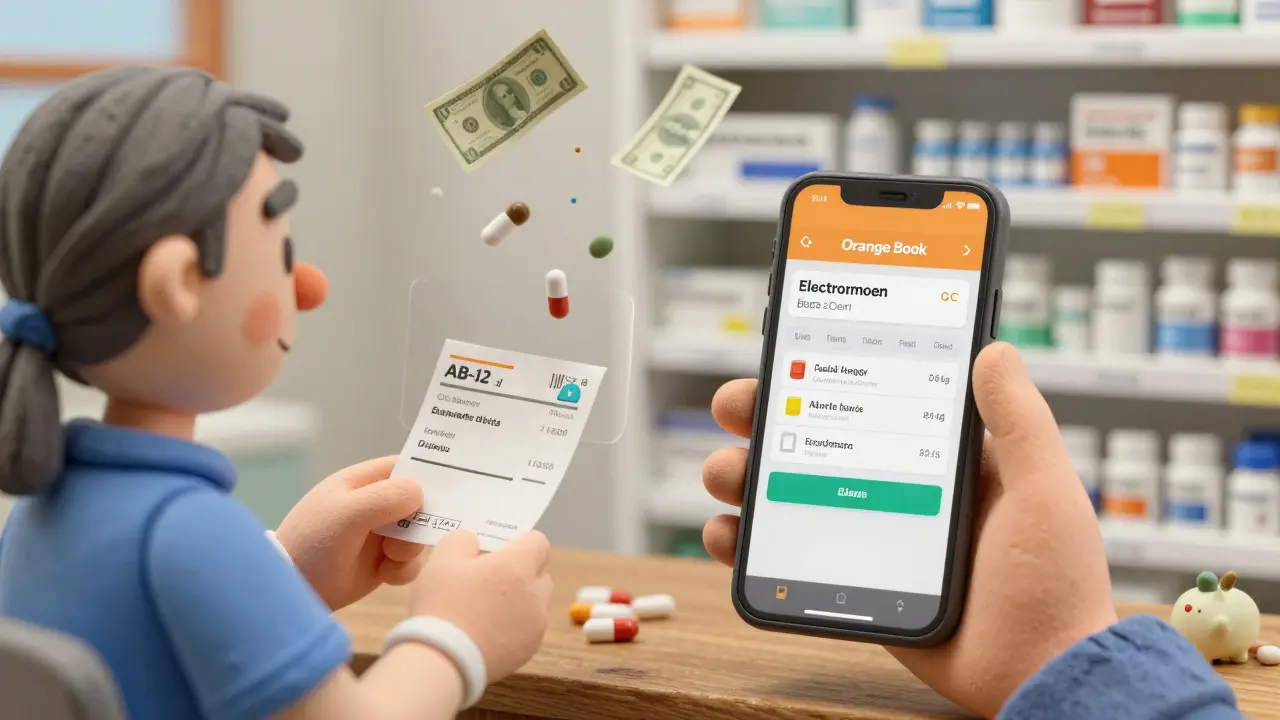
There’s a mobile app too, launched in 2015. Pharmacists use it at the counter. Patients use it to check if their prescription has a cheaper alternative.
Still confused? The FDA offers free tutorials. Over 250,000 people download their guide to patent use codes every month. The most common question? “What does ‘Use Code C’ mean?” Answer: It means the patent covers a method of using the drug for a specific condition - not the drug itself.
The Bigger Picture: Savings and Impact
The Orange Book isn’t just a database. It’s a money-saving machine.
Generic drugs make up 90% of all prescriptions in the U.S. - but only 23% of total drug spending. That’s because generics cost 80-85% less than brand names.
Between 1984 and 2022, the Hatch-Waxman Act, powered by the Orange Book, helped bring 11,200 generic drugs to market. That saved the U.S. healthcare system $1.68 trillion.
Now, with new reforms coming, the savings are set to grow. IQVIA estimates that the upcoming patent expirations for drugs like Eliquis and Xarelto could save $12 billion per year once generics flood the market. The FDA’s new API - launched in beta in 2023 - is already handling over 2 million queries daily. That’s more people than ever using it to cut costs.
What’s Next for the Orange Book?
The FDA is pushing for faster updates. Right now, patent litigation outcomes can take months to reflect in the database. That’s a problem. If a court invalidates a patent, the Orange Book should show it immediately - not after a monthly update.
The 2022 Consolidated Appropriations Act demanded more transparency. The new rules, expected in 2025, will require companies to list only patents that directly cover the approved use. No more padding.
And the future? The FDA is working on linking the Orange Book with the Purple Book. Eventually, we might see one unified system for all drugs - not just small molecules. But for now, the Orange Book remains the backbone of generic competition in the U.S.
Frequently Asked Questions
Is the Orange Book only for U.S. drugs?
Yes. The Orange Book only includes drugs approved by the U.S. Food and Drug Administration. It does not cover medications approved in Canada, the EU, Australia, or other countries. If you’re looking for equivalent information elsewhere, you’ll need to check your country’s regulatory agency - like Health Canada or the EMA.
Can I trust the Orange Book to tell me if a generic is safe to substitute?
Yes - but only if you check the therapeutic equivalence rating. Drugs marked with an AB rating are considered bioequivalent and interchangeable with the brand. BX ratings mean the generic isn’t interchangeable, often due to delivery method or absorption differences. Always verify the rating - never assume. The FDA updates this daily, so it’s the most reliable source.
Why do some drugs have multiple patents listed?
A single drug can be protected by multiple patents covering different things: the chemical compound, how it’s made, how it’s used for specific diseases, or even the pill’s shape. Each patent has a use code (A, B, C, etc.) that links it to an FDA-approved indication. This is why a drug might have five patents - but only one is for the main use. Generic manufacturers must challenge each one to enter the market.
Does the Orange Book include biologics like Humira?
No. Biologics - complex drugs made from living cells, like Humira, Enbrel, or insulin - are listed in the Purple Book, not the Orange Book. The Purple Book has less patent detail and different rules for biosimilar approval. The two systems are separate because biologics are harder to copy exactly than small-molecule pills.
How often is the Orange Book updated?
The Electronic Orange Book is updated daily. New drug approvals, patent expirations, exclusivity changes, and court rulings are added as soon as the FDA processes them. This is a major improvement from the old printed version, which only updated monthly. For anyone tracking generic entry, daily updates are critical.
Can consumers use the Orange Book to save money on prescriptions?
Absolutely. If your doctor prescribes a brand-name drug, you can look it up in the Orange Book to see if a cheaper, AB-rated generic exists. If it does, you can ask your pharmacist to substitute it - unless the prescription says “dispense as written.” Many people don’t know this, but using the Orange Book can save hundreds or even thousands per year on chronic medications.


