
How to Create a Home Medication Storage Checklist for Safety and Effectiveness

Dec, 9 2025
Every year, thousands of people in Australia and around the world end up in emergency rooms because of medication mistakes - not because they took the wrong dose, but because their medicine was stored badly. A pill left on the bathroom counter, insulin left in a hot car, or a bottle of painkillers sitting in a drawer a child can reach - these aren’t just careless habits. They’re preventable risks. Creating a home medication storage checklist isn’t about being overly cautious. It’s about making sure your pills still work, your kids stay safe, and your elderly relatives don’t accidentally grab the wrong bottle.
Why Your Medicine Cabinet Isn’t Safe
Most people think the bathroom cabinet is the best place for meds. It’s convenient, right? But it’s also the worst place. Showers heat up the air, steam raises humidity to 80-90%, and the temperature swings 10-15 degrees every time someone turns on the water. That’s bad news for your medicine. Studies show that high humidity and heat can reduce drug potency by 30-50% in just a few months. The U.S. Environmental Protection Agency says 60% of accidental poisonings in kids under six happen because meds were left within reach - and the bathroom is often the first place they look. Instead, find a cool, dry, out-of-the-way spot. A linen closet, a high shelf in a bedroom, or even a locked cabinet in the kitchen (away from the stove) works better. Keep it away from windows, radiators, and any place that gets direct sunlight. Light can break down pills too - especially if they’re in clear bottles. If your medicine is light-sensitive, keep it in its original opaque container or store it inside a dark box.Organize by Person, Not by Type
You might think grouping all your pills together makes sense - all the blood pressure meds here, all the painkillers there. But that’s how mix-ups happen. A 2022 study in the Journal of Patient Safety found that separating medications by household member reduced accidental ingestion by 63%. If you live with others, each person’s meds should be on a different shelf, or at least on opposite sides of the same shelf. Use clear bins or small boxes labeled with names. This matters even more if someone in your home takes high-risk medicines like insulin, warfarin, or opioids. These drugs can be deadly if taken by the wrong person. The Institute for Safe Medication Practices recommends labeling them clearly with “High Alert” and storing them in a separate locked container - even if everything else is in a locked cabinet. Don’t assume your kids know the difference between a vitamin and a prescription. They don’t.Lock It Down - Seriously
A standard medicine cabinet? It’s barely a barrier. Consumer Product Safety Commission tests show it stops only 12% of kids trying to get into it. A 2023 study in Pediatrics found that households using dedicated medicine lockboxes saw 92% fewer accidental ingestions in children under five. That’s not a small difference. That’s life-changing. You don’t need a fancy safe. A simple combination lockbox - the kind used for tools or valuables - works fine. Make sure it’s mounted high (at least four feet off the ground) and behind closed doors. Kids are smart, but they’re not persistent if they can’t see the box or reach it. Avoid key locks - kids can find keys. Combination locks are more reliable because they’re always locked, and adults remember the code. If you have teens, don’t ignore this step. One in three teens who misuse prescription drugs get them from home. Storing meds securely isn’t about distrust - it’s about reducing temptation and opportunity.
Track Expirations Like a Pro
Most people don’t check expiration dates until they need the medicine. That’s dangerous. The FDA says 82% of pills still work one year past their expiration date - if stored properly. But after three years? Only 42% remain effective. Worse, 70% of households still have expired meds sitting around. Some of those expired pills can even become toxic. Set a reminder: every six months, do a full medicine audit. Do it when you change your clocks for daylight saving time - it’s an easy habit to stick to. Pull out every bottle, box, and tube. Check the expiration date. Look for changes: pills that are cracked, discolored, or smell odd. Creams that have separated or turned watery? Toss them. Insulin that looks cloudy when it should be clear? Don’t use it. For multi-dose items like insulin vials or eye drops, write the opening date on the label. Most lose potency after 28 days once opened - even if the bottle says “use by 2027.” The Senior Care Consultant Group says 25-40% of these meds degrade after opening if not tracked.Special Cases Need Special Rules
Not all meds are the same. Some need cold. Some need dry. Some need to be handled like fragile glass. Insulin: Unopened vials go in the fridge (36-46°F). Once opened, they can stay at room temperature for 14 to 56 days, depending on the type. Keep them away from direct heat - like a windowsill or next to the coffee maker. A 2022 American Diabetes Association study found 38% of users store in-use insulin wrong, cutting its effectiveness by up to 30%. Inhalers: Don’t leave them on the counter. Store them in their original plastic case to prevent accidental spraying. Cold weather can make them less effective - keep them inside, not in the car. Topical creams and ointments: These aren’t just for skin. They can be mistaken for food or drink if not clearly labeled. North Carolina’s Kaitlyn’s Law requires all topical products - even sunscreen and insect repellent - to be stored in original containers with pharmacy labels. That rule cuts medication errors by 72%. Supplements: Vitamins and herbal pills count too. They’re not harmless. Some interact with prescriptions. Store them with your other meds, not in the kitchen spice rack.Dispose of What You Don’t Need
Don’t flush pills down the toilet. Don’t toss them in the trash bare. Both ways pollute water and risk someone finding them. The EPA says proper incineration removes 99.9% of pharmaceuticals from the environment. Flushing leaves 60-80% behind. Find a drug take-back program. In Australia, pharmacies like Chemist Warehouse and TerryWhite Chemmart offer free disposal bins. The DEA’s National Prescription Drug Take Back Day collects over a million pounds of meds each year - twice a year, in April and October. If you can’t make it to a drop-off, mix your old pills with something unappetizing: coffee grounds, cat litter, or dirt. Put them in a sealed bag, then throw them in the trash. This cuts accidental ingestion by 76%, according to the FDA.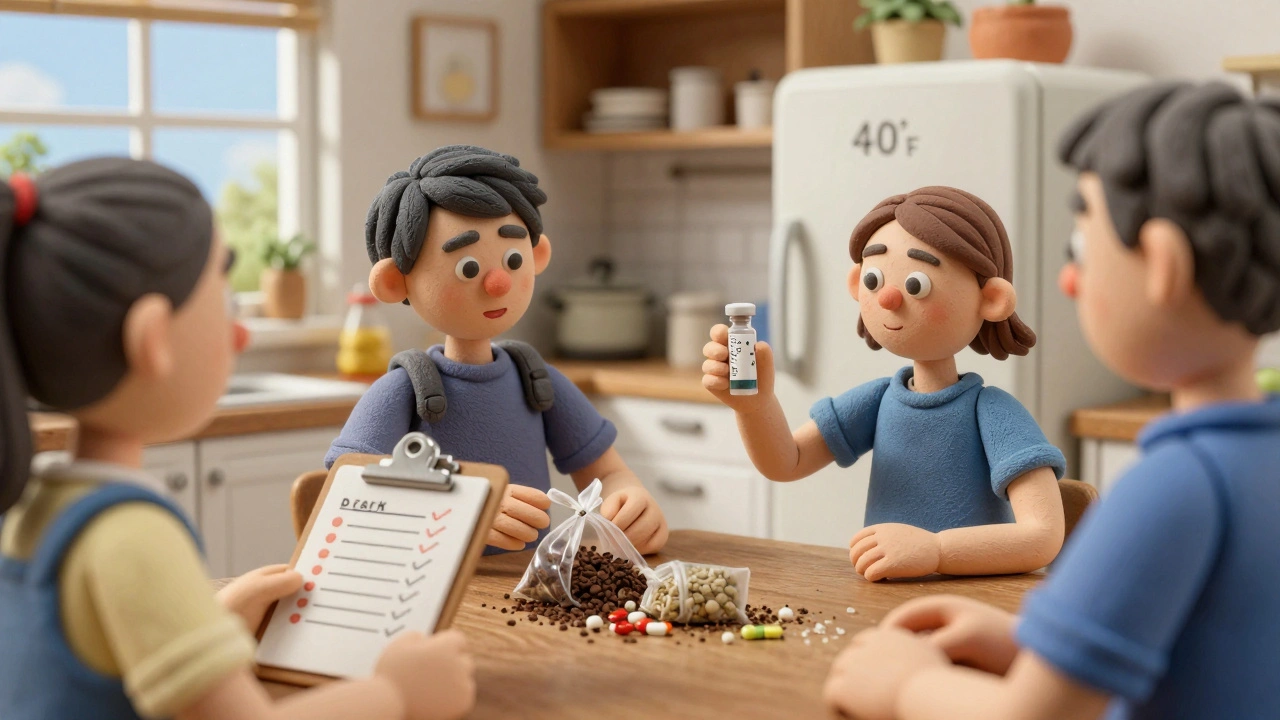
Make It a Routine
A checklist only works if you use it. Don’t write it once and forget it. Turn it into a habit.- Every 6 months: Do a full inventory. Check dates. Toss expired meds.
- Every month: Do a quick visual check. Look for changes in color, texture, smell.
- Every day: If you use refrigerated meds, check the fridge temp. Keep a log for 30 days - it helps catch problems early.
- Every time you get a new prescription: Put it in its spot right away. Don’t leave it on the counter.
What Your Checklist Should Include
Here’s a simple template you can print or save on your phone:- ✔ All meds stored in original containers with labels
- ✔ No meds in bathroom or kitchen near heat/light
- ✔ All meds stored in locked container, at least 4 feet off ground
- ✔ Each person’s meds on separate shelves or in labeled bins
- ✔ High-alert meds (insulin, opioids, warfarin) in separate locked box
- ✔ Refrigerated meds stored at 36-46°F with daily temp log
- ✔ All multi-dose items marked with opening date
- ✔ Expired or unused meds removed every 6 months
- ✔ Disposal plan in place - take-back program or safe mix method
- ✔ All caregivers (including grandparents) know where meds are stored
What to Do If Something Goes Wrong
If a child swallows medicine, don’t wait. Call Poison Control immediately. In Australia, that’s 13 11 26. If someone takes the wrong pill, call an ambulance. Don’t try to make them vomit - that can make things worse. Keep this number saved in your phone: 13 11 26. It’s free, fast, and available 24/7.Can I store all my medications in one place?
No. Storing all meds together increases the risk of mix-ups, especially in households with multiple people. Each person’s medications should be stored separately - ideally on different shelves or in labeled containers. This reduces accidental ingestion by up to 63%, according to a 2022 study in the Journal of Patient Safety.
Is it safe to keep medicines in the fridge?
Only if the label says so. Most pills don’t need refrigeration - and cold can actually damage some. Insulin, certain eye drops, and some antibiotics must be kept between 36-46°F. Store them away from food and never in the fridge door, where temperatures swing. Always check the manufacturer’s instructions.
What should I do with expired medications?
Never flush them. Use a drug take-back program at your local pharmacy or during a National Prescription Drug Take Back Day. If that’s not available, mix pills with coffee grounds or cat litter, seal them in a bag, and throw them in the trash. This reduces the chance of accidental ingestion or environmental harm.
Do I need to keep medicine in its original bottle?
Yes. Original bottles have the name, dosage, expiration date, and pharmacy info. Removing labels increases the risk of errors - especially for seniors or caregivers. North Carolina’s Kaitlyn’s Law requires this for childcare settings, and it’s a smart rule for every home.
How often should I check my medicine storage?
Do a full check every six months - like during daylight saving time changes. Do a quick visual inspection every month. Look for changes in color, texture, or smell. Check fridge temperatures daily if you store meds there. A consistent routine cuts medication errors by 89%, according to Consumer Reports.
If you’re caring for an older relative, a child, or someone with memory issues, this checklist isn’t optional. It’s essential. Medication errors don’t just cause harm - they lead to hospital visits, lost time, and sometimes death. But with a simple system, you can prevent almost all of them. Start today. Don’t wait for a crisis to act.


