
Where to Find Detailed Side Effect Information for Your Medications
Dec, 1 2025
Side Effect Frequency Calculator
How to Use This Calculator
This tool helps you interpret side effect reports correctly. Many people see a number of reports and assume it's common, but without knowing the total number of users, you can't determine actual frequency. Enter the numbers below to calculate how rare or common a side effect truly is.
- Common: 1% or more of users
- Uncommon: 0.1% to 1% of users
- Rare: Less than 0.1% of users
Side Effect Frequency Results
Based on your inputs:
Knowing what side effects a medication might cause isn’t just helpful-it can be life-saving. But finding clear, accurate, and up-to-date information isn’t as easy as a quick Google search. Many people rely on pharmacy pamphlets or drug apps, but those often miss the full picture. The truth is, the most detailed and reliable side effect data comes from official sources, and you don’t need to be a doctor to access them.
The FDA’s FDALabel Database Is Your Best Starting Point
The FDA maintains the most authoritative source for prescription and over-the-counter drug side effects: the FDALabel database. This isn’t a marketing brochure-it’s the exact text drug manufacturers submit to the FDA when they apply for approval. Every approved drug in the U.S. has one, and it’s updated every time new safety data emerges.
Inside each label, look for Section 6: Adverse Reactions. This section lists side effects reported during clinical trials, ranked by how often they happened. You’ll see terms like “common,” “uncommon,” or “rare,” and sometimes exact percentages. For example, a label might say: “Nausea occurred in 18% of patients taking Drug X.” That’s real data from real people in controlled studies.
For over-the-counter meds, check the “Warnings” section instead. It highlights the most serious risks, like liver damage from too much acetaminophen or stomach bleeding from NSAIDs. The FDA requires these to be clear and prominent.
But here’s the catch: labels only include side effects that were seen in clinical trials. That means rare reactions-like one in 10,000 people-might not show up until after the drug hits the market. That’s why you need more than just the label.
DailyMed: The Public Face of FDA Labels
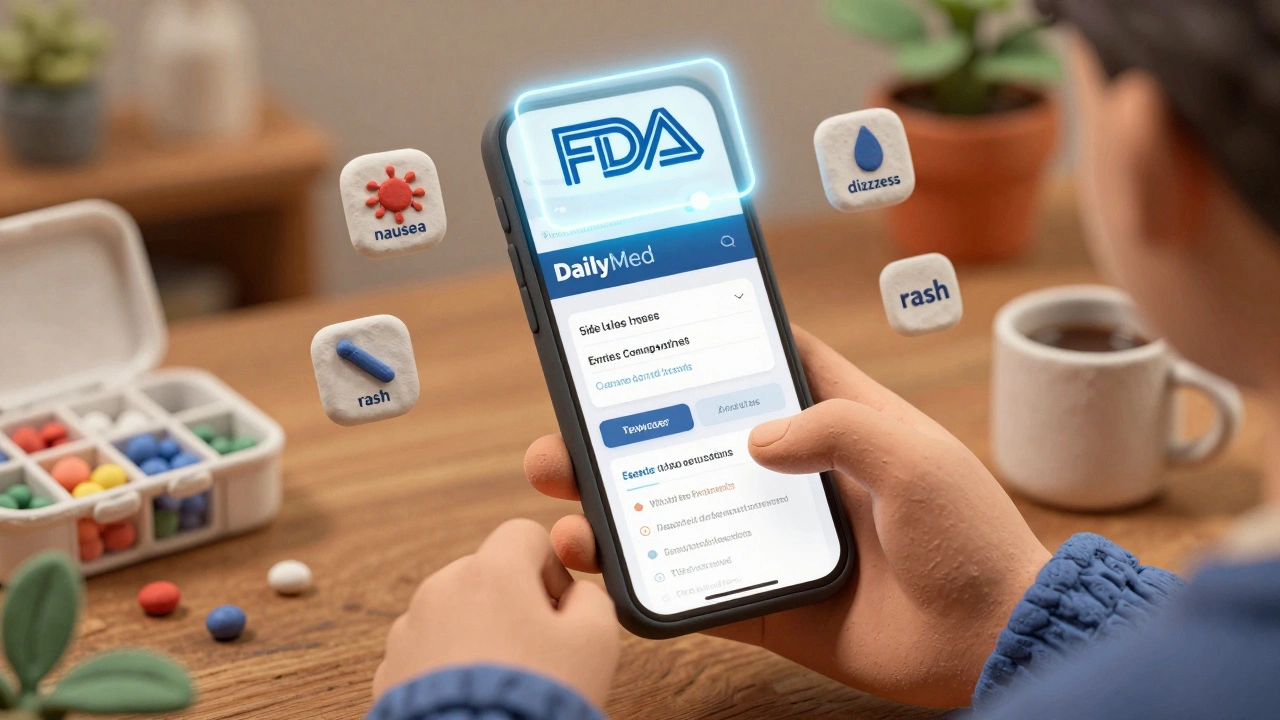
If the FDALabel site feels too technical, go to DailyMed, run by the National Library of Medicine. It pulls the exact same FDA labels but in a cleaner, easier-to-read layout. You can search by drug name, active ingredient, or even brand name.
DailyMed is updated daily. If a drug gets a new black box warning or a side effect is added after a post-market study, you’ll see it here within 24 hours. It’s free, no login required, and trusted by pharmacists across the U.S.
Pro tip: Always check the “Last Updated” date at the top of the page. If it’s from 2020, you’re looking at outdated info. The most recent label should be labeled “Current.”
What the Label Doesn’t Tell You: Off-Label Side Effects
Most side effects listed on FDA labels come from trials with healthy adults under controlled conditions. But real life is messier. People take multiple drugs. They have other health conditions. They’re older, pregnant, or have kidney problems. That’s where off-label side effects come in-reactions that happen in the real world but weren’t caught in trials.
A 2012 study from Columbia University found that the average drug label lists only 69 side effects. But when researchers analyzed real-world data, they found an average of 329 high-confidence off-label side effects per drug. That’s nearly five times more.
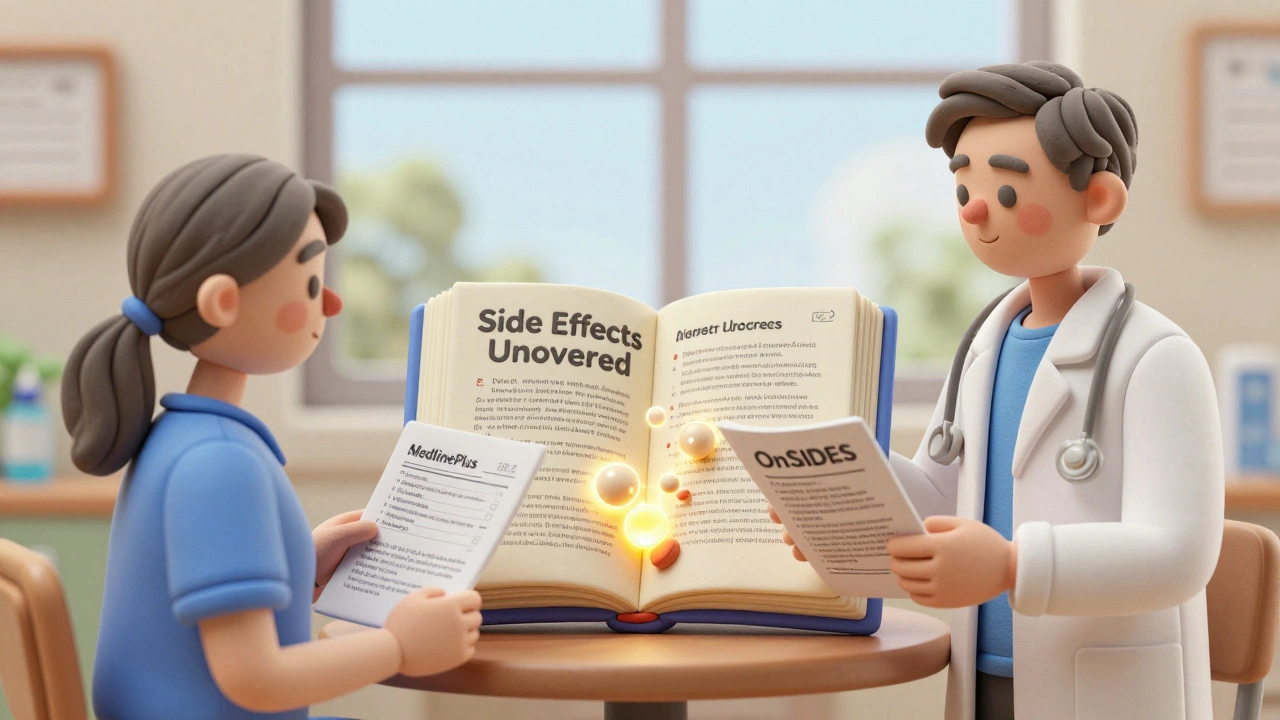
One of the best tools for this is OnSIDES, launched in 2023. It uses AI to scan every FDA-approved drug label, plus international ones, and pulls out side effects mentioned in medical literature, patient reports, and clinical notes. As of November 2023, it contained over 3.6 million drug-side effect pairs-far more than any previous database.
OnSIDES even breaks it down by population: pediatric, elderly, or international use. If you’re worried about a side effect that’s not on the label, this is where you look.

VigiAccess: Real-World Reports From Around the World
When someone has a bad reaction to a drug, doctors and patients can report it to national safety agencies. These reports go into a global database called VigiBase, managed by the World Health Organization through the Uppsala Monitoring Centre.
Go to VigiAccess and type in a drug name. You’ll see how many times that drug has been linked to a specific side effect worldwide. For example, you might find that 287 people reported dizziness after taking Drug Y. That sounds alarming-until you realize that millions took it. Without knowing the total number of users, you can’t tell if that’s high or low.
Still, VigiAccess is powerful for spotting rare or unexpected reactions. If 50 people report a strange skin rash after taking a new drug, and no one else has, that’s a red flag. It’s how we found out about the rare blood clots linked to certain COVID-19 vaccines.
But remember: VigiAccess doesn’t give you rates. It gives you counts. A side effect reported 100 times could be extremely rare-or extremely common, depending on how many people used the drug. That’s why you need to cross-reference it with other sources.
MedlinePlus: Side Effects Made Simple
If you’re not a researcher or a clinician, you probably don’t want to read through 30 pages of drug labels. That’s where MedlinePlus comes in. Run by the National Library of Medicine, it takes the FDA’s data and turns it into plain language.
A 2023 survey of 2,891 patients found that 87% found MedlinePlus easier to understand than FDA labels. It lists side effects in simple categories: common, less common, serious. It also explains what to do if you experience them-like when to call your doctor or go to the ER.
It’s not as detailed as OnSIDES or FDALabel, but it’s perfect for patients who want to know what to expect without getting lost in medical jargon.
What to Avoid: Outdated or Biased Sources
Some websites still use old data. SIDER, once a popular side effect database, hasn’t been updated since 2015. Its creators openly say it’s outdated and no longer maintained. Using it now is like relying on a 2015 weather forecast.
Also avoid paid services like PDR.Net. While it’s been around since 1947 and has useful drug comparisons, it’s subscription-based ($50/year), and critics say it may downplay side effects to please drug makers. The American Medical Association doesn’t recommend it as a primary source.
And never trust random blogs, forums, or social media groups as your only source. Reddit might have stories, but they’re anecdotes-not evidence. One person’s bad reaction doesn’t mean it’s common.
How to Use These Tools Together
Here’s a simple plan:
- Start with MedlinePlus to get a clear, simple overview of what side effects are possible.
- Check DailyMed for the official FDA label-look for frequency data and warnings.
- Search VigiAccess to see if your drug has any unusual or rare reports from other countries.
- If you’re on multiple medications or have a complex health history, use OnSIDES to check for off-label interactions and effects not on the label.
That’s it. No guesswork. No guesswork. No fluff. Just facts from the most reliable sources.
Why This Matters More Than Ever
More people are taking multiple medications than ever before. In 2023, the FDA received over 2.1 million side effect reports-up 37% from 2018. But experts estimate less than 1% of actual side effects are ever reported. That means every time you look up a drug’s side effects, you’re only seeing part of the story.
The FDA is working on making labels easier to search and integrate with electronic health records by 2026. In the meantime, you have the tools to get the full picture. You just need to know where to look.
Don’t wait until you have a reaction to check. Do it before you start the medication. Talk to your pharmacist. Print out the DailyMed page. Keep it in your phone. Knowledge isn’t just power-it’s protection.
Can I trust side effect information from my pharmacy’s pamphlet?
Pharmacy pamphlets are based on FDA labels, so they’re generally accurate for common side effects. But they’re often simplified and may leave out rare or off-label reactions. For full details, always check DailyMed or MedlinePlus.
Are side effects listed on drug labels always complete?
No. Labels only include side effects seen in clinical trials, which involve a limited number of people under controlled conditions. Rare reactions, long-term effects, or side effects in people with other health conditions often show up only after the drug is widely used. That’s why real-world databases like VigiAccess and OnSIDES are important.
Is SIDER still a reliable source for side effect data?
No. SIDER hasn’t been updated since 2015, and its creators have stated it’s no longer maintained. Using it now gives you outdated information that doesn’t reflect current drug safety profiles. Avoid it in favor of OnSIDES or DailyMed.
How do I know if a side effect is serious enough to call my doctor?
Look for red flags: chest pain, trouble breathing, swelling of the face or throat, severe dizziness, unusual bleeding, yellowing of the skin or eyes, or sudden mood changes. If you’re unsure, call your doctor or pharmacist. When in doubt, it’s better to check than to wait.
Can I use VigiAccess to find out how common a side effect is?
VigiAccess tells you how many reports exist, but not how common the side effect is. For example, 50 reports could mean it’s rare (if millions took the drug) or common (if only a few did). To understand frequency, compare it with the FDA label or MedlinePlus, which give estimated rates.
Is OnSIDES free to use?
Yes. OnSIDES is free and publicly accessible at nSIDES.io. The data is available through a web interface, so you don’t need technical skills to search. The full dataset is also downloadable for researchers, but for most patients, the website is all you need.
Should I rely on AI tools or apps that predict side effects?
Some apps use AI to predict side effects, but they’re not regulated and often rely on outdated or incomplete data. Stick to official sources like the FDA, DailyMed, MedlinePlus, and OnSIDES. If an app claims to predict your personal risk, it’s making guesses-not giving facts.
Next Steps: What to Do Today
If you’re taking any medication right now, open your phone and do this:
- Search for your drug on DailyMed.
- Read Section 6: Adverse Reactions.
- Go to MedlinePlus and compare the summary.
- Check VigiAccess if you’re concerned about rare reactions.
It takes less than 10 minutes. And if you’re helping someone else-like a parent, partner, or elderly relative-do it with them. Side effect information isn’t just for doctors. It’s for anyone who takes medicine. Know what you’re getting into. Your body will thank you.


