
Bromocriptine for Diabetes: How to Manage Nausea, Dizziness, and the Right Timing

Dec, 7 2025
Bromocriptine isn’t your typical diabetes pill. It doesn’t boost insulin, flush out sugar through urine, or make your body more sensitive to insulin like metformin or SGLT2 inhibitors do. Instead, it works deep inside your brain-specifically in the hypothalamus-to reset your body’s internal clock. This unique action helps lower blood sugar by reducing the liver’s overnight glucose production and calming the nervous system’s overdrive that leads to insulin resistance. But here’s the catch: if you don’t take it at the right time, or if you ignore the side effects, it won’t work-and you might quit because of nausea or dizziness.
Why Timing Matters More Than You Think
Bromocriptine (sold as Cycloset) only works if you take it within two hours of waking up. Not when you feel like it. Not after your morning coffee. Not after you’ve checked your phone. Right after you wake up. That’s because the drug targets your body’s circadian rhythm-the natural cycle that controls your metabolism, hormone levels, and energy use. Studies show patients who took bromocriptine within two hours of waking had 0.7% greater HbA1c reduction than those who took it later-even if they took the same dose. That’s not a small difference. For someone with an HbA1c of 8%, that could mean going from 7.3% to 6.6%, which lowers your risk of nerve damage, kidney problems, and heart disease. This isn’t just advice-it’s science. The quick-release formula peaks in your bloodstream within 30 minutes to two hours. If you take it at noon, your body’s dopamine receptors aren’t primed to respond. The window closes fast. That’s why patients who work night shifts or have irregular sleep schedules often struggle. One Reddit user, a nurse working 11 PM to 7 AM, said: “I’d take it when I woke up at 3 PM, but my blood sugar didn’t budge. My doctor switched me to metformin.”Nausea Is Common-But It Doesn’t Have to Stop You
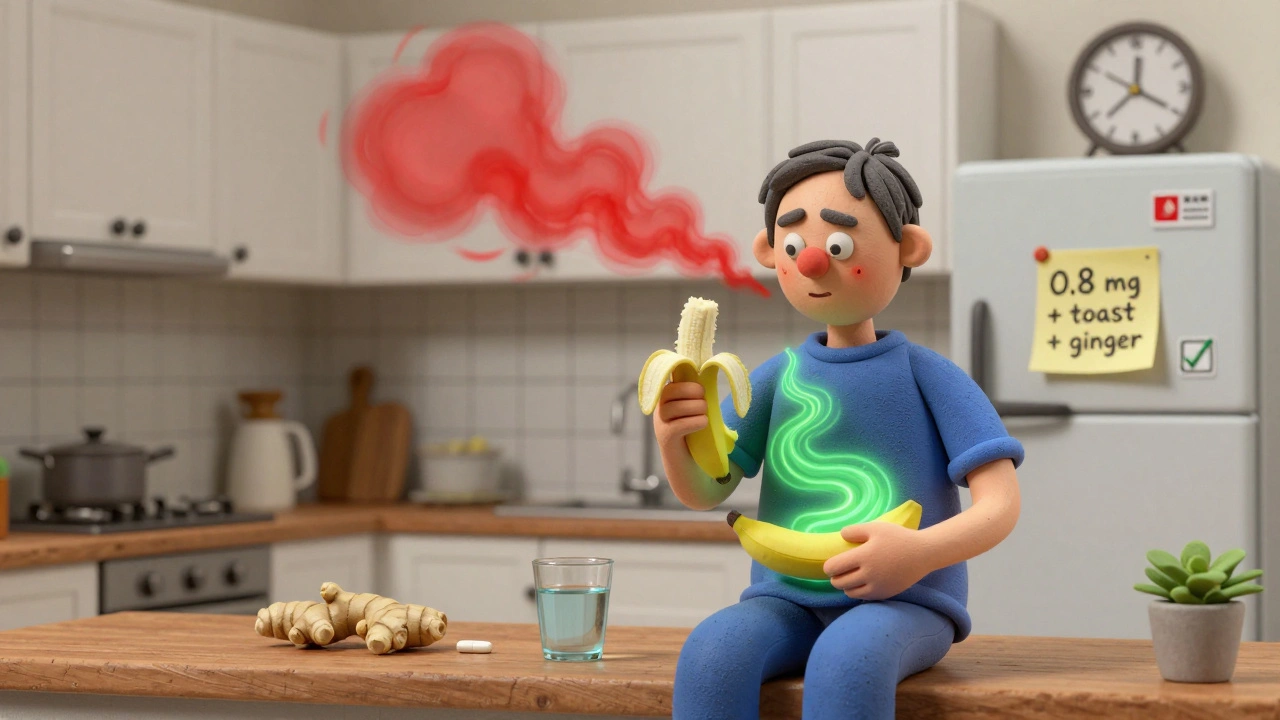
About 30% of people starting bromocriptine feel nauseous. Some say it’s like morning sickness. Others describe it as a wave of queasiness that hits 20 minutes after swallowing the pill. It’s not dangerous, but it’s enough to make people quit. The good news? Nausea drops sharply with the right approach. Clinical trials show that starting at 0.8 mg and increasing by 0.8 mg each week cuts nausea from 32% to just 18%. That’s a huge difference. Here’s what works best based on real patient reports and doctor recommendations:- Start with 0.8 mg daily for a full week before increasing.
- Take it with a small piece of dry toast, one cracker, or half a banana. Not a full meal-just enough to coat your stomach.
- Avoid drinking water or coffee for 30 minutes after taking it. Liquids can speed up absorption and make nausea worse.
- Try 250 mg of ginger supplement 30 minutes before your dose. One study showed this reduced nausea severity by 40%.
- Don’t lie down after taking it. Sit upright for 15 minutes.
Dizziness Is Temporary-Here’s How to Handle It
Dizziness affects about 12% of users. It’s not the same as feeling tired. It’s a sudden light-headedness, like you might faint if you stand up too fast. It usually happens within 15 minutes of taking the pill and lasts 15 to 30 minutes. This isn’t an allergy. It’s your blood pressure adjusting. Bromocriptine lowers sympathetic nervous system activity, which can cause a small drop in blood pressure when you move quickly. To manage it:- Don’t rush after taking your dose. Sit on the edge of the bed for a minute, then stand slowly.
- Avoid driving, operating machinery, or doing anything risky until you know how your body reacts.
- Most people find the dizziness fades after two to four weeks of consistent dosing.
- Keep a journal. Note when you feel dizzy and what you did right before. You might spot a pattern-like taking it on an empty stomach or right after a shower.
Who Really Benefits From Bromocriptine?
This isn’t for everyone. If you’re young, healthy, and just starting diabetes, metformin is still the first choice. Bromocriptine is for people who:- Have type 2 diabetes and already have heart disease, stroke, or blocked arteries.
- Can’t take metformin because of stomach issues or kidney problems.
- Need a medication that doesn’t cause weight gain or low blood sugar.
- Are willing to stick to a strict morning routine.
How It Compares to Other Diabetes Pills
| Medication | HbA1c Reduction | Weight Effect | Hypoglycemia Risk | Cardiovascular Benefit | Timing Requirement |
|---|---|---|---|---|---|
| Bromocriptine (Cycloset) | 0.4-0.8% | Weight-neutral | Very low (0.2%) | Yes (40% reduction) | Must be taken within 2 hours of waking |
| Metformin | 1.0-1.5% | Mild weight loss | Low (1-3%) | Moderate | Any time, with meals |
| SGLT2 Inhibitors | 0.6-0.8% | Mild weight loss | Low | Yes (heart and kidney protection) | Any time, morning preferred |
| DPP-4 Inhibitors | 0.5-0.8% | Weight-neutral | Very low | No | Any time |
| Sulfonylureas | 1.0-1.5% | Weight gain | High (16-20%) | No | Before meals |

Real-World Tips for Success
If you’re starting bromocriptine, here’s what actually works:- Set two alarms: one to wake you, and one 10 minutes later to remind you to take the pill.
- Keep the bottle next to your bed. Don’t wait until you’re in the kitchen.
- Use a pill organizer with a daily checkmark. Tracking consistency helps you stay on track.
- Don’t skip doses. Missing even one day can reset your body’s response.
- Talk to your doctor about the ‘Cycloset Success’ program. It offers free coaching on timing and nausea management.
What’s Next for Bromocriptine?
A major new trial called BROADEN-CV is wrapping up in late 2025. It’s tracking 3,500 people with diabetes and heart disease to confirm if bromocriptine truly cuts heart attacks and strokes. If the results are strong, it could become a first-line option for high-risk patients. Right now, it’s a niche drug. But it’s the only oral diabetes pill that targets your brain’s clock. That’s powerful. If you’ve tried everything else and still need better control without weight gain or low blood sugar, it’s worth a serious try-with the right strategy.Can I take bromocriptine at night if I work nights?
No. Bromocriptine only works when taken within two hours of waking, no matter what time that is. If you work night shifts and wake up at 3 PM, that’s your new ‘morning’ window. But if you take it at midnight after your shift, it won’t work. The body’s circadian rhythm responds to light and wakefulness-not clock time. Some night shift workers have successfully used it by treating their post-sleep time as their ‘morning.’ But if your schedule changes daily, this drug will be very hard to use effectively.
Will bromocriptine make me lose weight?
No. Unlike metformin or SGLT2 inhibitors, bromocriptine is weight-neutral. Clinical trials showed no significant change in body weight over 24 weeks. That’s actually a benefit for people who struggle with weight gain from other diabetes drugs. It lowers blood sugar without affecting appetite or metabolism in a way that leads to weight loss or gain.
Can I take bromocriptine with other diabetes meds?
Yes. Bromocriptine is often used with metformin, SGLT2 inhibitors, or DPP-4 inhibitors. It doesn’t cause low blood sugar on its own, so combining it with other drugs is generally safe. But always check with your doctor. Combining it with insulin or sulfonylureas increases hypoglycemia risk slightly, so your doses may need adjusting.
How long does it take for bromocriptine to start working?
You might notice less morning blood sugar spikes within a week. But the full effect on HbA1c takes 8 to 12 weeks. That’s because it’s resetting your body’s rhythm, not just blocking sugar. Don’t give up if your numbers don’t drop right away. Consistency with timing and dosing matters more than speed.
Is bromocriptine safe for people with kidney problems?
It’s safe for people with mild to moderate kidney impairment (eGFR 30-59 mL/min). No dose adjustment is needed. But it’s not approved for severe kidney disease (eGFR below 30) because the drug can build up and increase side effects. If you’re on dialysis or have advanced kidney disease, your doctor will likely choose another option.
What happens if I miss a dose?
If you miss your morning dose, skip it for the day. Don’t take it later. Taking it outside the 2-hour window won’t help and might worsen side effects. Just resume your regular schedule the next day. Missing one day won’t ruin your progress, but frequent missed doses will reduce its effectiveness.


