
Liquid vs. Tablet Medications for Children: What to Choose
Dec, 27 2025
When your child is sick, the last thing you want is a battle over medicine. You’ve got the prescription in hand, but now you’re staring at two options: a sweet-tasting liquid or a tiny pill. Which one actually works better? And more importantly - which one is safer, easier, and less stressful for everyone involved?
Why the Liquid Assumption Is Outdated
For decades, doctors and parents assumed kids couldn’t swallow pills. So, liquid became the default. But that mindset is changing - fast. Research shows children as young as 6 months can swallow mini-tablets just fine, if they’re taught properly. In fact, a 2012 study of 60 kids found that tiny tablets (as small as 2mm) were accepted just as often as liquids, and in some cases more so. Why? Because many liquids taste like chemical candy - not real fruit. Kids know the difference. One parent on Reddit put it bluntly: "My 4-year-old would rather swallow a mini-tablet than take the 'strawberry' antibiotic that tasted like chemicals." The truth? The automatic choice of liquid isn’t based on science - it’s based on habit. And it’s costing families and healthcare systems more than they realize.When Liquid Still Makes Sense
There are times when liquid is the right call. For babies under 6 months, swallowing pills isn’t safe or practical. And for medications that need precise, tiny adjustments - like levothyroxine for thyroid issues or warfarin for blood thinning - liquid lets you dose down to 0.1mL. That level of control matters. Also, if your child is vomiting or has trouble keeping food down, a liquid can be easier to absorb quickly. Some medications, especially antibiotics, work slightly faster in liquid form - about 15-30% faster according to recent pharmacokinetic studies. But here’s the catch: that speed advantage doesn’t always mean better results. For most common infections, the difference in recovery time is negligible.Why Tablets Are Often the Better Choice
Solid medications - especially modern mini-tablets - have come a long way. Today’s pediatric pills are designed to be:- As small as 2-4mm (about the size of a sesame seed)
- Flavor-coated to taste like real fruit, not artificial syrup
- Designed to dissolve in the mouth without water
- Stable for years at room temperature
The Choking Fear - Is It Real?
Parents worry about choking. And it’s a valid concern. But the data tells a different story. Between 2010 and 2020, the FDA recorded fewer than 0.002% of choking incidents linked to properly sized pediatric tablets. That’s less than one case per 50,000 prescriptions. In comparison, choking on food - like grapes or hot dogs - is far more common. The real issue isn’t the pill. It’s how it’s given. Crushing tablets to mix with food? That’s risky. It can destroy time-release coatings, alter absorption, or make the dose uneven. And if you crush a tablet that’s meant to be swallowed whole, you’re not making it safer - you’re making it less effective.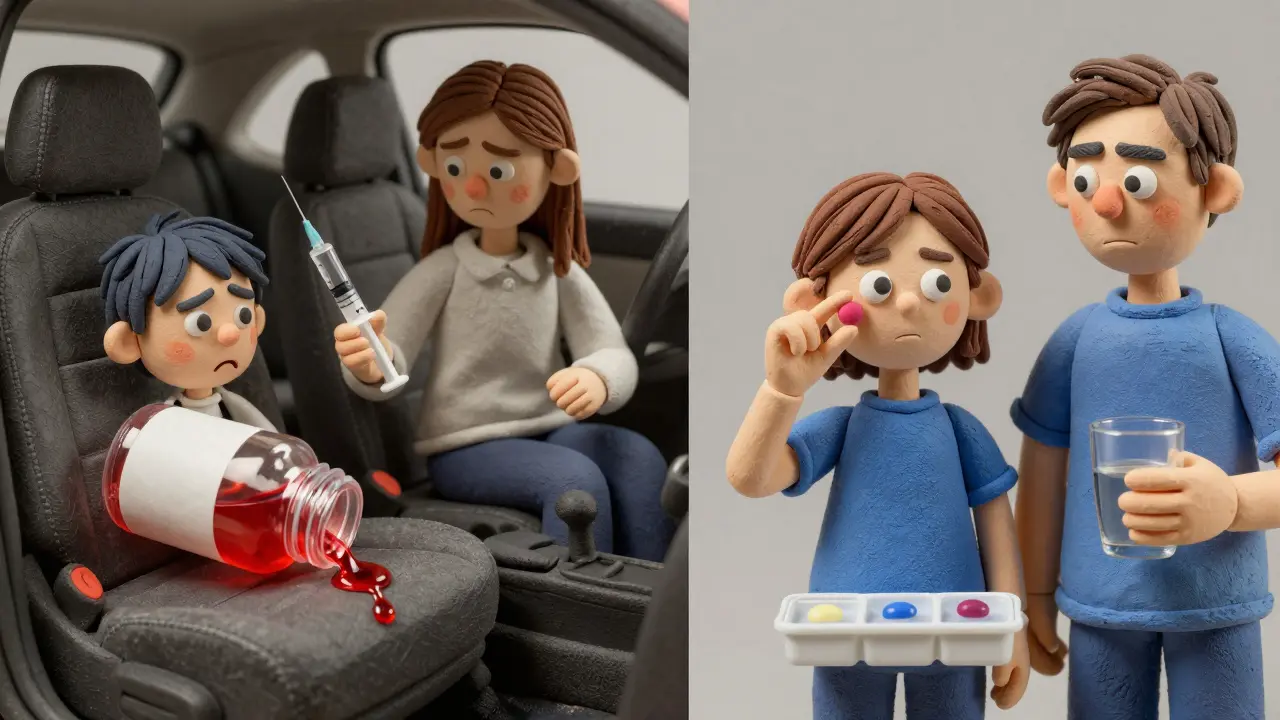
How to Teach Your Child to Swallow Pills
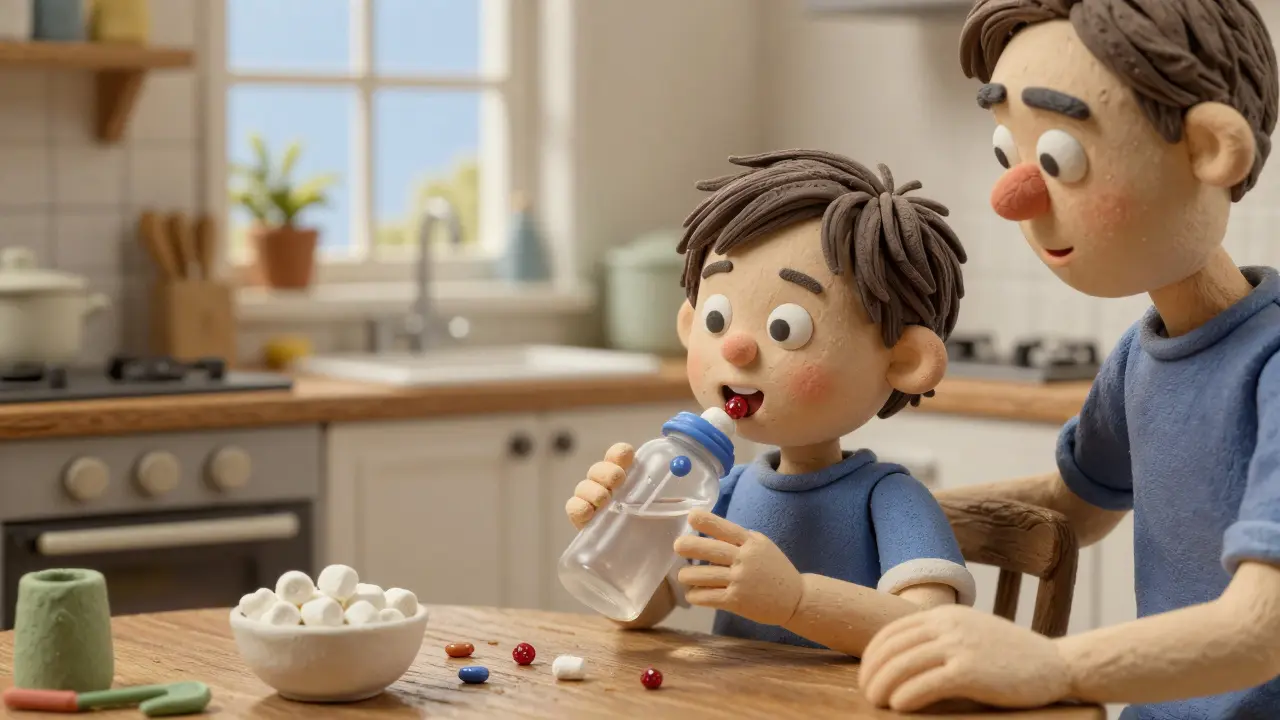
You don’t have to wait until your child is 8. You can start training as early as age 3-4. Here’s how:- Start with practice: Use mini-marshmallows or tiny bread balls. Let them practice swallowing something small and soft.
- Use the "pop-bottle" method: Have your child take a sip of water from a plastic bottle, then place the tablet on their tongue. As they swallow the water, the suction helps the pill go down.
- Make it a game: Turn it into a challenge. "Can you swallow three little peas in a row?"
- Be patient: Some kids need a week. Others need a month. Don’t force it.
Flavor Matters More Than You Think
A lot of liquid meds claim to be "strawberry flavored." But if it doesn’t taste like the strawberry juice your kid drinks at breakfast, they’ll know. And they’ll refuse it. A 2023 report from BCCHR found that "fake" flavors - the kind that smell like medicine but don’t match real fruit - cause 68% of kids to reject the medicine outright. Tablets don’t have this problem. Modern ones use real fruit extracts and coatings that mask bitterness without tasting artificial. Some even come in flavors like cherry, grape, or orange that actually taste like the fruit they’re named after.What the Experts Say
The European Medicines Agency (EMA) has been clear since 2013: children with long-term conditions should be trained to swallow pills from age 3-5. The American Academy of Pediatrics echoed this in 2022, saying kids as young as 2 can learn with proper support. Dr. Jane Standing, a leading pediatric pharmacist at Great Ormond Street Hospital, put it plainly: "The automatic preference for liquid formulations in children is not evidence-based and often counterproductive to long-term adherence." Yet, a 2021 survey of 500 U.S. pediatricians found that 62% still default to liquid for kids under 8 - mostly because parents ask for it. But that’s changing. With new regulations pushing for better pediatric formulations and more hospitals pushing for cost savings, the tide is turning.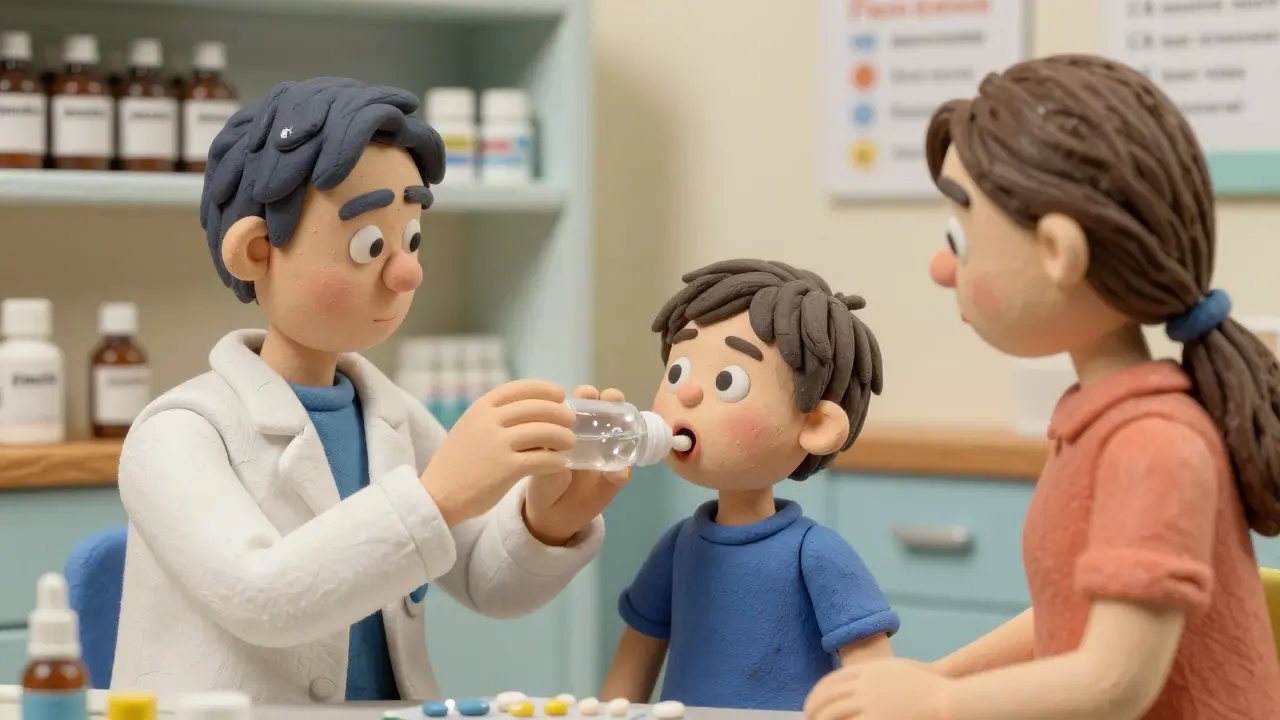
What to Do Right Now
When your doctor prescribes medicine, ask these three questions:- "Is there a tablet form available?"
- "Can we try a mini-tablet instead of liquid?"
- "Can you show me how to help my child swallow it?"
Final Decision Guide
Here’s a simple rule to follow:- Under 6 months: Stick with liquid. No exceptions.
- 6 months to 2 years: Liquid is usually easier - but ask if a dissolvable mini-tablet is available.
- 2-4 years: Start training with soft practice items. Try mini-tablets if the dose allows.
- 4+ years: Tablets are almost always the better choice - unless the medicine requires exact, tiny adjustments.
What’s Next for Kids’ Medicines?
The future is small, stable, and smart. Researchers are already testing 1mm "micro-tablets" that can be sprinkled on food or swallowed whole. The WHO’s 2024 update to its Essential Medicines List for Children now recommends solid forms for kids as young as 2 for common drugs like antibiotics and fever reducers. By 2030, experts predict solid forms will make up 55-60% of pediatric prescriptions - up from just 35% today. The shift isn’t coming. It’s already here.Can I crush my child’s tablet and mix it with food?
Only if the label says it’s safe. Many tablets are coated to release medicine slowly or protect the stomach. Crushing them can make the dose too strong, too fast, or ruin the medicine entirely. Always check with your pharmacist first.
Why do some liquid medicines need refrigeration?
Liquid medicines often contain preservatives and sugars that break down at room temperature. Once opened, many expire in 14-30 days. Tablets, on the other hand, last 2-3 years in a cool, dry place. Refrigeration adds cost, waste, and hassle.
Are tablets more expensive than liquids?
Usually not. In fact, tablets often cost 25-40% less per dose because they’re easier to manufacture and store. The price difference shows up in pharmacy bills - especially when you’re refilling prescriptions often.
My child refuses to swallow pills. What now?
Don’t give up. Try the "pop-bottle" method with mini-marshmallows first. Practice daily for a few minutes. Most kids learn within a week. If they still struggle, ask your doctor about orodispersible tablets - they dissolve on the tongue with no water needed.
Is there a list of medications that come in both liquid and tablet forms?
Many common ones do: amoxicillin, cephalexin, azithromycin, ibuprofen, and acetaminophen. But availability varies by country and pharmacy. Always ask your pharmacist - they can tell you what’s available and if a tablet version is appropriate for your child’s age and dose.
Choosing between liquid and tablet isn’t about what’s traditional. It’s about what works best for your child - and your family. The science is clear: tablets are safer, cheaper, and often easier. You just need to ask for them.


