
Autoimmune Myopathy: Causes, Diagnosis, and Treatment Options
When your immune system attacks your own muscles, you get autoimmune myopathy, a rare condition where the body’s defense system mistakenly targets muscle tissue, leading to progressive weakness. Also known as inflammatory myopathy, it’s not just tired muscles—it’s your immune system turning on you, often without warning. Unlike muscle strain or overuse, this weakness doesn’t improve with rest. It creeps up slowly, making simple tasks like climbing stairs, lifting groceries, or even getting out of a chair feel impossible.
What causes it? The exact trigger is still unclear, but it’s often linked to other autoimmune diseases, conditions where the immune system attacks healthy tissues like lupus or rheumatoid arthritis. In some cases, it shows up after cancer, suggesting the immune system gets confused and starts attacking muscle cells that look similar to tumor cells. Doctors look for specific antibodies—like anti-HMGCR or anti-SRP—that act as red flags. A muscle biopsy, a small tissue sample taken from the thigh or arm muscle is often the only way to confirm it’s not another condition like ALS or muscular dystrophy.
Treatment isn’t one-size-fits-all. Most patients start with immunosuppressants, drugs that calm down the overactive immune response like corticosteroids. But long-term steroid use brings its own problems—weight gain, bone loss, high blood sugar. That’s why doctors often add other drugs like methotrexate or azathioprine to reduce steroid doses. For stubborn cases, IVIG (intravenous immune globulin) or rituximab may be used. Physical therapy isn’t optional—it’s essential to prevent muscles from shrinking further. The goal isn’t a cure, but control: stopping the attack before it leaves you permanently weak.
You won’t find this condition in every doctor’s office. It’s rare, and many are unfamiliar with it. That’s why patients often go months—or years—misdiagnosed as having chronic fatigue or depression. But if you’ve had unexplained muscle weakness for more than a few weeks, especially with elevated creatine kinase levels in blood tests, it’s worth asking. The posts below cover real cases, treatment struggles, what works (and what doesn’t), and how people manage daily life with this invisible illness. You’ll find practical advice on medication side effects, how to talk to your doctor, and what to expect from rehab. This isn’t theory—it’s what people are living through, and what actually helps.
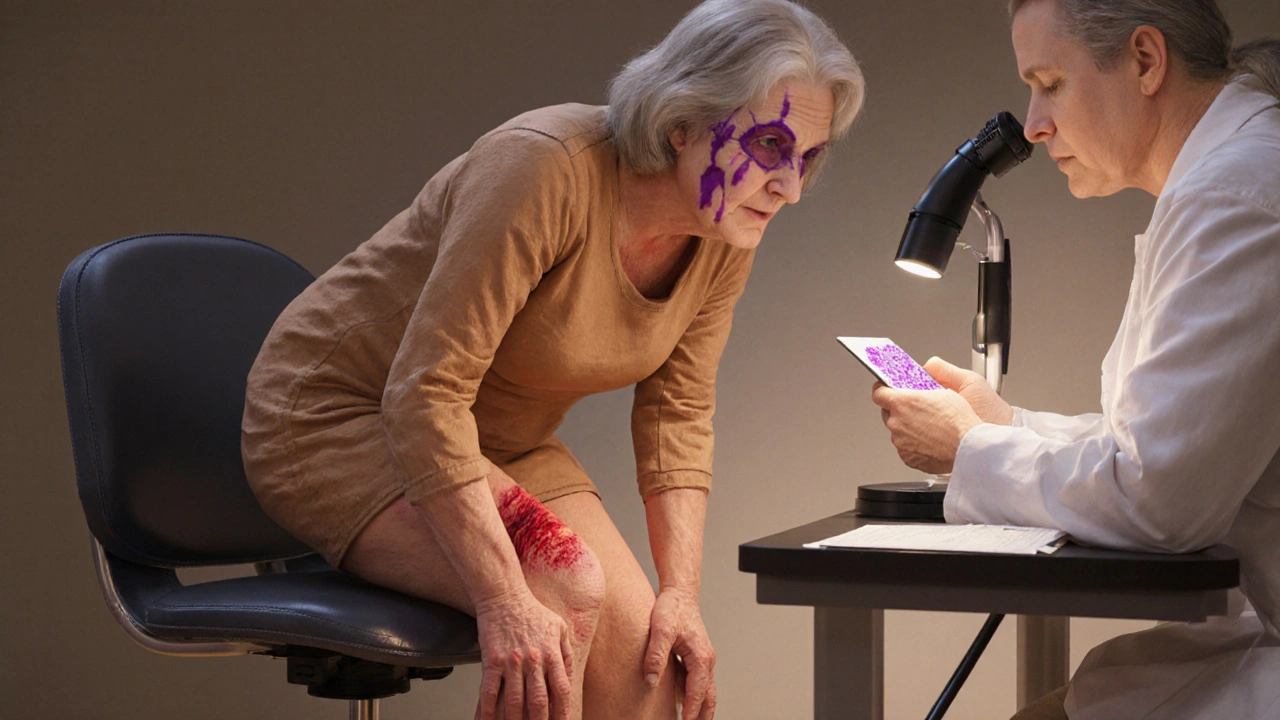
Dermatomyositis and Polymyositis: Understanding Muscle Inflammation and Modern Treatment Options
Harrison Greywell Nov, 20 2025 14Dermatomyositis and polymyositis are rare autoimmune diseases causing muscle weakness and inflammation. Learn how they differ, how they're diagnosed, and what modern treatments-including steroids, IVIG, and physical therapy-can do to restore function and quality of life.
More Detail