
Nutrition During Chemotherapy: How to Manage Nausea and Maintain Weight
Dec, 6 2025
When you’re going through chemotherapy, your body isn’t just fighting cancer-it’s fighting side effects that make eating feel impossible. Nausea hits without warning. Food tastes like metal. Your stomach refuses to hold anything down. And even when you try to eat, the numbers on the scale keep dropping. You’re not lazy. You’re not failing. You’re just caught in a biological storm that most healthy diets don’t prepare you for.
Why Normal Diet Rules Don’t Apply During Chemotherapy
The advice you’ve heard for years-eat whole grains, cut back on fat, avoid sugar-isn’t wrong. But it’s not helpful right now. Chemotherapy changes your metabolism. Your body burns through calories and protein faster than ever. The American Society for Parenteral and Enteral Nutrition (ASPEN) and the European Society for Clinical Nutrition and Metabolism (ESPEN) agree: cancer patients need 1.2 to 2.0 grams of protein per kilogram of body weight daily. That’s nearly double what a healthy adult needs. And calories? You need 25-30 kcal per kg per day, not the usual 20-25. Skipping meals or trying to lose weight during treatment doesn’t help your body heal-it makes treatment harder, delays recovery, and increases the risk of complications.Studies show that 60-85% of chemotherapy patients experience nutritional problems. Malnutrition isn’t just about being thin-it’s about losing muscle. And muscle loss means less strength, more fatigue, and a higher chance of needing to pause treatment. Your goal isn’t to eat "healthy"-it’s to eat enough to keep your body going.
Beating Nausea: What Actually Works
Nausea during chemo isn’t just discomfort. It’s a full-body reaction triggered by chemicals, smells, and even the thought of food. The Academy of Nutrition and Dietetics found that 73% of patients feel worse after eating greasy or fried foods. Strong smells-like coffee, fried onions, or even perfume-can trigger vomiting in 68% of cases.Here’s what works, based on real patient data and clinical guidelines:
- Eat small meals, 5-6 times a day. Three big meals overload your stomach. Instead, aim for 300-400 calories per mini-meal. A slice of toast with peanut butter, a cup of yogurt, or a handful of trail mix works better than a full plate.
- Drink between meals, not with them. Filling your stomach with liquids during meals makes you feel full faster and can worsen nausea. Sip water, herbal tea, or ginger ale an hour before or after eating.
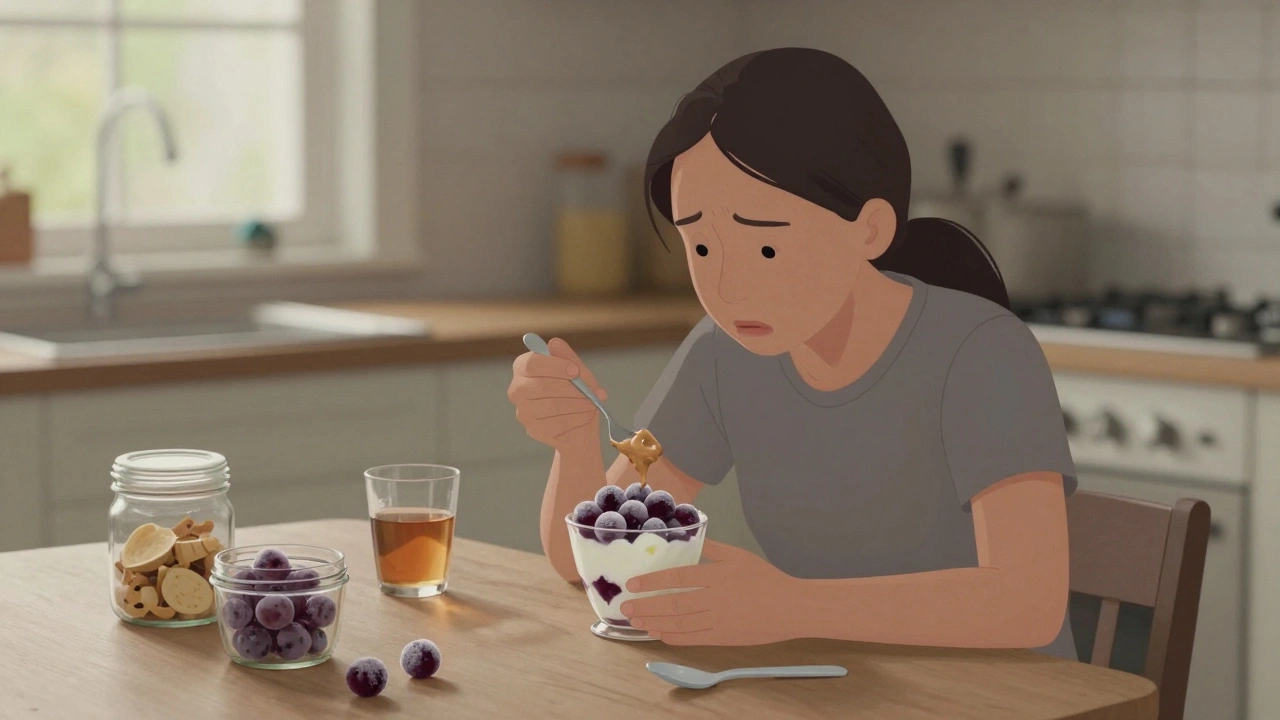
- Go cold. Hot foods release more odor. Cold or room-temperature foods like chilled watermelon, yogurt, or smoothies are easier to tolerate. Frozen grapes? A popular trick-cool, sweet, and gentle on sore mouths.
- Avoid strong smells. Cook in a well-ventilated kitchen. Use a fan. Let someone else heat up food if you can. Pre-made meals from the fridge often smell less than freshly cooked ones.
- Try ginger. Ginger chews, ginger tea, or even ginger capsules have helped over 280 patients on Cancer Survivors Network. It’s not magic, but it’s one of the few natural tools with real evidence behind it.
And if you’re dealing with a metallic taste? Switch to plastic utensils. Metal can make food taste bitter. Rinse your mouth with a mix of baking soda and water before eating. It helps reset your taste buds.
How to Get Enough Protein When You Can’t Eat
Protein isn’t just for bodybuilders. It’s what keeps your muscles from breaking down. Without enough, your body starts eating itself-starting with your heart, lungs, and immune system. That’s dangerous when you’re already fighting cancer.Here’s how to hit your protein targets without forcing down a steak:
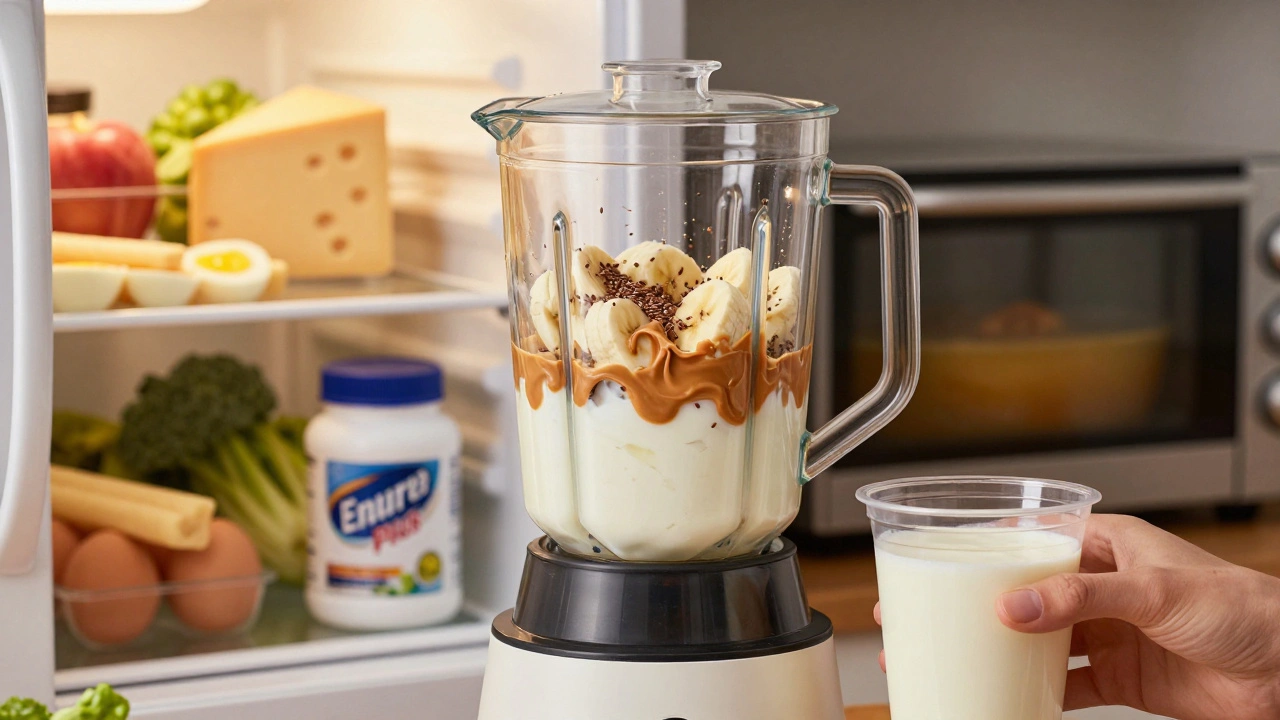
- Protein shakes are your best friend. Homemade ones beat store-bought. Blend full-fat Greek yogurt, a spoon of peanut butter, a banana, a dash of honey, and a splash of milk. That’s 25-30g of protein in one drink. Add a tablespoon of ground flaxseed for extra calories and omega-3s.
- Snack on cheese. String cheese, cottage cheese, or shredded cheddar on crackers are easy, shelf-stable, and packed with protein.
- Eggs are flexible. Scrambled, boiled, or in an omelet with cheese-they’re easy to digest. Just make sure the yolk is cooked to 160°F (71°C). Raw eggs are a no-go during chemo.
- Try nutritional supplements. Products like Ensure Plus or Juven are designed for cancer patients. They’re high-calorie, high-protein, and often easier to tolerate than food. But if they’re too expensive ($35-$45 for a 12-pack), don’t panic. You can make your own version with milk, powdered milk, oats, and nut butter.
Track your protein intake for a few days. Write down everything you eat. You might be surprised how little you’re getting. Even 15g of protein spread across five snacks adds up.
Food Safety Isn’t Optional
Chemotherapy weakens your immune system. What’s harmless to a healthy person can make you very sick. The Blood Cancer United guidelines are clear: avoid anything raw or undercooked.- No sushi, rare steak, or runny eggs.
- No homemade mayonnaise, Caesar dressing, or cookie dough.
- No unpasteurized cheeses or raw sprouts.
- Wash all produce thoroughly-even if it’s pre-washed.
- Reheat leftovers until steaming hot.
And don’t rely on your sense of smell. Spoiled food doesn’t always smell bad. When in doubt, throw it out. Your immune system can’t afford to take chances.
Real People, Real Strategies
Patients aren’t just following guidelines-they’re inventing their own. On Reddit’s r/cancer community, 78% of people said protein shakes were essential. 63% made their own with Greek yogurt, peanut butter, and honey. One patient kept pre-portioned snacks in jars around the house: a spoonful of almond butter, a few cheese cubes, a handful of dried apricots. She didn’t have to think. She just ate.Another used frozen grapes to soothe mouth sores. Another kept a thermos of broth and a small container of mashed potatoes in the fridge, ready to grab when nausea hit. One man said his turning point was realizing he didn’t have to eat like a healthy person-he had to eat like someone surviving a war.
And yes, some days are still impossible. That’s normal. Don’t beat yourself up. If you only ate crackers and ginger tea for two days, that’s still progress. You didn’t give up.
What to Do When Nothing Works
Sometimes, even the best strategies fail. Nausea won’t stop. You lose weight despite eating. You can’t keep anything down. That’s when you need to talk to your care team about alternatives.For 15-20% of patients, oral nutrition isn’t enough. That’s when doctors turn to:
- Enteral nutrition: A tube placed directly into the stomach to deliver liquid nutrition.
- Parenteral nutrition: Nutrients delivered through an IV when the gut can’t absorb anything.
These aren’t last resorts-they’re tools. If your body can’t handle food, your doctors have ways to feed it. Ask for a referral to a registered dietitian who specializes in oncology. Only 35% of community clinics have one, but they make a huge difference. Patients who see them are 31% less likely to have treatment delayed due to malnutrition.
What’s New in 2025
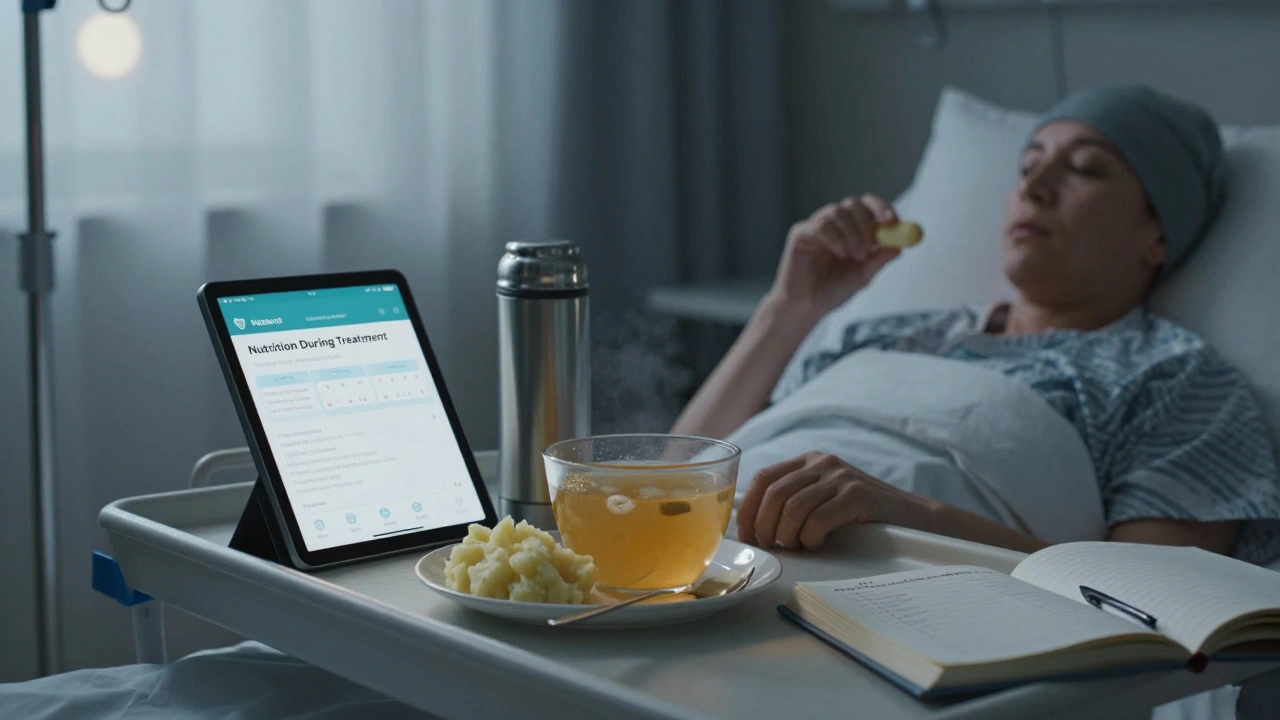
The field is moving fast. The National Cancer Institute launched a free app in 2023 called "Nutrition During Treatment." It tracks calories, protein, nausea triggers, and even suggests recipes based on your symptoms. Over 42,000 people downloaded it in six months.Researchers are now testing personalized nutrition based on genetics. Some people metabolize nutrients differently during chemo. Future plans include AI-powered meal planners that adjust your menu daily based on how you’re feeling.
And the message from experts is clear: nutrition isn’t a side note. It’s part of your treatment. The American Institute for Cancer Research predicts that by 2028, 90% of major cancer centers will have structured nutrition programs built in. Because the data doesn’t lie-proper nutrition improves survival rates by 8-12% for certain cancers.
You’re Not Alone
This isn’t about willpower. It’s about biology. Your body is under siege. Eating well during chemotherapy isn’t about discipline-it’s about strategy. You don’t need to love food right now. You just need to get enough calories and protein to keep your body alive until the next treatment.Start small. One extra snack. One protein shake. One cold apple. One glass of milk before bed. Those tiny wins add up. And if you’re struggling, reach out. The American Cancer Society’s helpline fields over 12,000 nutrition questions every month. You don’t have to figure this out alone.
Your job isn’t to be perfect. It’s to keep going. And you can.


