
Metronidazole and Alcohol: What Really Happens When You Drink While Taking This Antibiotic

Dec, 18 2025
Metronidazole Alcohol Risk Calculator
Your Personal Risk Assessment
Your Risk Assessment
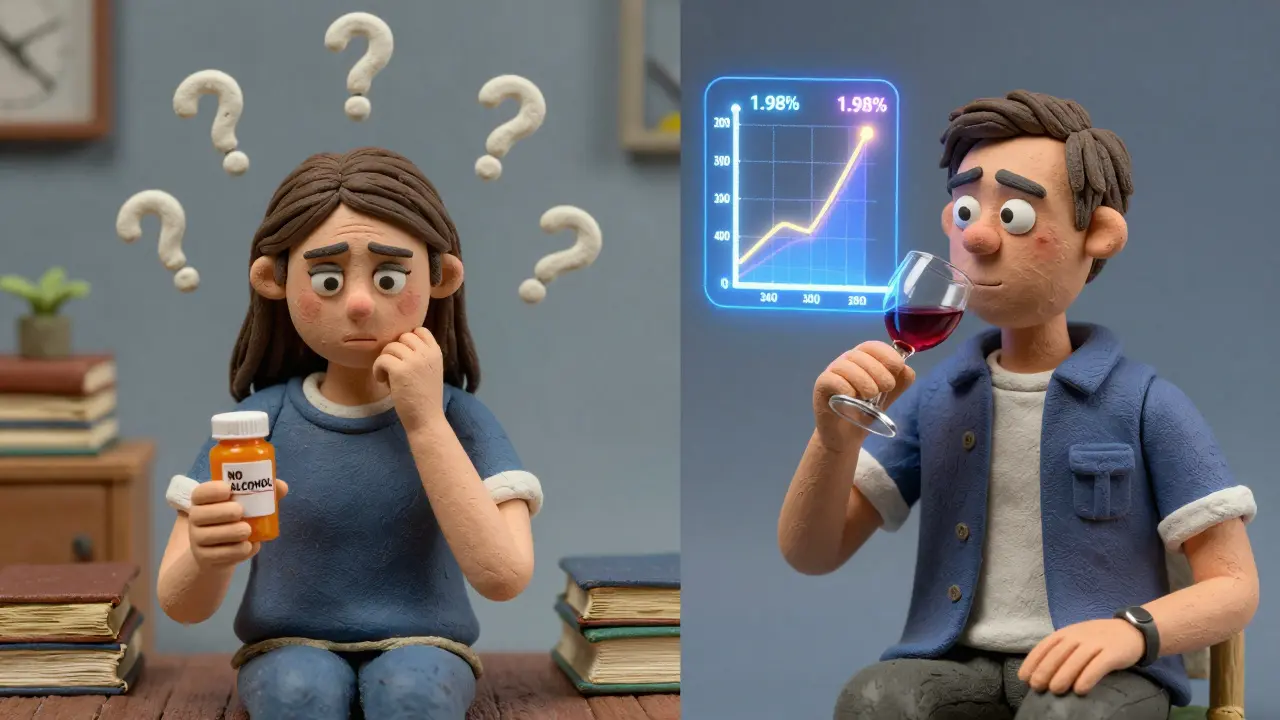
Based on current medical evidence: Most studies show metronidazole does not cause dangerous disulfiram-like reactions. Only about 1.98% of people experience symptoms regardless of metronidazole use (Wisconsin Medical Journal, 2023).
For decades, doctors have told patients: don’t drink alcohol while taking metronidazole. The warning is everywhere - on pill bottles, in patient handouts, even in dental offices. The reason? A scary-sounding "disulfiram-like reaction" that’s supposed to cause flushing, nausea, vomiting, headaches, and a racing heart. But here’s the twist: that warning might not be based on real science anymore.
Where Did This Warning Come From?
The story starts in 1964, when a single doctor reported one patient who felt sick after drinking while on metronidazole. That’s it - one case. But it stuck. By the 1970s, this anecdote became medical dogma. Metronidazole was lumped in with drugs like disulfiram (Antabuse), which is specifically designed to make you feel awful if you drink alcohol. Disulfiram blocks an enzyme called aldehyde dehydrogenase (ALDH), causing toxic acetaldehyde to build up in your blood. That’s what causes the flushing, vomiting, and panic-like symptoms.
For 60 years, doctors assumed metronidazole worked the same way. So they told patients: avoid alcohol completely during treatment - and for 72 hours after. But new evidence is turning that idea upside down.
The Science Has Changed - Big Time
In 2023, a major study published in the Wisconsin Medical Journal looked at over 1,000 patients who went to the emergency room with alcohol in their system. Half were taking metronidazole. The other half weren’t. Both groups had the same amount of alcohol in their blood. The results? 1.98% of both groups had symptoms like flushing or nausea. That’s not a reaction to metronidazole - that’s just how many people feel bad after drinking, period.
Other studies back this up. Controlled experiments with healthy volunteers show metronidazole doesn’t raise acetaldehyde levels in the blood. That’s the key marker for a true disulfiram-like reaction. In fact, 15 out of 17 well-designed studies found no link between metronidazole and acetaldehyde buildup.
So why do people still feel sick? One theory, proposed by researchers at Aristotle University in 2024, suggests it’s not about alcohol metabolism at all. Instead, both metronidazole and alcohol can increase serotonin in the brain. That might explain the nausea, dizziness, and flushing - not because your liver is backed up, but because your nervous system is overstimulated. It’s not a disulfiram reaction. It might be a mild serotonin effect.
Not All Antibiotics Are the Same
This isn’t true for every antibiotic. Some drugs do cause real disulfiram-like reactions. Tinidazole - a close cousin of metronidazole - has stronger evidence of raising acetaldehyde levels. Cefotetan and cefoperazone, two other antibiotics, have been shown in controlled studies to cause serious reactions with alcohol. Their effects are real, measurable, and dangerous.
Metronidazole? Not so much. If you’re prescribed one of those other drugs, you absolutely should avoid alcohol. But for metronidazole, the evidence just isn’t there.
Why Are Doctors Still Warning People?
If the science says it’s safe, why are so many doctors still telling patients to avoid alcohol?
One reason: fear. Doctors don’t want to be the one who says "it’s fine" and then a patient ends up in the ER. Even if the risk is tiny or nonexistent, the legal and reputational risk feels too big. The FDA label still says to avoid alcohol. The Institute for Safe Medication Practices still lists it as a "possible" interaction. Hospitals and pharmacies still print the same warnings.
Another reason: tradition. Medical students are taught this warning early and often. It’s in textbooks, on exams, in lectures. Changing long-standing habits takes time - even when the evidence changes.
And then there’s the patient factor. If you tell someone "it’s okay to drink," they might drink too much. If you tell them "don’t drink," they’re more likely to listen. It’s easier to give a simple rule than to explain complex pharmacology.
What Should You Actually Do?
Here’s the practical truth:
- If you’re taking metronidazole for a serious infection - like C. diff, bacterial vaginosis, or a dental abscess - don’t stop your antibiotic just because you want a beer. The infection is the real danger.
- There’s no strong evidence that drinking a small amount of alcohol will hurt you. One glass of wine? Probably fine.
- But if you’re a heavy drinker, have liver problems, or are prone to nausea, it’s still smart to skip it. You don’t need to add stress to your body while it’s fighting infection.
- If you’re unsure, talk to your doctor. Ask: "Is there any real risk here, or is this just an old warning?"
For most people, the benefit of finishing your course of metronidazole far outweighs the unproven risk of a reaction. Skipping your antibiotic because you’re afraid of alcohol could mean the infection comes back - worse than before.
What About Cough Syrup or Mouthwash?
Here’s a twist: sometimes the alcohol isn’t from a beer or glass of wine. It’s in your cold medicine. Or your mouthwash. Or even some liquid vitamins.
A 2019 case report described a 7-year-old child who had vomiting and flushing after taking metronidazole with cough syrup that contained 7% alcohol. That’s not a huge amount - but in a small child, it’s enough to cause symptoms.
So if you’re on metronidazole, check the labels of other medicines. Avoid anything with alcohol listed as an ingredient - especially if you’re giving it to a child or elderly person.
The Bottom Line
Metronidazole and alcohol don’t cause a dangerous disulfiram-like reaction like we’ve been told. The science says so. The biggest studies say so. The biochemical evidence says so.
That doesn’t mean drinking while on metronidazole is perfectly safe. Alcohol can still upset your stomach, make you dizzy, or interfere with healing. And if you’re feeling unwell from an infection, adding alcohol isn’t going to help.
But you don’t need to live in fear of a glass of wine or a single beer. The warning was based on an old mistake. The truth is simpler: take your medicine as directed. Listen to your body. If you feel bad after drinking, stop. But don’t let outdated fear stop you from getting better.
What’s Next?
Researchers are now running new trials to measure acetaldehyde levels in real patients who drink alcohol while on metronidazole. The results, expected by the end of 2024, could finally settle this debate for good.
Until then, the medical world is slowly catching up. Kaiser Permanente updated its guidelines in 2023 to say the alcohol warning isn’t evidence-based. Infectious disease specialists are starting to change their advice. But it’s going to take years for this to reach every pharmacy, every clinic, every patient.
For now, the best thing you can do is ask questions. Don’t accept warnings just because they’re printed on a bottle. Demand the evidence. And remember - your health isn’t about following rules blindly. It’s about understanding what’s real and what’s just noise.


