
Oral Corticosteroid Burden in Severe Asthma: Proven Alternatives That Work
Jan, 25 2026
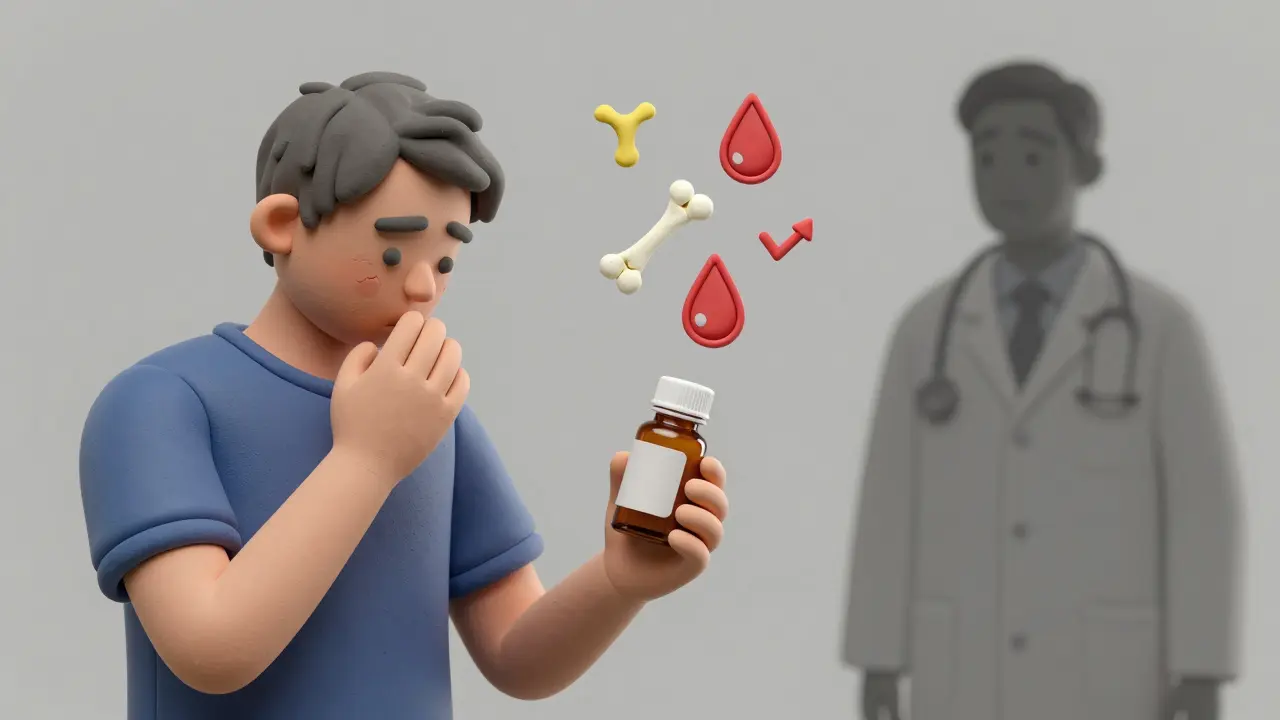
Oral corticosteroids have been the go-to rescue for severe asthma for decades. They work fast. They stop flare-ups. But for many patients, they come at a cost no one talks about enough: weight gain that won’t quit, bones that weaken, blood sugar that spikes, and a constant fear of what happens when you try to stop. If you’re one of the 93% of severe asthma patients who’ve suffered side effects from long-term steroid use, you’re not alone-and you don’t have to keep living this way.
Why Oral Steroids Are a Necessary Evil
For years, doctors reached for oral corticosteroids (OCS) like prednisone because they worked. When an asthma attack hit, a 5- to 7-day course could keep someone out of the ER. For those with uncontrolled asthma, daily low-dose steroids became a crutch-sometimes for months, even years. But here’s the truth: even short courses under 30 days can trigger problems. Weight gain. Mood swings. High blood pressure. Higher risk of infections. And over time? Osteoporosis. Diabetes. Adrenal fatigue. The body doesn’t forget these hits.
Studies show patients on long-term OCS have a higher risk of dying than those who aren’t. In Italy, the annual cost of managing just the side effects of OCS in asthma patients was nearly €2,000 per person-double what non-asthma patients paid. The steroids themselves cost pennies. The damage they cause? That’s where the real bill comes in.
What Counts as OCS Dependence?
Dependence isn’t just taking steroids when you’re sick. It’s when you’re on them for six months or longer just to stay stable. That’s the clinical definition. And it’s more common than you think. In one study of 106 Italian adults with severe, uncontrolled asthma, nearly 80% were taking daily OCS just to breathe. That’s not management. That’s survival mode.
And here’s the catch: if you’re relying on OCS regularly, it usually means your asthma isn’t being controlled properly. It’s not that the steroids aren’t working-they are. But they’re masking a deeper problem. Your airways are still inflamed. Your immune system is still overreacting. You’re just suppressing the symptoms instead of fixing the cause.
The Game-Changer: Biologics
There are now six FDA-approved biologic drugs for severe asthma: omalizumab, mepolizumab, reslizumab, benralizumab, dupilumab, and tezepelumab. These aren’t pills. They’re injections-given weekly, monthly, or every few months-that target specific parts of the immune system driving inflammation in your lungs.
They only work for people with type 2 inflammation, which makes up about half to two-thirds of severe asthma cases. That’s why doctors test for eosinophils (a type of white blood cell) or IgE levels before starting treatment. If those markers are high, biologics can be life-changing.
Take mepolizumab: in one study, patients who switched from daily OCS to mepolizumab dropped their steroid use by nearly 5 mg per day on average. The number of people still dependent on steroids fell from 79% to just 31%. Exacerbations dropped from over four per year to less than one. Hospital visits? Cut by more than eightfold.
Dupilumab showed similar results. In clinical trials, patients cut their OCS use in half and had fewer flare-ups, fewer ER trips, and better lung function. It’s not magic. But it’s the closest thing we’ve had in decades.

Why Aren’t More People Using Biologics?
Cost. Access. Confusion.
Biologics cost thousands per year. OCS? A few dollars. But that’s like comparing the price of a tire to the cost of a car wreck. When you factor in hospital stays, missed work, emergency care, and treatments for steroid-induced diabetes or fractures, biologics often pay for themselves in under two years.
But getting them isn’t easy. Insurance companies demand proof you’ve tried everything else. Some clinics don’t have the specialists to prescribe them. Others don’t have the testing infrastructure to identify who qualifies. And even when you qualify, the wait for approval can stretch for months.
Guidelines from GINA now say: if you’re at Step 5 (the highest level of asthma severity), add a biologic before turning to long-term OCS. But in real life? Many doctors still default to steroids because it’s faster, cheaper, and familiar.
Other Alternatives-And Why They Fall Short
Some people turn to bronchial thermoplasty-a procedure where heat is applied to the airways to reduce muscle thickening. It can help a little. But it’s invasive. You need three separate bronchoscopy sessions. And in the weeks after, asthma symptoms often get worse. It’s only considered for the rare patient who’s failed every other option.
Vitamin D? Sounds logical, right? Low levels are common in asthma patients. But multiple studies-including one published by the American Academy of Family Physicians-found giving high-dose vitamin D3 to adults with asthma didn’t prevent flare-ups, didn’t improve lung function, and didn’t reduce steroid use. It’s not the answer.
Other supplements? No strong evidence. Breathing exercises? Helpful for some, but not a replacement for medical therapy. Pulmonary rehab? Great for quality of life, but doesn’t reduce inflammation.
The Real Barrier: Tapering Safely
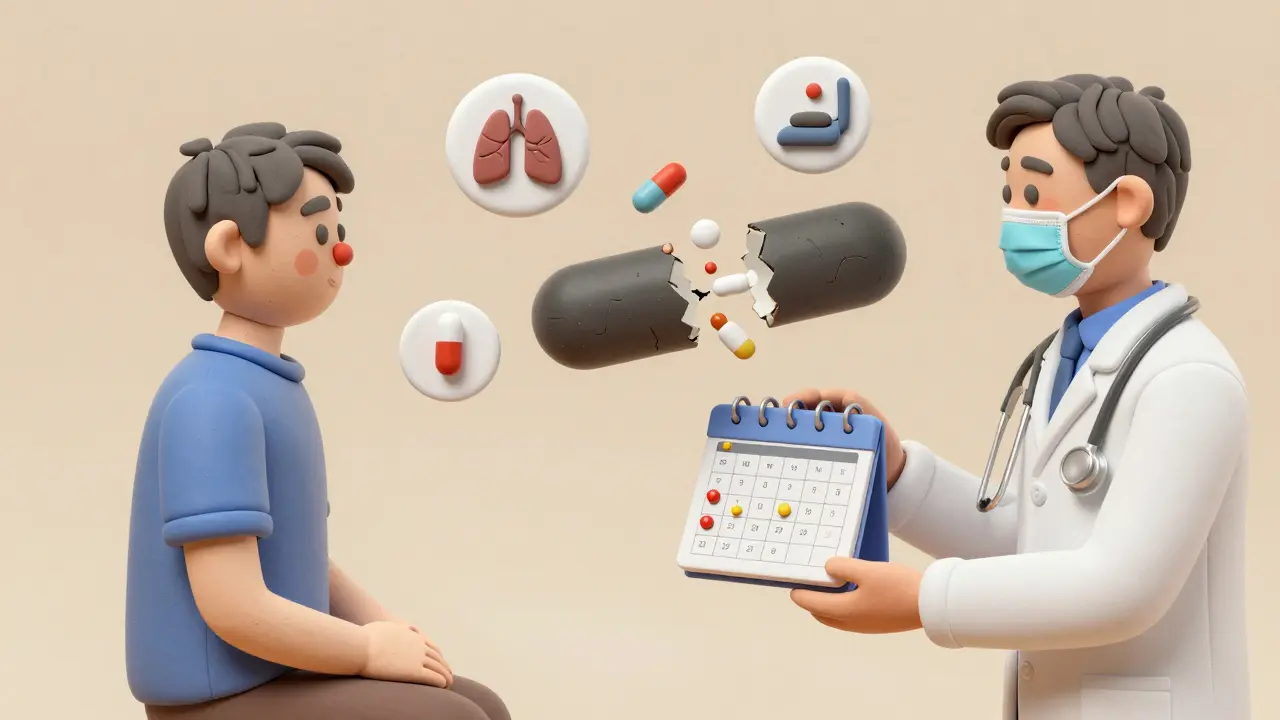
Switching from steroids to biologics sounds simple. But stopping OCS isn’t like turning off a faucet. Your body gets used to them. Your adrenal glands stop making natural cortisol. If you quit cold turkey, you can crash-fatigue, nausea, low blood pressure, even life-threatening adrenal crisis.
There’s no universal tapering plan. Some patients drop by 2.5 mg every two weeks. Others need months. It depends on how long they’ve been on steroids, their dose, and how their body responds. That’s why a slow, monitored plan with your doctor is non-negotiable.
Experts agree: we need better guidelines. Right now, it’s guesswork. And that’s scary for patients who’ve been on steroids for years. They’re terrified of what happens if they stop. But with the right support, many can get off them completely.
What You Can Do Now
If you’re on daily oral steroids for asthma:
- Ask your doctor if you have type 2 inflammation. Request an eosinophil count or IgE test.
- If you qualify, ask about biologics-even if you’ve been told you’re not a candidate.
- Don’t stop steroids on your own. Work with your provider on a slow, safe taper plan.
- Track your symptoms, peak flow, and steroid doses. Bring this to every appointment.
- Ask if your clinic has a dedicated asthma specialist or steroid reduction program.
And if you’re on short-term OCS for a flare-up? Make sure it’s truly short. Five days for adults. No more. And follow up with your doctor to fix the root cause-not just treat the symptom.
The Future Is Changing
Three major inhaler makers recently capped out-of-pocket costs at $35 a month for their products. That’s huge. But it doesn’t cover biologics. And it doesn’t help people on public insurance.
Still, the tide is turning. More doctors are learning about biologics. More insurers are covering them after proving cost savings. More patients are speaking up about how steroids ruined their lives-and how biologics gave them back their health.
This isn’t about abandoning a tool that works. It’s about stopping the overuse of a tool that’s harming more than helping. For severe asthma, the future isn’t more steroids. It’s smarter, targeted, and safer treatments that let you breathe without paying the price.


