
Grapefruit Juice and Medications: What You Need to Know Before You Drink
Jan, 15 2026
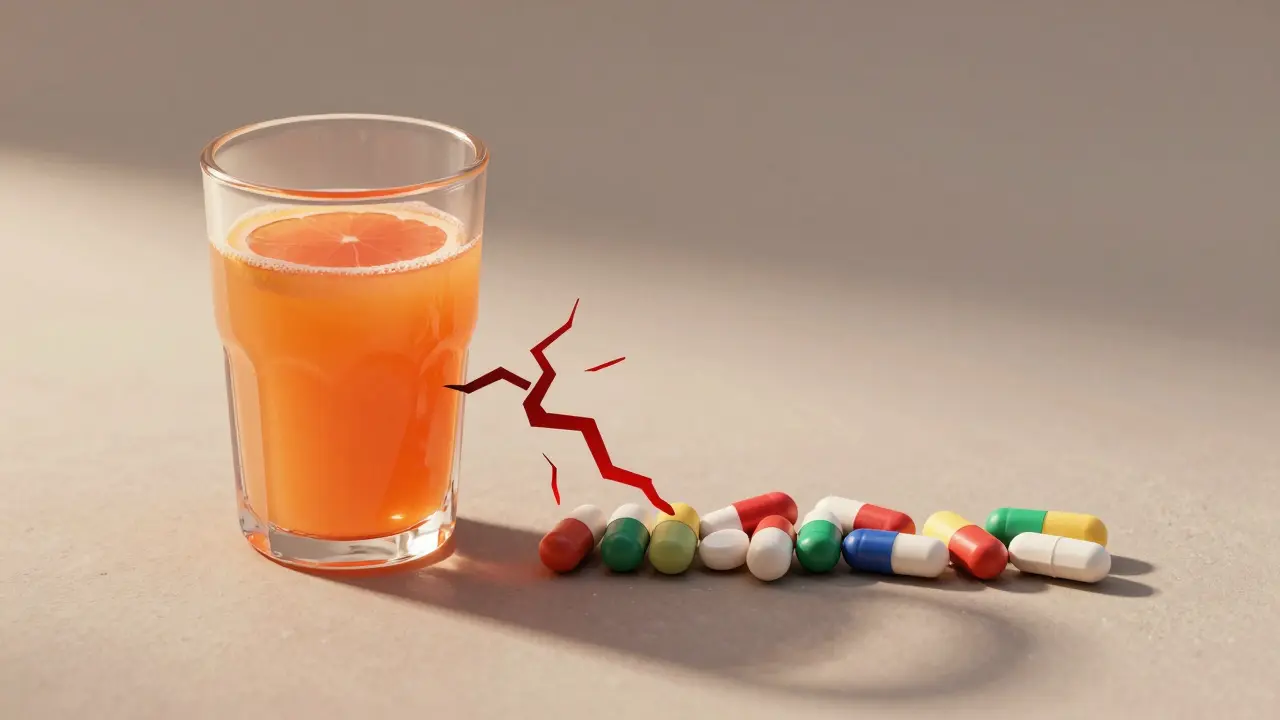
Drinking a glass of grapefruit juice with your morning pills might seem like a healthy habit-until it turns dangerous. This isn’t just a myth or a vague warning. For people taking certain medications, grapefruit juice can cause drug levels in the blood to spike dangerously high, leading to kidney failure, irregular heartbeats, muscle breakdown, or even death. The science behind this isn’t new, but many people still don’t know how serious it is.
Why Grapefruit Juice Changes How Your Medication Works
Grapefruit juice doesn’t just mix with drugs-it changes how your body processes them. The culprit? Furanocoumarins, natural chemicals in grapefruit, especially in the pulp and peel. These compounds shut down an enzyme in your gut called CYP3A4. This enzyme normally breaks down about half of all oral medications before they enter your bloodstream. When it’s blocked, your body absorbs way more of the drug than it should. The effect isn’t temporary. One 200-milliliter glass of fresh grapefruit juice can block CYP3A4 for up to 72 hours. That means even if you take your pill hours after drinking the juice-or drink the juice hours after your pill-you’re still at risk. Unlike other food interactions, this isn’t about timing your meal. It’s about whether you’ve had grapefruit at all during your treatment. This isn’t a guess. The U.S. Food and Drug Administration (FDA) has confirmed this mechanism since 2014. Researchers first noticed it in 1989 when a Canadian team found grapefruit juice made the blood pressure drug felodipine act like a much higher dose. Since then, over 85 medications have been linked to this interaction, and 43 of them can cause life-threatening side effects.Medications That Can Become Dangerous with Grapefruit
Not all drugs are affected the same way. Some are barely touched by grapefruit. Others? A single glass can turn a safe dose into a toxic one. Statins are the most common and dangerous category. Simvastatin (Zocor) is especially risky. Drinking grapefruit juice while taking it can triple your drug levels. That raises your risk of rhabdomyolysis-a condition where muscle tissue breaks down and floods your kidneys with toxins. One study found the risk jumped from 0.04 to 0.44 cases per 100 person-years. Atorvastatin (Lipitor) has a milder effect, but it’s still present. Pravastatin and rosuvastatin? They’re safe. If you’re on simvastatin and love grapefruit, talk to your doctor about switching. Calcium channel blockers like felodipine (Plendil) and nifedipine (Procardia) can see their blood levels increase by 5-fold and 3.3-fold, respectively. That can cause sudden drops in blood pressure, dizziness, or fainting. Amlodipine (Norvasc) is an exception-it barely reacts to grapefruit. Immunosuppressants like cyclosporine (Neoral), used after organ transplants, are another red flag. Grapefruit can push levels up by 50-60%. That increases the chance of kidney damage, high blood pressure, and infections. Tacrolimus is a safer alternative in many cases. Antiarrhythmics like amiodarone (Cordarone) can lead to dangerous heart rhythms when grapefruit juice is involved. Studies show plasma concentrations rise 30-40%. On the flip side, some medications show little to no interaction. Trazodone (for depression) and zolpidem (Ambien, for sleep) are generally safe. But don’t assume-always check with your pharmacist.Not All Citrus Is the Same
You might think all citrus fruits are equally risky. They’re not. Seville oranges (used in marmalade) and pomelos contain the same furanocoumarins as grapefruit. So if you’re on a risky medication, skip those too. Sweet oranges (like navel or Valencia), lemons, limes, and tangerines? They’re fine. They don’t contain the harmful chemicals. So if you’re craving citrus, stick to these. A glass of orange juice with your pill? No problem. The European Medicines Agency confirmed this in 2022. Don’t rely on taste or color-check the type. If you’re unsure, ask your pharmacist or look up the fruit’s scientific name.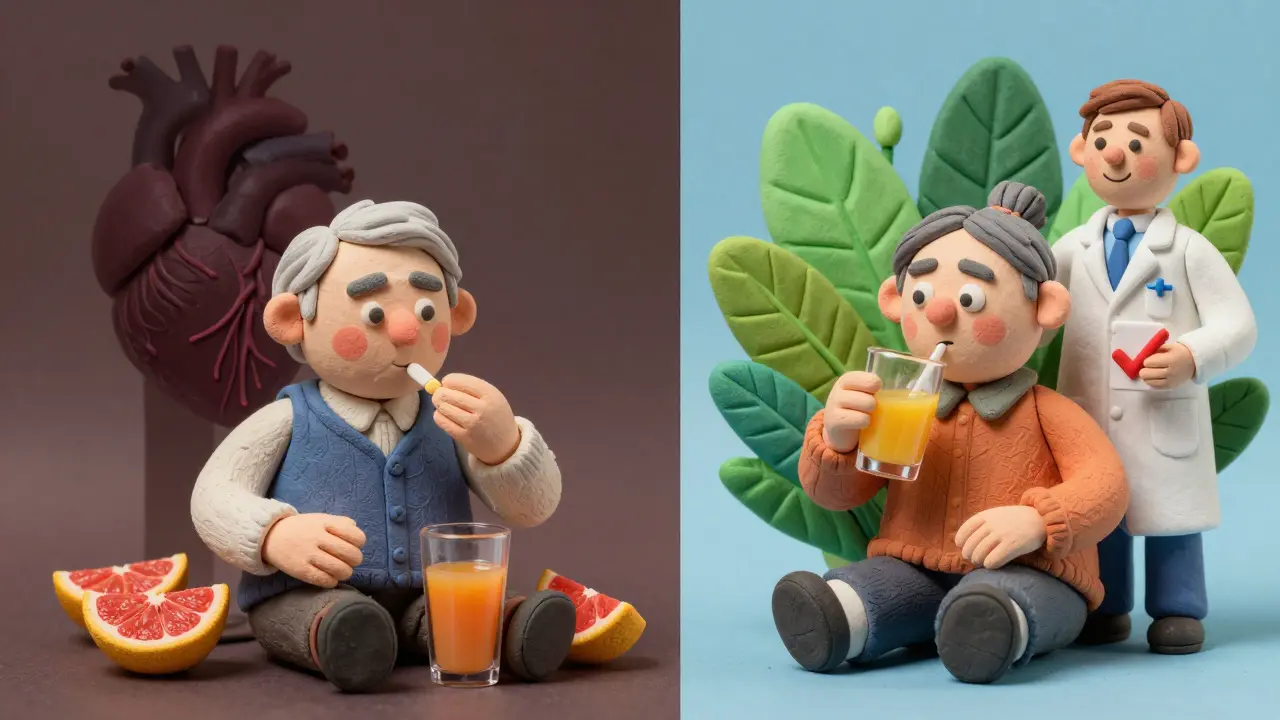
Who’s Most at Risk?
It’s not just about the drug. Your age, health, and genetics matter too. Older adults are especially vulnerable. People over 65 make up 40% of grapefruit consumers in the U.S., according to USDA data. They’re also more likely to be taking 3-5 medications at once-many of which interact with grapefruit. The American Geriatrics Society warns this group to be extra careful. Your body’s natural CYP3A4 levels also play a role. Some people have more of the enzyme than others. That means the same amount of grapefruit juice can have wildly different effects on different people. One study showed felodipine levels varied from zero to eight times higher after grapefruit, depending on the person. You can’t test for this. So if you’re on a high-risk drug, the only safe answer is to avoid grapefruit completely.What Should You Do?
Here’s a simple, practical plan:- Check every medication you take-prescription, over-the-counter, and even supplements. Look for the word “grapefruit” in the patient information leaflet.
- Ask your pharmacist: “Does this interact with grapefruit?” They screen for this during dispensing 89% of the time, according to a 2021 study.
- If your drug is on the high-risk list, stop drinking grapefruit juice, eating grapefruit, or using grapefruit-flavored products (including some candies and teas).
- Switch to safe citrus: oranges, lemons, or limes.
- Ask your doctor if there’s a safer alternative medication. For example, switching from simvastatin to pravastatin removes the risk entirely.
Why This Keeps Happening
Despite decades of research, patient awareness is still shockingly low. A 2022 survey found only 38% of people recalled being warned about grapefruit interactions when they got their prescription. That’s not just a gap in education-it’s a public health blind spot. Pharmacists are doing their part. So are drug manufacturers. Since 2014, the FDA has required grapefruit warnings on labels for affected drugs. But the message isn’t getting through. One reason? People think “natural” means “safe.” Grapefruit is full of vitamin C and antioxidants. It’s easy to assume it’s harmless. But natural doesn’t mean safe when it comes to drug interactions. As Dr. David Bailey, who discovered this interaction, put it: “For susceptible drugs, a single glass of grapefruit juice can be the difference between therapeutic benefit and a fatal arrhythmia.”The Future: Can We Fix This?
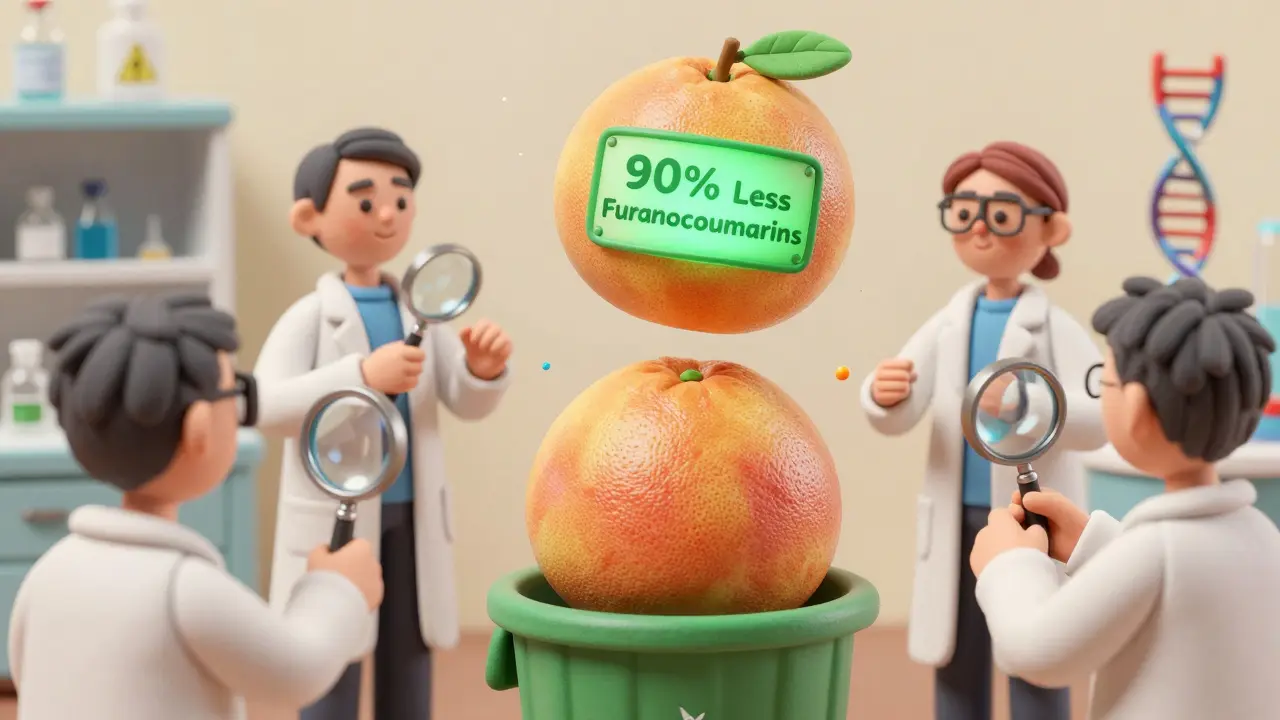
Scientists are working on a solution. In October 2023, the USDA announced CRISPR-edited grapefruit with 90% less furanocoumarin had passed early safety tests. If approved, this could one day let people enjoy grapefruit without risk. But that’s years away. Until then, the advice stays the same: if your medication interacts with grapefruit, don’t take it. Not occasionally. Not just when you’re not taking your pill. Not even in small amounts. The interaction is irreversible and long-lasting. There’s no safe window.What to Do If You’ve Already Drank Grapefruit Juice
If you accidentally drank grapefruit juice while on a high-risk medication:- Don’t panic-but don’t ignore it either.
- Stop drinking grapefruit juice immediately.
- Watch for symptoms: unexplained muscle pain, weakness, dark urine, dizziness, rapid heartbeat, or confusion.
- Call your doctor or pharmacist. Tell them what you took and when.
- If you have chest pain, trouble breathing, or severe muscle pain, go to the emergency room.
Can I drink grapefruit juice if I take my medication at night and juice in the morning?
No. The enzyme-blocking effect lasts up to 72 hours. Whether you take your pill 2 hours or 24 hours after drinking grapefruit juice, the risk remains. The interaction isn’t about timing-it’s about whether grapefruit was in your system at all during your treatment period.
Are all grapefruit products the same? What about juice from concentrate or flavored water?
Fresh-squeezed grapefruit juice has the strongest effect, but even pasteurized juice, concentrate, and flavored water can contain enough furanocoumarins to cause an interaction. If a product says it contains grapefruit or grapefruit extract, assume it’s risky. Check the ingredient list-sometimes it’s hidden under “natural flavors.”
Is it safe to eat grapefruit instead of drinking the juice?
No. The interaction happens in the gut, and eating the fruit delivers the same furanocoumarins as drinking the juice. The pulp and peel contain the highest concentration. So whether you drink it or eat it, the risk is identical.
Can I take my medication with water and drink grapefruit juice later the same day?
No. The enzyme inhibition lasts for days. Even if you wait 12 or 24 hours, the CYP3A4 enzyme in your gut is still blocked. The FDA and other health agencies say you must avoid grapefruit for the entire time you’re on the medication-not just around your dose time.
What if I only drink grapefruit juice once a week?
For high-risk medications, even occasional consumption can be dangerous. The enzyme doesn’t recover instantly. A single glass can cause a spike in drug levels that lasts 3 days. If you’re on a statin, blood pressure drug, or immunosuppressant, there’s no safe frequency. Complete avoidance is the only recommended approach.


