
Generic Drug Prices Over Time: Year-by-Year Changes and What It Means for You
Dec, 11 2025
Every year, millions of Americans rely on generic drugs to manage chronic conditions like high blood pressure, diabetes, and thyroid disorders. These pills are supposed to be cheaper-often 80% to 90% less than brand names. But if you’ve picked up a prescription lately, you might have noticed something strange: some generics cost more than they did last year. Others dropped in price. And a few? They spiked overnight.
Generic drug prices don’t move in a straight line. They jump, dip, and sometimes vanish from shelves entirely. What looks like a steady decline on paper hides wild swings in real life. For patients, that means unpredictable bills. For pharmacies, it means scrambling to stay profitable. And behind it all? A market that works well-until it doesn’t.
How Generic Prices Drop (When Competition Is Strong)
When a brand-name drug loses its patent, the race is on. Companies rush to make the same pill, often within months. The first generic usually costs about 90% of the brand price. The second? It drops to 65%. By the time a third company joins, prices fall to around 52%. Once four or more makers are selling the same drug, prices can crash to just 15% of the original brand cost.
This isn’t theory. It’s data from the FDA. Take lisinopril, a common blood pressure pill. When five manufacturers were selling it in 2020, the average cash price was under $5 for a 30-day supply. By 2023, with 12 companies making it, the price stayed below $4-even as inflation hit everything else.
The same pattern shows up with metformin, the go-to diabetes drug. With over 20 makers, it’s one of the cheapest prescriptions in the country. You can get a 90-day supply for $10 at Walmart. That’s the power of competition.
But here’s the catch: not every drug has that many makers. And when competition fades, prices don’t just stop falling-they start rising.
The Price Spikes No One Sees Coming
In 2013, a generic version of nitrofurantoin, a simple antibiotic for urinary infections, cost $12 a month. By 2018, it cost $160. That’s a 1,272% increase. No new ingredients. No new packaging. Just fewer companies making it.
That’s not an outlier. Between 2013 and 2014, 8.2% of generic prescriptions saw price jumps between 100% and 500%. A 2024 analysis found that 40 generic drugs rose by an average of 39% in just one year. Most of these were drugs with only one or two manufacturers.
Why does this happen? When a company stops making a drug-because it’s not profitable, or because of a factory shutdown-there’s no backup. The remaining maker raises prices. And because there’s no competition, there’s no pressure to lower them.
Take levothyroxine, used for hypothyroidism. Over five years, its price dropped 87% because so many companies made it. But in 2022, one major manufacturer pulled out. Prices jumped 18% in six months. Patients who had been paying $10 suddenly paid $15. Then $20. Some paid $40.
These aren’t rare events. A 2023 analysis found that 15% of generic drugs are at high risk for sudden price spikes. Most are in categories like cardiovascular, psychiatric, and thyroid meds-drugs people take every day, for life.
Who Controls the Market?
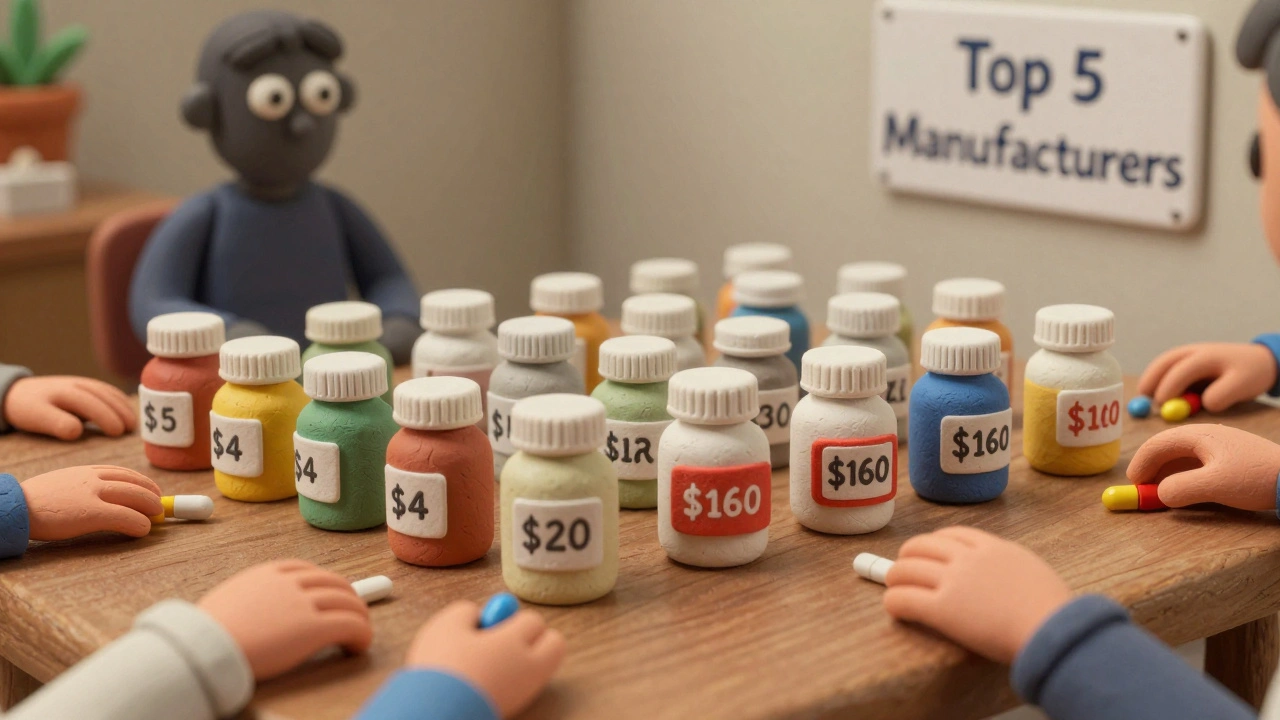
There used to be 150 companies making generic drugs in the U.S. By 2018, that number dropped to 80. Today, the top five manufacturers control over half the market. That’s a big shift.
When you have only a few players, pricing stops being about competition. It becomes about control. A 2023 FTC report found that 65% of price increases over 100% happened in markets with three or fewer manufacturers. That’s why regulators are now investigating 12 of these cases.
One big reason for the consolidation? Manufacturing is expensive. The FDA requires strict quality standards. A single inspection failure can shut down a plant for months. In 2023, 23% of foreign generic factories had quality issues. When one of those plants makes a drug that 5 million people rely on, the supply chain breaks-and prices go up.
And it’s not just factories. The Medicaid Best Price rule forces manufacturers to offer the same low price to every buyer, including government programs. That makes it harder for them to compete on price with private pharmacies. So some just leave the market.
What’s Happening Right Now?
In January 2024, a new Medicaid rule took effect: the cap on rebates was removed. That meant manufacturers had to pay back more money to the government if they raised prices. In response, over 20 brand-name drugs dropped their prices. But generics? Not so much.
Why? Because generics don’t have the same profit margins. When a brand drug cuts its price, it can still make money. When a generic cuts its price, it might lose money. So they don’t cut. They wait.
Meanwhile, the FDA is trying to speed up approvals for generics with few competitors. They’re aiming to cut review times by 20% for these high-risk drugs. But it takes time. A drug approved today won’t hit shelves for six to nine months.
And pharmacies? They’re caught in the middle. Independent pharmacies report that 42% of them saw margins shrink on 15% of their generic inventory. One week, a drug is profitable. The next, it’s a loss leader. Some have to absorb $3.75 per prescription in losses just to keep stocking it.
What This Means for Patients
If you take a generic drug every day, here’s what you need to know:
- Some of your meds are safe-lots of makers, low prices.
- Others? They’re ticking time bombs.
Check your prescriptions. If you’re paying more than $20 a month for a drug that’s been generic for five years, it might be one of the risky ones. Ask your pharmacist: “How many companies make this?” If the answer is one or two, you’re in a vulnerable market.
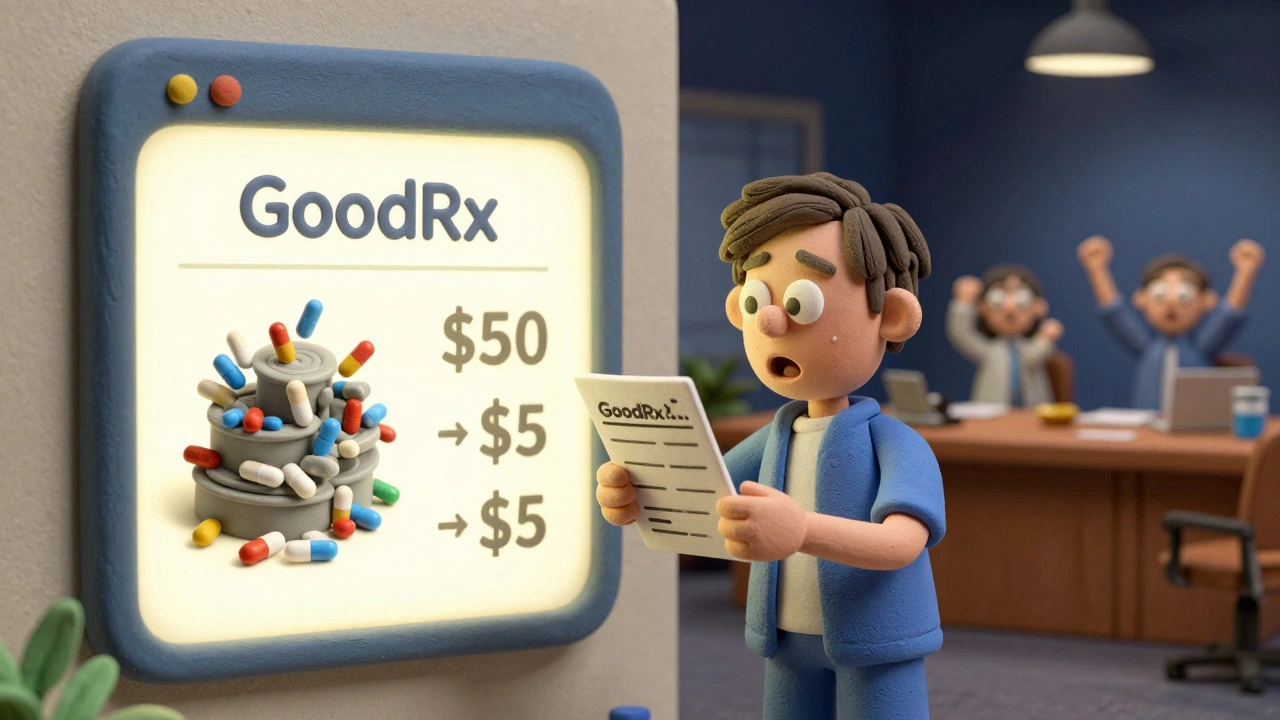
Use GoodRx. It’s not magic, but it works. In 2023, users saved an average of $112 per prescription. For some drugs, it’s the difference between $50 and $5. Even if your insurance covers it, the cash price might be lower.
And if your price jumps suddenly? Call your doctor. Ask if there’s a similar drug with more competition. Sometimes, switching from one generic to another-same active ingredient, different maker-can drop your bill by half.
Why This Matters Beyond Your Wallet
It’s not just about money. A 2024 KFF survey found that 37% of Medicare beneficiaries skipped doses because of cost. That’s 1 in 3 seniors choosing between their medicine and groceries.
When a drug spikes in price, people stop taking it. Blood pressure rises. Blood sugar goes unchecked. Hospital visits go up. The system pays more in the long run.
Generic drugs saved the U.S. healthcare system $2.2 trillion between 2008 and 2017. That’s real money. But those savings are fragile. If just 10% of the most volatile generics keep rising, they could eat up half of all generic savings by 2030.
The system works when there’s competition. When there isn’t, it breaks. And patients pay the price.


