
FDA Facility Inspections: How the Agency Ensures Quality in Manufacturing
Nov, 27 2025
The U.S. Food and Drug Administration doesn’t wait for problems to happen before acting. Instead, it shows up-unannounced or with notice-to check if the places making your medicine, medical devices, and even your food are doing things right. These visits aren’t random. They’re calculated, detailed, and often make or break a company’s ability to stay open. If you’ve ever wondered how the FDA keeps products safe, the answer starts with FDA facility inspections.
Why inspections matter more than you think
Think of an FDA inspection like a medical checkup for a manufacturing plant. It’s not about catching someone doing something wrong on purpose. It’s about finding small gaps that could lead to big problems: a contaminated batch of insulin, a faulty pacemaker, or pills with the wrong dosage. The FDA inspects around 12,000 domestic and 1,000 foreign facilities every year. That’s not a lot when you consider how many factories are out there. So how do they pick who to visit? They use a risk-based system. A facility making life-saving cancer drugs gets inspected more often than one making over-the-counter vitamins. The agency looks at three things: the product’s risk level (how serious the condition it treats is), the facility’s history (have they had recalls or violations?), and how new or complex their manufacturing process is. If a company just started making a new type of biologic drug using cutting-edge tech? That’s a red flag. They’ll be on the list for an inspection within six to twelve months.The four types of inspections you need to know
Not all inspections are the same. The FDA uses four distinct types, each with its own purpose.- Pre-approval inspections happen before a new drug or device gets approved. The FDA wants to see that the facility can consistently make the product the way it was tested in clinical trials. If the inspection fails, approval gets delayed-sometimes for years.
- Routine surveillance inspections are the most common. These happen every 2 to 5 years, depending on risk. A low-risk facility might go 5 years without a visit. A high-risk one? Maybe every year.
- Compliance follow-up inspections are the FDA’s way of checking if you fixed what they pointed out last time. If you ignored a Form 483 observation, expect a repeat visit-and worse consequences.
- For-cause inspections are triggered by something specific: a whistleblower tip, a spike in patient complaints, or a sudden increase in adverse events. These can happen with zero notice. No warning. No time to clean up. Just a knock on the door.
What happens during an inspection?
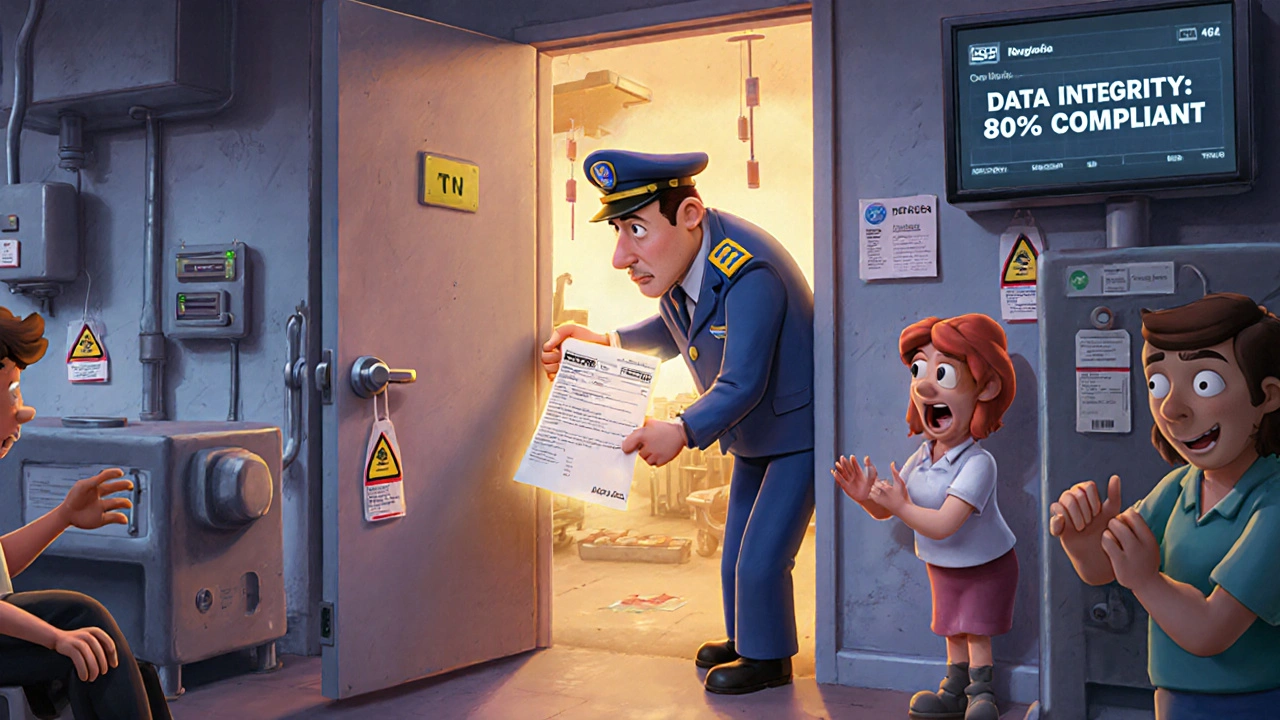
When the FDA investigator arrives, they’ll hand you FDA Form 482-the official Notice of Inspection. You’re legally required to let them in. They’ll ask for a designated representative to accompany them at all times. No one is allowed to be left alone with the inspector. The inspection lasts anywhere from three to ten days. It’s not just a tour. It’s a deep dive. Inspectors will:- Walk through every part of the facility-clean rooms, packaging lines, storage areas.
- Ask to see records: deviation logs, training files, equipment calibration records, validation reports, batch production records.
- Interview staff, from lab technicians to quality managers. They’ll ask the same question to three different people to see if answers match.
- Collect samples. Yes, they can take your product and send it to a lab for testing.
The biggest mistakes facilities make
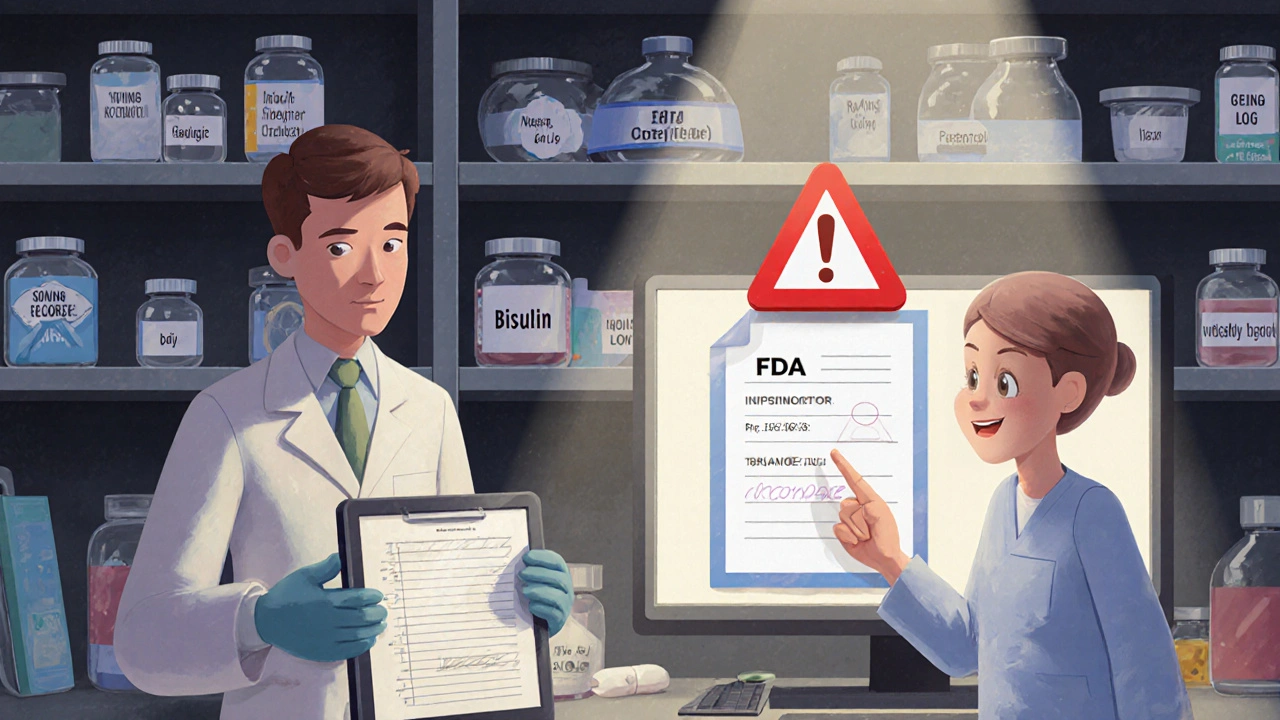
Based on thousands of inspection reports, the same errors keep popping up. And they’re avoidable.- Inadequate deviation investigations (32% of observations): A batch fails a test? You can’t just say “it was a fluke.” You have to find out why. Was it the machine? The operator? The raw material? If you don’t investigate, the FDA assumes you don’t care.
- Incomplete training records (24%): Staff can’t just say they were trained. You need signed logs, dates, topics covered, and proof they understood it. No signature? No training.
- Poor change control (7%): You changed a supplier? Updated a machine? Modified a process? If you didn’t document and approve it formally, the FDA will see it as uncontrolled risk.
- Data integrity issues (45% of all observations in 2024): This is the fastest-growing problem. Spiking data? Deleted files? Backdated entries? The FDA now uses software to detect anomalies in electronic records. If your system doesn’t meet 21 CFR Part 11 standards, you’re already behind.
How to get ready-and stay ready
You can’t cram for an FDA inspection. But you can build a system that makes you ready every day.- Designate one person as your inspection coordinator. Facilities that do this report 83% smoother inspections.
- Run quarterly mock inspections. Bring in an outside expert to play FDA. Find your own gaps before they do.
- Keep your facility layout diagram updated. If you moved a machine last month, update the diagram within 7 days. Inspectors notice mismatches instantly.
- Create a dedicated inspection room. Have printers, computers, phones, and organized digital folders ready. Facilities with this setup answer document requests 40% faster.
- Train your staff. Everyone who might talk to an inspector needs 8 hours of training a year. Leaders need 16. Only 63% of sites meet this. Don’t be one of them.

What’s changing in 2025 and beyond
The FDA isn’t standing still. They’re getting smarter-and faster. By late 2024, they’ll start testing AI tools to scan inspection documents automatically. Instead of reading 500 pages of batch records by hand, an algorithm will flag inconsistencies. That means even small errors will be caught faster. They’re also expanding remote inspections. In 2022 and 2023, they piloted virtual tours and digital document reviews with 147 facilities. For documentation checks, it worked just as well as being there in person. By 2026, 35% of inspections will include remote components. And the focus on data integrity? It’s only getting stronger. The number of observations related to electronic records jumped 22% in just one year. If your company still uses paper logs for critical processes, you’re already at risk.What happens after the inspection
Getting a Form 483 isn’t the end. It’s the start of a new chapter. Your response matters more than the observations themselves. A good response doesn’t just say “we’ll fix it.” It says: “Here’s what went wrong. Here’s why it happened. Here’s how we’re preventing it from ever happening again. Here’s proof we trained staff. Here’s the updated procedure. Here’s the validation report.” If you respond well, the FDA may close the case. If you respond poorly-or not at all-you’ll get a warning letter. And if you get three warning letters in five years? The FDA can ban your product from the U.S. market. The 2023 Enforcement Report showed 1,842 warning letters issued. Medical device makers got 42% of them. Drug manufacturers got 38%. The message is clear: if you’re making complex products, the bar is high-and rising.Final takeaway: Quality isn’t an event. It’s a habit.
FDA inspections aren’t about fear. They’re about accountability. The goal isn’t to shut you down-it’s to make sure the product someone is taking to stay alive is safe. The companies that thrive aren’t the ones who panic before an inspection. They’re the ones who build quality into every step, every day. If you’re waiting for the FDA to show up before you fix something, you’re already too late.How often does the FDA inspect manufacturing facilities?
The frequency depends on risk. High-risk facilities-like those making life-saving drugs or implantable devices-are inspected every 6 to 12 months. Medium-risk sites, such as those producing generic medicines or Class II medical devices, typically get inspected every 2 to 3 years. Low-risk facilities, like some dietary supplement manufacturers, may go 3 to 5 years between inspections. The FDA uses a risk-based model that considers product type, facility history, and manufacturing complexity.
What is an FDA Form 483?
An FDA Form 483 is a written list of observations made by an inspector during a facility visit. It highlights conditions that may violate federal regulations, such as incomplete records, unvalidated equipment, or poor sanitation. It’s not a citation or fine-it’s a notice that corrective action is needed. Facilities must respond in writing within 15 working days with a plan to fix each observation.
Can the FDA inspect without warning?
Yes. Routine inspections usually give 5 business days’ notice, but ‘for-cause’ inspections can happen with no advance warning. These are triggered by complaints, adverse event reports, whistleblower tips, or data anomalies. Facilities cannot refuse entry during a for-cause inspection. Refusal is a federal offense.
What happens if a facility ignores FDA Form 483 observations?
Ignoring Form 483 observations almost always leads to a warning letter from the FDA. Failure to respond adequately or repeatedly violating regulations can result in product seizures, import bans, injunctions, or even criminal prosecution. In 2023, over 1,800 warning letters were issued, and most stemmed from unresolved Form 483 items.
Why is data integrity such a big issue in FDA inspections?
Data integrity is now the top concern in FDA inspections, accounting for 45% of all observations in 2024. This includes falsified records, deleted files, backdated entries, and unsecured electronic systems. The FDA now uses software to detect anomalies in digital records. Facilities using paper logs or unvalidated software systems are at high risk. Compliance with 21 CFR Part 11 for electronic records is mandatory for all regulated products.
Are remote inspections becoming common?
Yes. The FDA began piloting remote inspections in 2022 and expanded them in 2023. In 78% of cases, remote reviews of documents and virtual facility tours were just as effective as in-person visits for documentation checks. By 2026, the FDA plans to use remote tools in 35% of all inspections. This shift allows the agency to increase oversight without expanding its field staff.
What documents does the FDA typically request during an inspection?
Inspectors routinely ask for batch production records, deviation reports, non-conformance logs, equipment calibration records, training records, validation protocols (IQ/OQ/PQ), change control documentation, analytical method validation data, and environmental monitoring results. All records must be maintained for at least two years after product discontinuation, or longer for certain products like implants.
How can a facility reduce the number of inspection observations?
Facilities with formal inspection readiness programs reduce observations by up to 63%. Key strategies include quarterly mock inspections, assigning a single inspection coordinator, maintaining up-to-date facility diagrams, creating a dedicated inspection support room, and ensuring all staff complete annual training. The most effective programs treat compliance as a daily practice, not a checklist to complete before an inspection.


