Why You Should Never Skip Doses: Timing Your Prescription Medication
Jan, 26 2026
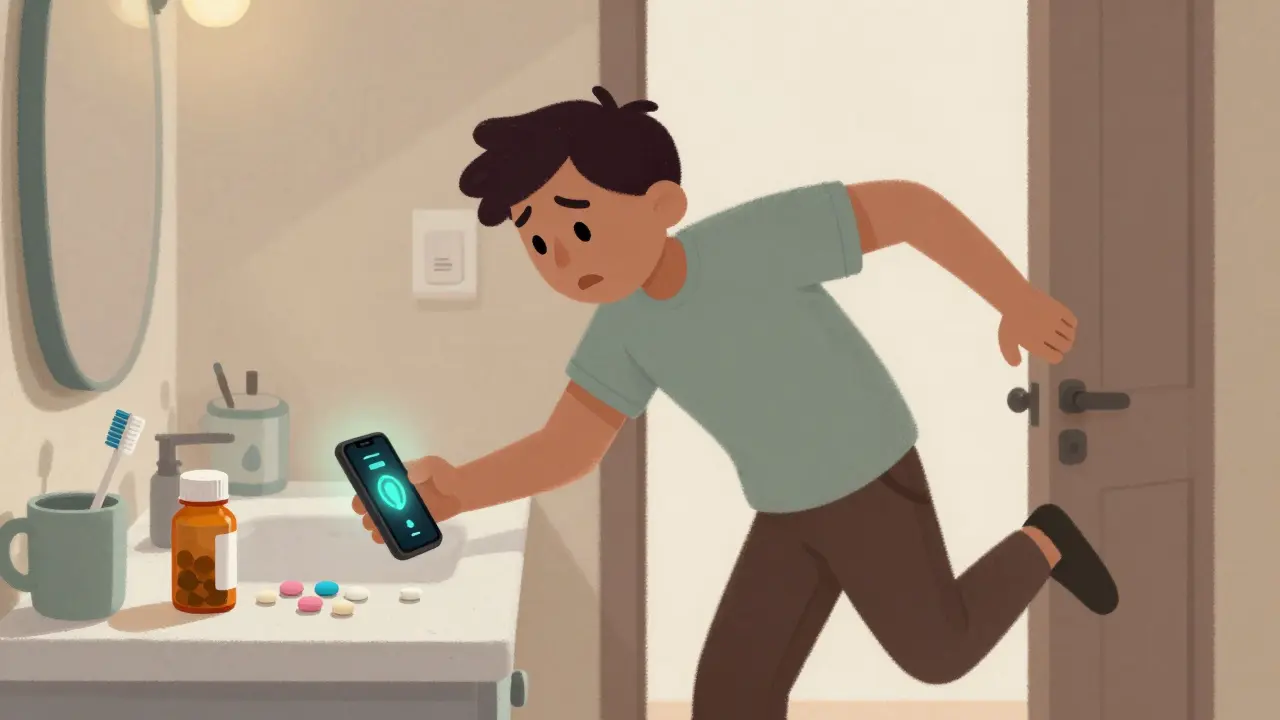
Skipping a pill because you’re running late. Missing a dose because you felt fine. Forgetting to take your medicine after a busy day. These aren’t just small oversights-they’re risks that can turn into serious health problems. When you’re on prescription medication, timing isn’t just a suggestion. It’s part of the treatment. And skipping even one dose can undo weeks of progress.
Why Timing Matters More Than You Think
Your body doesn’t work on a schedule that matches your daily routine. Medications are designed to keep a steady level of the drug in your bloodstream. Too little, and the treatment stops working. Too much, and you risk dangerous side effects. For many drugs, especially those for high blood pressure, diabetes, or infections, that balance is razor-thin. Take antibiotics, for example. You start feeling better after three days. It’s tempting to stop. But the bacteria that made you sick aren’t all gone yet. The ones that survive? They’re the toughest. And now they’ve learned to resist the drug. That’s how antibiotic resistance starts. The Centers for Disease Control and Prevention says completing the full course is the single most important thing you can do to stop this from happening. Same goes for blood pressure meds. High blood pressure doesn’t give you symptoms. You don’t feel it. But it’s silently damaging your heart, kidneys, and arteries. If you skip doses, your pressure spikes and crashes. That rollercoaster is more dangerous than consistently high pressure. The American Heart Association confirms that people who take their blood pressure meds exactly as prescribed cut their risk of stroke and heart attack in half. Then there are drugs like warfarin, used to prevent clots. One day you take it at 8 a.m., the next at 10 p.m. Your INR levels-measured through blood tests-go wild. Too high, and you bleed. Too low, and you clot. Both can kill you. This isn’t guesswork. It’s science. And the science demands consistency.What Happens When You Skip a Dose
The consequences aren’t always obvious right away. But they build up. - For diabetes medications: Skipping a dose can cause blood sugar to spike or crash. A low blood sugar episode can lead to confusion, seizures, or even coma. High blood sugar over time damages nerves and organs. - For heart failure meds: Missing doses leads to fluid buildup. You wake up swollen, breathless. You end up in the hospital. - For seizure meds: Even one missed dose can trigger a seizure. For some, that means losing their license, their job, their independence. - For transplant patients: Immunosuppressants must be taken within a 2-hour window every day. Skip one, and your body may start rejecting the new organ. That’s not hypothetical-it’s documented in medical journals. A 2002 study in the Annals of Internal Medicine found that for every extra daily dose in a regimen, adherence drops by about 16%. So if you’re taking five pills a day, your chance of getting it right every time is less than 40%. That’s not luck. That’s a system designed to fail.Why People Skip-And How to Fix It
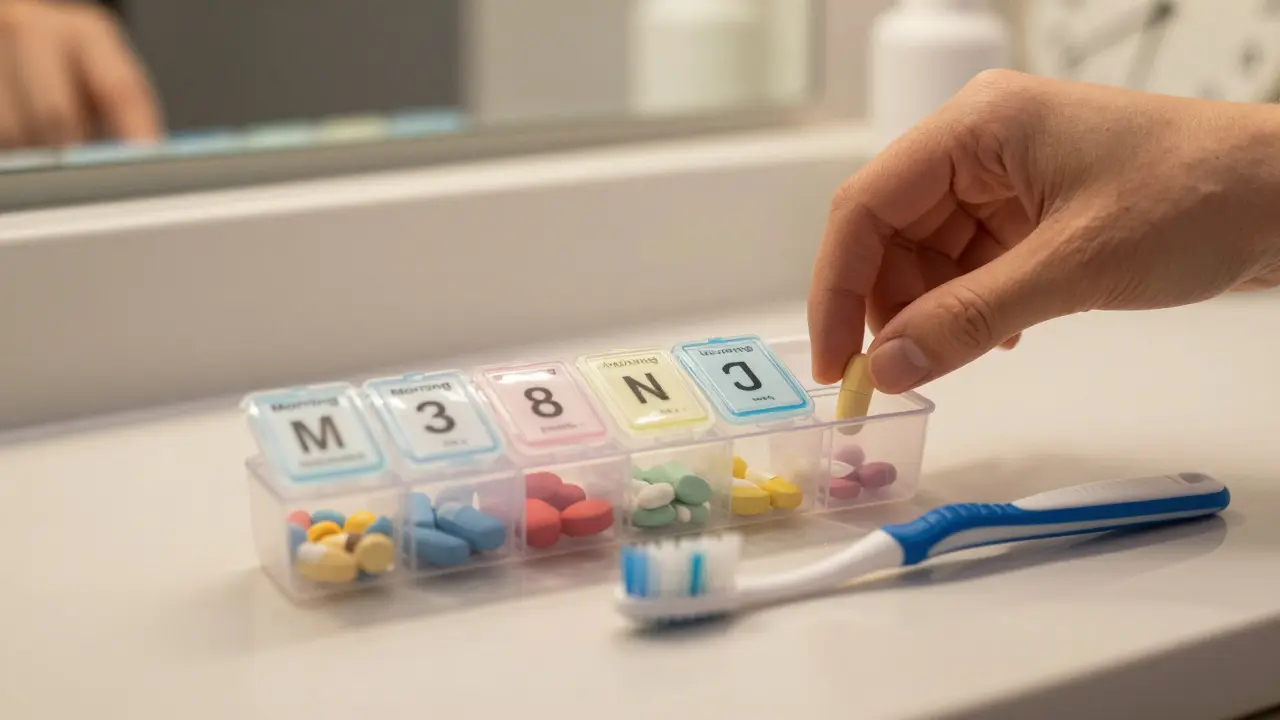
People don’t skip doses because they’re careless. They skip because it’s hard. - Forgetfulness: Life gets busy. Kids, work, appointments. Pills get lost in the shuffle. - Confusion: Too many pills. Similar-looking bottles. Instructions like “take on an empty stomach” or “with food”-what does that even mean? - Feeling fine: If you don’t feel sick, why keep taking the medicine? This is the biggest trap for hypertension and cholesterol meds. - Cost: Some people choose between meds and groceries. No one should have to make that choice. - Fear of side effects: A mild headache or dizziness makes people wonder if the drug is worse than the disease. Here’s what actually works:- Use a pill organizer. Not the fancy kind-the simple weekly one with morning, afternoon, evening, night slots. Put it next to your toothbrush.
- Set phone alarms. Label them: “Blood pressure,” “Insulin,” “Antibiotic.” Don’t just say “Medicine.”
- Pair meds with habits. Take your pill after you brush your teeth. After your morning coffee. Before you turn off the light.
- Ask your pharmacist for a medication review. They can simplify your regimen. Maybe combine two pills into one. Or switch to a once-daily version.
- Use the “teach-back” method. When your doctor gives you instructions, say: “So, to make sure I got this right-I take this pill at 8 a.m. with water, not with food, every day, even if I feel fine.” If you can say it clearly, you’re more likely to remember it.
The Role of Pharmacists and Doctors
Your pharmacist isn’t just the person who hands you the bottle. They’re your medication coach. In Australia, Medicare-funded Medication Therapy Management services are available for people on multiple prescriptions. Pharmacists sit down with you. They check for interactions. They spot timing conflicts. They simplify. They answer questions you’re too embarrassed to ask. Doctors need to do their part too. Too often, they hand you a script and say, “Take one daily.” That’s not enough. They need to ask: “What time do you usually wake up?” “Do you eat breakfast?” “Do you have trouble remembering?” The American Society of Consultant Pharmacists says the biggest barrier for older adults isn’t memory-it’s complexity. One study found that 70% of seniors take five or more medications daily. That’s not a prescription. That’s a full-time job.What to Do If You Miss a Dose
Don’t panic. But don’t guess either. - Check the label. Most meds have instructions: “If you miss a dose, take it as soon as you remember. If it’s almost time for the next dose, skip the missed one.” - Don’t double up. Taking two pills at once can overdose you. Especially with blood thinners, painkillers, or heart meds. - Call your pharmacist. They know your meds better than anyone. If you’re unsure, ask. No judgment. No rush. - Write it down. Keep a simple log: Date, time, did you take it? If not, why? After a week, you’ll see patterns. Missed doses after work? Set an alarm for 6 p.m.