
What Is a Drug Formulary? A Simple Guide for Patients on Costs, Tiers, and How to Navigate Coverage
Jan, 3 2026
When you walk into the pharmacy to pick up your medication, you expect to pay your usual copay. But then the pharmacist says, "This isn’t covered the way you thought." That’s not a mistake-it’s your drug formulary at work. A drug formulary is the official list of medications your health plan will pay for, either fully or partially. It’s not just a catalog-it’s a decision-making tool that directly affects how much you pay, what drugs you can get, and sometimes even which treatment your doctor can prescribe.
How a Drug Formulary Works
Think of a drug formulary like a menu at a restaurant. Not every dish is available, and some cost more than others. The same goes for medications. Your insurance company, often working with a Pharmacy Benefit Manager (PBM), decides which drugs to cover based on three things: how well they work, how safe they are, and how much they cost. The goal? To give you access to effective treatments without letting prices spiral out of control. These lists are updated regularly-sometimes monthly-by a team of doctors, pharmacists, and other experts called a Pharmacy and Therapeutics (P&T) committee. They review new drugs, safety alerts, and real-world usage data to make sure the list stays current. If a drug gets pulled off the formulary, it doesn’t mean it’s dangerous. It might just be more expensive than a similar option that works just as well.The Tier System: Why Your Copay Changes
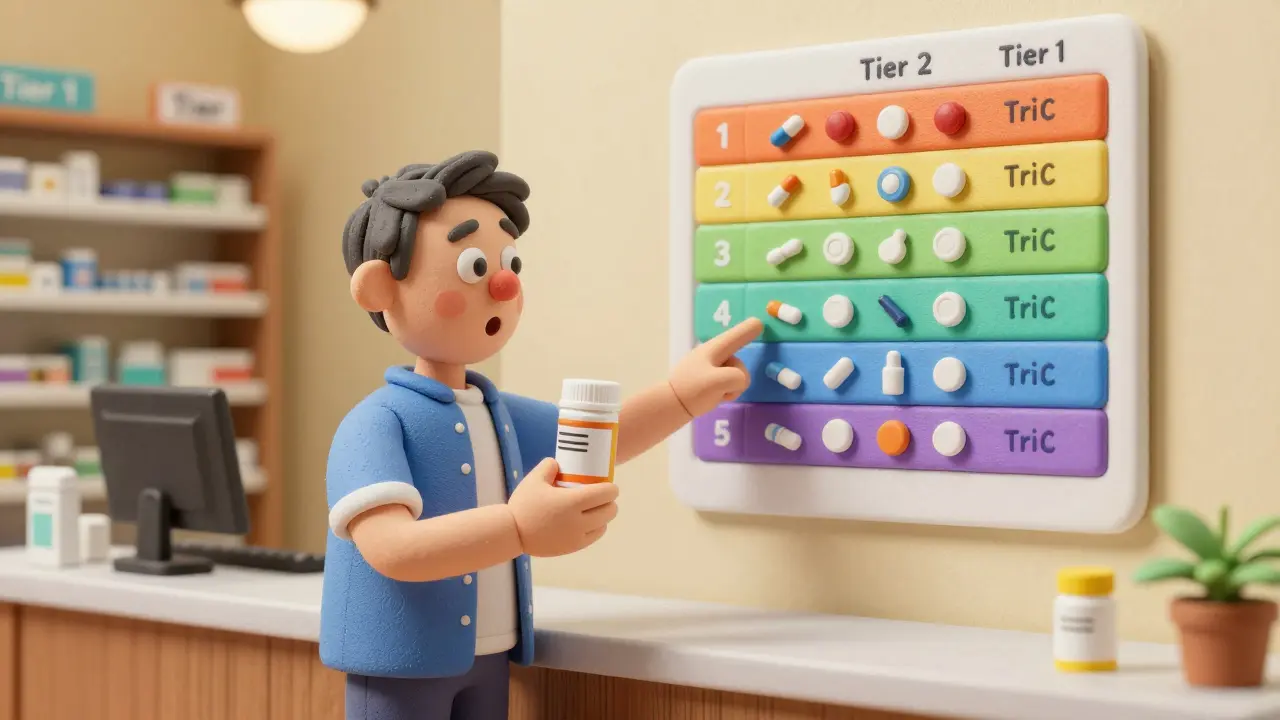
Most formularies use a tier system to show you how much you’ll pay. The higher the tier, the more you pay out of pocket. Here’s how it usually breaks down:- Tier 1: Generic Drugs - These are the cheapest. They’re chemically identical to brand-name versions but cost a fraction of the price. You might pay $0 to $10 for a 30-day supply.
- Tier 2: Preferred Brand-Name Drugs - These are brand-name medications your plan has negotiated lower prices for. Your copay could be $25 to $50.
- Tier 3: Non-Preferred Brand-Name Drugs - These are brand-name drugs that aren’t on the preferred list. You’ll pay more-often $50 to $100 per prescription.
- Tier 4: Specialty Drugs - Used for serious conditions like cancer, rheumatoid arthritis, or multiple sclerosis. These can cost $100 to $500 per month, and you might pay 30-50% coinsurance.
- Tier 5 (if offered): High-Cost Specialty Drugs - These are the most expensive treatments, sometimes costing thousands. Your share could be half the price.
Here’s the catch: the same drug can be on different tiers in different plans. A medication that’s Tier 2 with one insurer might be Tier 3 with another. That’s why two people on the same plan can pay wildly different amounts for the same pill.
What Happens When Your Drug Isn’t on the List?
If your doctor prescribes a drug that’s not on your formulary, you’re looking at one of two things: a big bill or a switch. Some plans won’t cover it at all. Others might cover it-but only if you pay the full list price, which could be $500 or more per month. You’re not stuck, though. You have options:- Ask your doctor for an alternative - They might have another medication in the same class that’s covered. For example, if your brand-name statin is off-formulary, there are often several generic cholesterol drugs that work just as well.
- Request a formulary exception - Your doctor can submit a letter explaining why the non-formulary drug is medically necessary. For instance, if you had a bad reaction to every other drug in the class, that counts. Approval rates for these requests are around 67% for Medicare Part D plans.
- Appeal if denied - If your exception is turned down, you can file a formal appeal. You have 60 days to do this, and you can get help from your plan’s patient advocate.
Emergency exceptions are faster. If you’re in a life-threatening situation, like needing a cancer drug that’s not covered, the plan must respond within 24 hours.

Why Formularies Change-And How It Affects You
Formularies aren’t set in stone. They change every year-and sometimes in the middle of the year. A drug might move from Tier 2 to Tier 3 because a cheaper generic became available. Or a new, more expensive drug might get added because it’s proven to reduce hospital visits. In 2024, Medicare Part D plans had to start including insulin with a $35 monthly cap. That’s a direct result of policy changes. But not all changes are good news. A patient on Reddit shared that their diabetes medication jumped from $35 to $85 a month when it moved to a higher tier. They had to switch-because they couldn’t afford it. That’s why checking your formulary every year during open enrollment is critical. Don’t wait until you’re at the pharmacy counter. Use tools like the Medicare Plan Finder or your insurer’s website to search your medications. You can even compare multiple plans side by side to see which one covers your drugs best.Real Stories: The Good, the Bad, and the Ugly
People’s experiences with formularies vary wildly. One woman on the Patient Advocate Foundation’s Facebook page said her immunotherapy drug was on Tier 4-but with a $95 copay instead of the $5,000 list price. "It saved my life financially," she wrote. Another patient, who asked to remain anonymous, said her migraine medication was removed from her plan’s formulary without notice. She went from paying $40 a month to $320. She had to go without for two weeks until she could get a prior authorization approved. A 2023 Kaiser Family Foundation survey found that 42% of people have switched medications because of formulary changes. That’s nearly half of all insured adults. And 31% reported being hit with an unexpected denial at the pharmacy.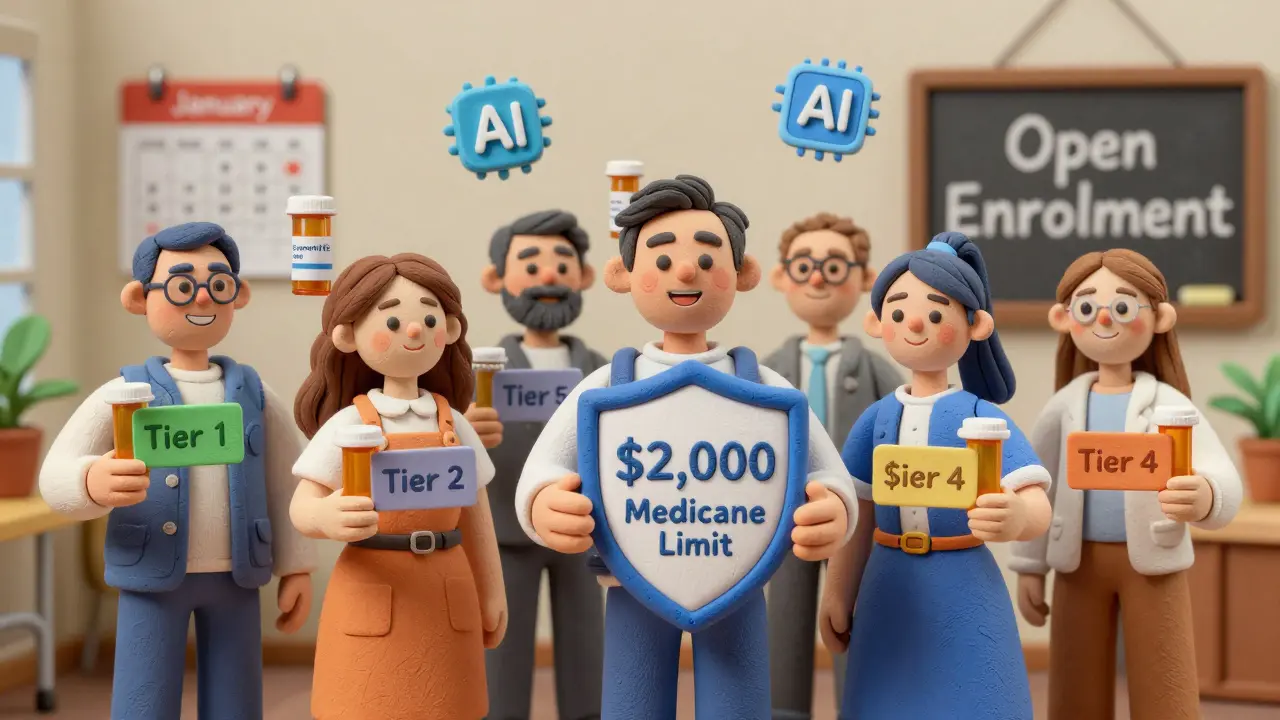
How to Protect Yourself
Here’s what you can do right now to avoid surprises:- Check your formulary before you fill any prescription - Even if you’ve taken the same drug for years, it could be moved to a higher tier or removed.
- Ask your pharmacist for the formulary tier - They can tell you how much you’ll pay before you pay.
- Keep a list of your medications and their tiers - Update it every January when new formularies launch.
- Know your plan’s step therapy rules - Some plans require you to try cheaper drugs first. If you’ve already tried them and they didn’t work, tell your doctor so they can note it in the prior authorization request.
- Call your insurer if you’re unsure - Don’t rely on your doctor’s memory. Formulary details change fast.
Remember: just because a drug is on the formulary doesn’t mean it’s the best for you. But if it’s not on the list, you’re likely paying way more than you should.
What’s Changing in 2025?
Starting in 2025, Medicare Part D will cap out-of-pocket spending on all covered drugs at $2,000 a year. That’s huge. It means no matter how expensive your meds are, you won’t pay more than that. Also, more biosimilars-cheaper versions of biologic drugs-are hitting the market. By 2027, these could cut costs by 15-30% for drugs used in conditions like rheumatoid arthritis and Crohn’s disease. Formularies will start favoring these as they prove safe and effective. And AI is coming. By 2027, some insurers will use algorithms to suggest the best drug for you based on your health history, genetics, and even your zip code. The goal? Personalized care without the price tag.Final Thought: It’s Not Perfect, But It’s Manageable
Drug formularies aren’t designed to make your life harder. They’re meant to keep prescription costs from eating up your paycheck. But they’re complicated, and changes happen fast. The key is to stay informed. Don’t assume your plan hasn’t changed. Don’t wait until you’re at the pharmacy to find out your drug isn’t covered. Check your formulary. Ask questions. Advocate for yourself. You have rights-and tools-to make sure you get the care you need without going broke.What is a drug formulary?
A drug formulary is a list of prescription medications that your health insurance plan agrees to cover. It’s organized into tiers that determine how much you pay out of pocket. The list is managed by a team of doctors and pharmacists who choose drugs based on effectiveness, safety, and cost.
Why does my medication cost more this year?
Your medication may have moved to a higher tier on your plan’s formulary, or it may have been removed entirely. Insurance plans update their formularies every year, often on January 1. Even if you’ve taken the same drug for years, its cost-sharing can change without notice.
Can I get a drug that’s not on my formulary?
Yes, but it’s not automatic. Your doctor can request a formulary exception by explaining why the non-formulary drug is medically necessary. If approved, your plan will cover it. Approval rates are around 67% for Medicare Part D plans. You can also appeal if your request is denied.
How often do formularies change?
Most formularies are updated annually, usually effective January 1. But changes can happen at any time. If a drug is pulled from the list, your plan must give you at least 60 days’ notice. Always check your formulary before filling a new prescription.
What’s the difference between a generic and a brand-name drug on a formulary?
Generics are chemically identical to brand-name drugs and are required by the FDA to work the same way. They’re usually placed on Tier 1 and cost $0-$10. Brand-name drugs are on higher tiers and cost more because they’re still under patent or haven’t been negotiated down in price. Formularies push generics because they save money without sacrificing effectiveness.
Do all insurance plans have the same formulary?
No. Every plan creates its own formulary. A drug that’s Tier 2 on one plan might be Tier 4 on another. That’s why comparing plans during open enrollment is so important. Two people on different plans can pay vastly different amounts for the same medication.
What should I do if my drug is removed from the formulary?
First, ask your doctor if there’s a similar drug on your plan’s formulary. If not, ask them to submit a formulary exception request. You can also contact your insurer to ask about a transition supply-some plans allow a short-term refill while you switch or appeal. Don’t stop taking your medication without a plan.