
Medication Storage: How to Keep Your Pills Safe, Effective, and Ready to Use
When you buy medicine, you’re not just paying for the drug—you’re paying for its medication storage, the conditions under which a drug remains stable, safe, and effective until its expiration date. Also known as drug stability, it’s not just about keeping pills in a cabinet. Heat, moisture, light, and even the wrong container can turn a life-saving drug into something useless—or worse. Most people don’t realize that a pill sitting on a bathroom counter or in a hot car can lose potency long before its printed expiration date. The FDA doesn’t test every drug under every condition, so the label on your bottle is just a starting point. What matters is how you actually store it.
Temperature sensitivity, how a drug reacts to heat or cold, is one of the biggest hidden risks. Insulin, for example, goes bad if left out of the fridge too long. Antibiotics like amoxicillin suspension can grow mold if not refrigerated after mixing. Even common pills like levothyroxine or warfarin can break down faster in high heat, making them less effective. And don’t assume your medicine cabinet is safe—it’s often the warmest, dampest place in your house. A drawer in a cool bedroom or a locked box in the closet works better. If your drug says "store at room temperature," that means 68–77°F, not "somewhere warm near the shower." Medication expiration, the date after which a drug may no longer be safe or effective, is also often misunderstood. The expiration date isn’t a "use-by" deadline—it’s a guarantee from the manufacturer that the drug still works up to that point. After that, it doesn’t suddenly turn toxic, but it might not work at all. For critical meds like epinephrine auto-injectors or seizure drugs, that’s not a risk you can afford to take. Moisture is another silent killer. Keep pills in their original bottles with the desiccant packet inside. Don’t transfer them to pill organizers unless you plan to refill them weekly and keep the organizer dry. Humidity turns tablets into mush and capsules into sticky messes.
Light matters too. Some drugs, like nitroglycerin or certain antibiotics, break down when exposed to sunlight. Always keep them in opaque containers or store them in a dark place. And never leave pills in your glove compartment, purse, or backpack during summer—temperatures inside a car can hit 140°F. That’s enough to melt capsules and ruin tablets. If you’re traveling, carry meds in your carry-on, not checked luggage. Airplane cargo holds can freeze or overheat.
What you’ll find in the posts below are real, practical answers to the storage questions no one tells you about. How to tell if your medicine went bad. Why some pills need the fridge and others don’t. What happens when you mix different drugs in the same container. How to store insulin while camping. How to handle meds during power outages. And why your grandma’s old aspirin bottle might be doing more harm than good. This isn’t theory. These are the mistakes people make every day—and how to avoid them.
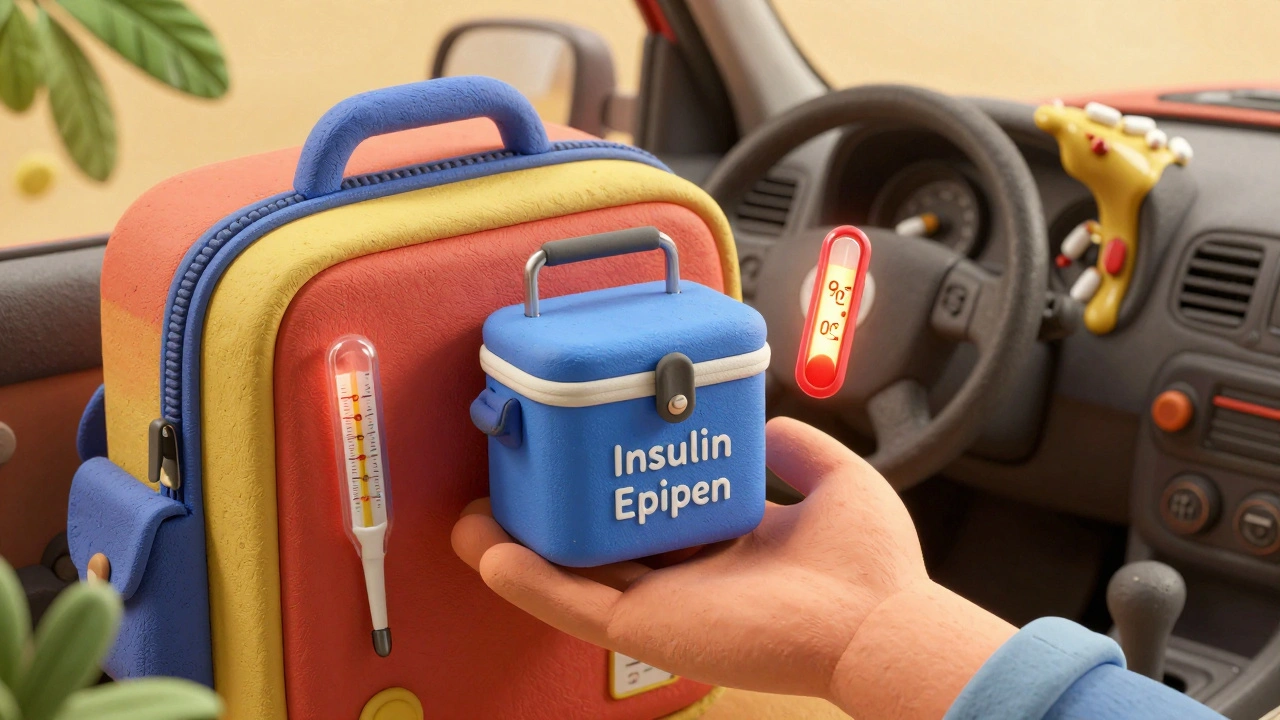
How to Store Medications Safely in Hot Climates While Traveling
Harrison Greywell Dec, 3 2025 10Learn how to protect your medications from heat damage while traveling. From insulin to EpiPens, heat can destroy drug effectiveness-here’s how to keep them safe in hot climates.
More Detail