
How to Store Medications Safely in Hot Climates While Traveling
Dec, 3 2025
When you’re traveling in a hot climate, your medications aren’t just sitting in your bag-they’re fighting for their life. Heat doesn’t just make you sweaty; it can wreck your pills, your insulin, your inhaler, even your EpiPen. And most people don’t realize it until it’s too late.
Why Heat Kills Medications
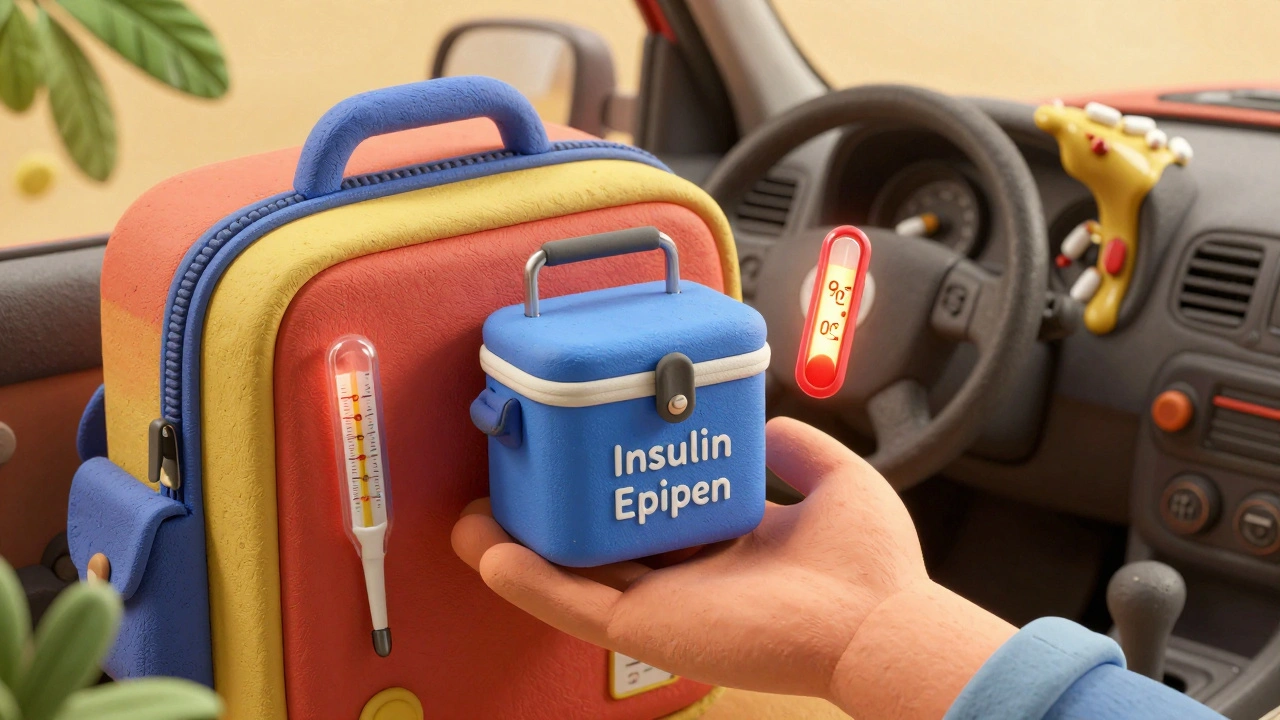
Medications aren’t like sunscreen or snacks. They’re chemical compounds designed to work at specific temperatures. Most tablets and capsules need to stay between 68°F and 77°F (20°C to 25°C). That’s not your car dashboard. That’s not your hotel room in Bali when the AC breaks. That’s not your beach bag left in the sun for an hour. The American Pharmacists Association confirms that vehicle interiors can hit 120°F (49°C) in under 20 minutes on an 85°F day. At that point, your birth control pills start breaking down. Your insulin loses potency. Your albuterol inhaler stops spraying properly. Studies show some hormone-based drugs lose up to 32% of their effectiveness after just 24 hours at 104°F (40°C). That’s not a theory. That’s a documented risk. Cedars-Sinai’s research found that medications like EpiPens, which are life-saving in anaphylaxis, can become useless if exposed to heat. One nurse on Reddit shared a terrifying story: a patient’s birth control failed after being left in a car for two days during a road trip. She got pregnant. The pills weren’t expired-they were just cooked.Which Medications Are Most at Risk?
Not all meds are equally sensitive, but some are far more fragile than you think:- Insulin: Begins degrading above 86°F (30°C). Once broken down, it won’t lower blood sugar. No warning. No alert. Just ineffective.
- EpiPens: Epinephrine is heat-sensitive. A study showed exposure to 110°F for 30 minutes reduced potency by over 50%. That’s not a backup-it’s a dead device.
- Hormonal contraceptives: Birth control pills, patches, and rings can lose effectiveness. No one tells you this until it’s too late.
- Anti-seizure meds: Even slight degradation can trigger breakthrough seizures.
- Inhalers: Albuterol and corticosteroid inhalers can clog or stop working if the propellant breaks down.
- Antibiotics and chemotherapy agents: These degrade unpredictably. You might think you’re getting the full dose, but you’re not.
What Happens If You Leave Medications in the Car?
The glove compartment? A death trap. The trunk? Worse. A 2021 study by A4PC.org found that a glove compartment in a parked car on a 90°F day reached 140°F (60°C) within 30 minutes. That’s hotter than an oven on bake. People think, “I’ll just grab it when I need it.” But that’s the mistake. Medications don’t bounce back. Once they’re damaged by heat, they don’t recover-even if you cool them down later. The U.S. Pharmacopeia says any temperature excursion over 15°F above the recommended range is a critical failure. That means if your pill bottle sits at 90°F for an hour, it’s no longer reliable. One user on Drugs.com said their albuterol inhaler stopped working after a beach day. They ended up in the ER. That’s not an exaggeration. That’s a real, preventable emergency.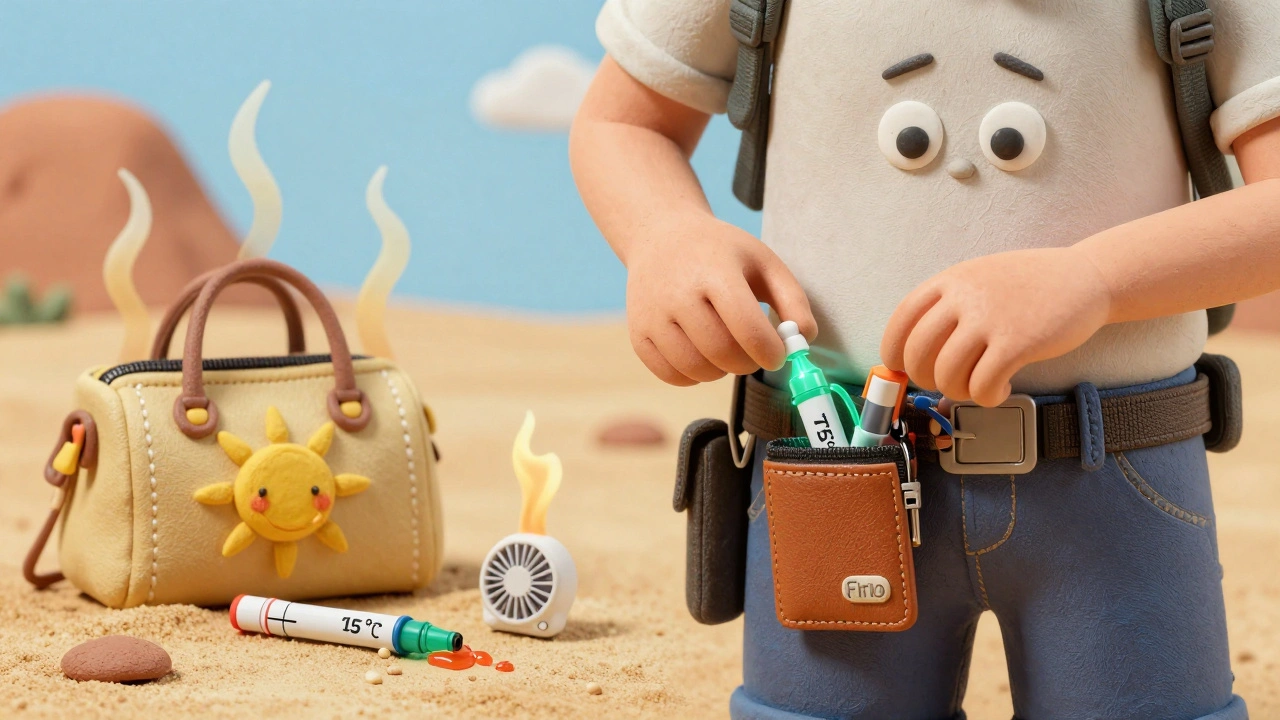
How to Pack Medications for Hot Weather
You don’t need a lab. You need a plan. Here’s how to do it right:- Use an insulated cooler bag. Not a regular lunch bag. Get one designed for medications. The MedActiv Travel Case ($34.99) and Frio Insulated Wallet ($24.99) use phase-change materials that stay between 59°F and 77°F for 48-72 hours, even in 100°F heat.
- For refrigerated meds like insulin: Use two frozen gel packs wrapped in a towel. Direct contact with ice can freeze and destroy insulin. The MyMediCarrier ($89.95) holds 36°F-46°F for 72 hours and has a built-in thermometer.
- Never leave meds in the car. Not even for 10 minutes. If you’re stopping for gas, take them with you. Put them in your purse, your pocket, your hand.
- Carry a thermometer. The American Society of Health-System Pharmacists now recommends every traveler carry a small digital thermometer. Check your bag’s internal temperature hourly. If it’s above 86°F, your meds are at risk.
- Use a portable fan. If you’re sitting outside, point a small USB fan at your medication bag. Tests show it can drop internal temps by 12°F-15°F.
Air Travel and Medications
Flying adds another layer of risk. Checked luggage can drop to 20°F (-6.7°C) in cargo holds-freezing your insulin. Or it can bake at 130°F if the plane sits on the tarmac. Either way, it’s dangerous. Always carry medications in your carry-on. TSA requires them to be in original containers with pharmacy labels. Don’t transfer pills to pill organizers unless you have to. If you do, keep the original bottle with you. For refrigerated meds, use a smart cooler like the TempSure Medication Cooler ($129.99). It connects to your phone and alerts you if temps go out of range. It’s not cheap, but it’s cheaper than an ER visit.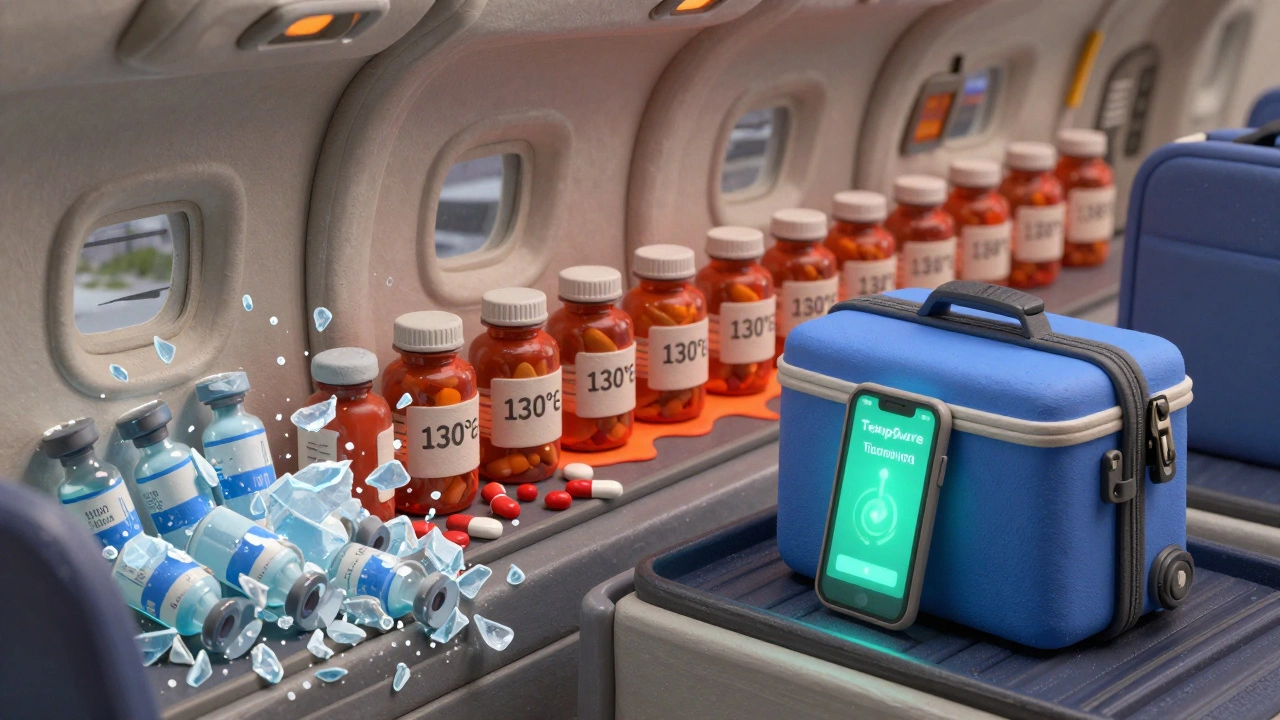
What to Do If Your Medication Gets Too Hot
If you suspect your meds were exposed to extreme heat:- Don’t use them. Especially insulin, EpiPens, or seizure meds.
- Check the appearance. Insulin that looks cloudy or clumpy? Discard. Pills that are sticky, cracked, or discolored? Throw them out.
- Contact your pharmacist. The FDA says if meds were above recommended temps for more than 24 hours, you should consult a pharmacist before using them.
- Replace them. If you’re abroad, ask your hotel concierge or local pharmacy for a replacement. Many countries have emergency medication services.
What’s Changing in the Industry
This isn’t just your problem-it’s becoming a global health priority. The FDA started requiring clearer temperature labels on all medications by November 2023. Companies are now putting color-coded heat indicators on packaging: red means the drug was exposed to dangerous temps. The global market for medication storage solutions hit $1.27 billion in 2022 and is growing fast. Travel insurance companies like Allianz now cover medication replacement due to heat damage. And by Q3 2024, airlines plan to install temperature-controlled compartments for passenger medications. The message is clear: heat isn’t just uncomfortable. It’s a medical hazard.Real-World Tips from Travelers
On Amazon, 63 out of 112 reviews for medication coolers praised products that kept meds cool without freezing them. One user wrote: “My insulin stayed at exactly 42°F during a 102°F road trip through Arizona. The thermometer showed it. I slept easy.” A nurse on Reddit shared: “I keep my EpiPen in a Frio wallet clipped to my belt loop. Even in 100°F heat, it never went above 75°F. I’ve seen people put theirs in their pocket-wrong. Body heat can warm it too.” Bottom line: If you’re traveling somewhere hot, treat your meds like your phone. You don’t leave it in the sun. Don’t leave your medicine there either.Can I keep my insulin in a regular cooler with ice?
Not safely. Ice can freeze insulin, which damages its structure. Use a pharmaceutical-grade cooler like MyMediCarrier or wrap ice packs in a towel before placing them in the bag. Never let the medication touch ice or frozen gel packs directly.
What if I forget my medication cooler?
Keep your meds in your hand, in a shaded bag, or tucked under your shirt. Avoid direct sunlight and hot surfaces. If you’re staying in a hotel, ask for a mini-fridge. If you’re outdoors, use a towel to shade your bag and keep it in your lap, not on the ground.
Do I need to carry extra medication?
Yes. Always bring at least a 3-day extra supply, especially for insulin, EpiPens, or seizure meds. Heat damage can happen without warning. Having backups means you’re not stranded if your meds fail.
Are pill organizers safe for hot weather?
Only if you keep them cool. Pill organizers offer no insulation. If you use one, keep it in your insulated bag with your meds. Never leave it on a windowsill, in a beach bag, or in your car.
Can I buy replacement meds overseas?
Sometimes, but it’s risky. Brand names, dosages, and regulations vary by country. Always carry a copy of your prescription and a letter from your doctor. Contact your embassy or a local hospital pharmacy for help. Don’t rely on street vendors or unlicensed clinics.


