
Food-Drug Interactions: What You Need to Know to Stay Safe
When you take a pill, it doesn’t just disappear into your system like magic. What you eat, drink, or even supplement can change how that drug works—sometimes making it useless, sometimes making it dangerous. This is called a food-drug interaction, a change in how a medication works because of something you consume. Also known as dietary-drug interaction, it’s not rare, and it’s not always obvious. Many people think if their doctor prescribed it, it’s safe to take with anything. That’s not true. A glass of grapefruit juice can turn a common cholesterol drug into a heart risk. A fiber supplement can block your thyroid medicine from being absorbed. Even a simple multivitamin might mess with your blood thinner.
These interactions happen because your body processes drugs and food through the same systems. The liver uses enzymes like CYP3A4 to break down medications, and certain foods—like grapefruit, pomegranate, or St. John’s wort—can block or speed up those enzymes. Your gut lining absorbs drugs, and fiber, calcium, or iron can bind to them and pull them out before they enter your bloodstream. Alcohol doesn’t just make you drowsy—it can overload your liver when mixed with painkillers or antidepressants. And timing matters. Taking levothyroxine with breakfast? It might not work at all. Waiting two hours after your fiber supplement? That’s the difference between control and crisis.
Some interactions are well-known and documented—like warfarin and leafy greens, or antibiotics and dairy. Others are hidden. People with chronic conditions—diabetes, high blood pressure, thyroid issues—are especially at risk because they’re often on multiple drugs, and small changes add up. You don’t need to avoid all foods. You just need to know which ones to time around your meds. The good news? Most of these risks are preventable. You don’t need a pharmacology degree. You just need to ask the right questions and pay attention to how your body reacts.
Below, you’ll find real, practical guides on how fiber affects your prescriptions, why grapefruit is risky with certain pills, how alcohol changes the game, and what to do when your meds don’t seem to be working. These aren’t theory pages—they’re based on what patients actually experience, backed by data from FDA sources, clinical studies, and pharmacy practice. Whether you’re on blood thinners, thyroid meds, antibiotics, or mental health drugs, there’s something here that could save you from a bad day—or worse.
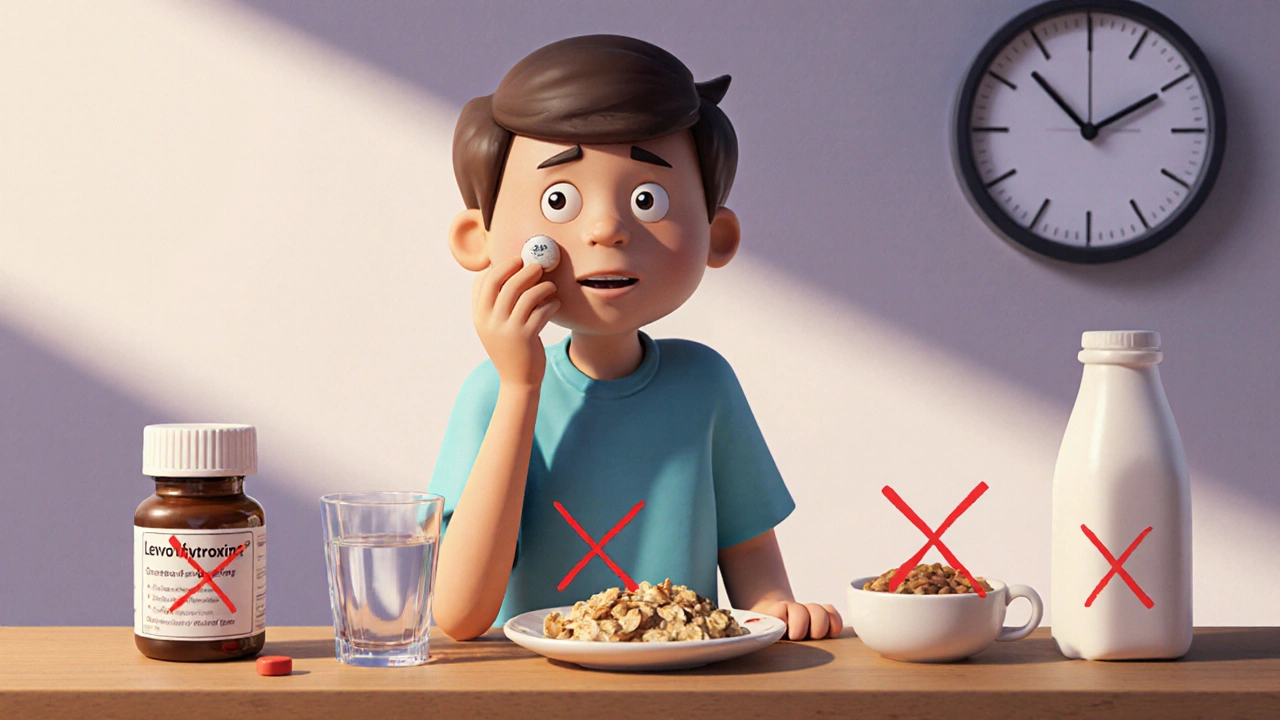
Taking Prescription Medicine with Food vs. on an Empty Stomach: What You Really Need to Know
Harrison Greywell Nov, 29 2025 12Learn when to take prescription meds with food or on an empty stomach, why it matters, and how to avoid common mistakes that reduce effectiveness or cause side effects.
More Detail