
Renal Diet Guide: How to Manage Sodium, Potassium, and Phosphorus with Chronic Kidney Disease
Jan, 1 2026
When your kidneys aren't working well, what you eat becomes just as important as any medication. A renal diet isn’t about losing weight or eating clean-it’s about keeping dangerous minerals from building up in your blood. Too much sodium, potassium, or phosphorus can cause swelling, irregular heartbeats, bone damage, and even sudden cardiac arrest. For people with chronic kidney disease (CKD), especially stages 3 to 5, getting these three minerals right can mean the difference between staying off dialysis and needing it sooner.
Why Sodium Matters More Than You Think
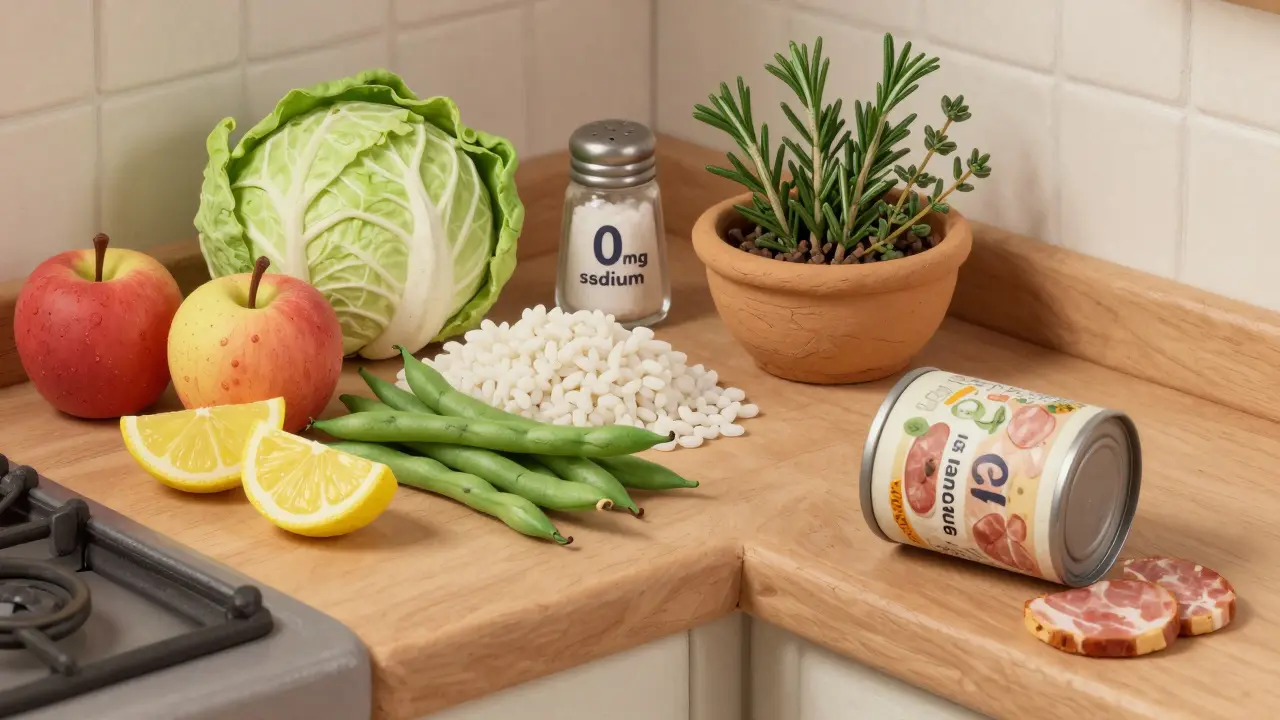
Sodium isn’t just about salt on your food. It’s in canned soups, bread, frozen meals, sauces, and even breakfast cereals. The average American eats over 3,400 mg of sodium a day. For someone with CKD, that’s dangerous. The goal? Keep it under 2,300 mg daily-roughly one teaspoon of salt. But here’s the catch: 75% of that sodium comes from processed and packaged foods, not what you add at the table. A single serving of canned vegetable soup can have 900 mg. One slice of deli ham? Around 600 mg. Even "low-sodium" products can surprise you-always check the label. Cutting back doesn’t mean bland food. Use herbs like oregano, thyme, or rosemary. Try spice blends like Mrs. Dash. Lemon juice, garlic powder, and vinegar add flavor without salt. Studies show reducing sodium by just 1,000 mg a day can lower blood pressure by 5 to 6 mmHg in CKD patients-helping protect your heart and kidneys.Potassium: The Silent Threat
Potassium keeps your muscles and heart beating normally. But when kidneys fail, they can’t flush out the extra. Levels above 5.5 mEq/L can trigger dangerous heart rhythms-and you won’t feel it coming until it’s too late. The recommended limit for most CKD patients is 2,000 to 3,000 mg per day. But that number changes based on your blood tests. If your potassium is high, you need to cut back fast. High-potassium foods to limit: bananas (422 mg each), oranges (237 mg each), potatoes (610 mg per medium), tomatoes (292 mg per cup), spinach (839 mg per cup cooked), and avocados (708 mg per half). Low-potassium swaps: apples (150 mg per medium), berries (65 mg per ½ cup blueberries), cabbage (12 mg per ½ cup cooked), green beans (175 mg per cup), and white rice (35 mg per cup cooked). There’s a trick called leaching for vegetables like potatoes and carrots. Peel them, slice thin, soak in warm water for at least 2 hours, then boil in plenty of fresh water. This can cut potassium by half. It’s time-consuming, but it lets you eat more veggies safely.Phosphorus: The Hidden Killer in Processed Foods
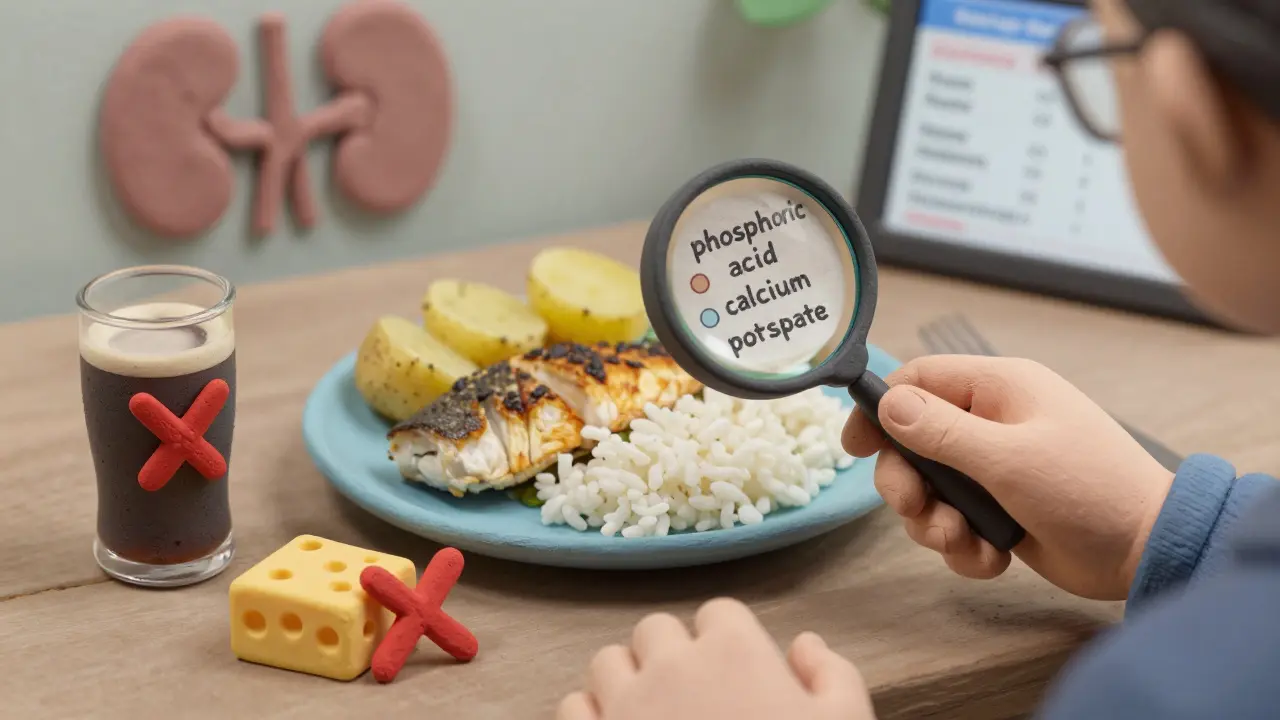
Phosphorus is everywhere-in dairy, meat, nuts, and especially processed foods. But here’s what most people don’t know: natural phosphorus in food is only 40-70% absorbed. Additives? Almost all of it gets absorbed-up to 90-100%. That’s why colas, processed cheese, deli meats, and instant mashed potatoes are worse than steak or milk. A 12-ounce cola has 450 mg of phosphorus. One slice of processed cheese? 250 mg. Half a cup of milk? 125 mg. The target for non-dialysis CKD patients is 800-1,000 mg per day. That’s not easy when you’re eating real food. But you can make smarter choices:- Choose white bread over whole grain (60 mg vs. 150 mg phosphorus per slice)
- Swap almond milk for rice milk (almond milk can have 150+ mg added phosphorus)
- Limit dairy to small portions-try ¼ cup of cheese or ½ cup of milk per day
- Avoid anything with "phos" in the ingredient list: calcium phosphate, sodium phosphate, phosphoric acid
What About Protein? The Myth of Low-Protein Diets
You’ve probably heard to eat less protein if you have kidney disease. That used to be the rule. But newer science says: don’t go too low. Too little protein (under 0.6 grams per kg of body weight) raises your risk of malnutrition by 34%, especially in older adults. That means muscle loss, weakness, and slower healing. The updated guidelines recommend 0.55-0.8 grams of high-quality protein per kg of body weight daily. That’s about 40-60 grams for most people. Think: one egg, 3 ounces of meat or fish, half a cup of beans, or two tablespoons of peanut butter. Focus on quality. Animal proteins like eggs, lean meat, and fish have all the essential amino acids your body needs. Plant proteins are okay too, but they’re less efficient-so pair them with small amounts of animal protein when possible.Real-Life Challenges and How to Beat Them
Most people struggle with this diet for three reasons: flavor, convenience, and confusion. Flavor: Salt is addictive. Going cold turkey feels like eating cardboard. Start slow. Use herbs, citrus, and spices. Over time, your taste buds reset. You’ll start noticing natural flavors you never noticed before. Convenience: Preparing meals from scratch takes time. Batch-cook lean proteins and leached vegetables on weekends. Freeze portions in small containers. Use apps like Kidney Kitchen to scan barcodes and check nutrient content on the go. Confusion: Not all fruits and veggies are equal. A banana isn’t just a banana-it’s 422 mg of potassium. A pear? Only 190 mg. Learn your low-potassium swaps. Keep a list on your fridge. Ask your dietitian for a printable guide. Fluids matter too. If you’re producing less than a liter of urine a day, limit drinks to 32 ounces (1 liter). That includes water, coffee, tea, soup, ice cream, and even gelatin. Suck on ice chips instead of drinking. Rinse your mouth with water when thirsty.
What’s New in Renal Nutrition (2025)
The field is changing fast. In 2023, the FDA approved the first medical food for CKD called Keto-1, designed to provide protein without raising phosphorus or potassium. It’s not for everyone-but it’s an option for those struggling to meet needs. New research is looking at the gut-kidney connection. Prebiotic fibers like inulin (found in chicory root or supplements) may reduce phosphorus absorption by 15-20%. Early trials show promise. AI-powered apps are starting to sync with lab results. If your blood test shows rising potassium, the app adjusts your meal plan automatically. Mayo Clinic is testing this in real patients. And there’s debate. Some European guidelines say phosphorus limits below 1,200 mg don’t improve survival. But in the U.S., most nephrologists still stick with 800-1,000 mg-especially if you’re not on dialysis yet. The big shift? From strict rules to personalized care. Your diet should match your labs, your lifestyle, and your preferences. One-size-fits-all doesn’t work.When to See a Renal Dietitian
You don’t have to figure this out alone. Medicare now covers 3-6 sessions per year with a registered dietitian for stage 4 CKD patients. That’s because every dollar spent on nutrition saves $12,000 in avoided dialysis costs. A renal dietitian will:- Review your blood work and tailor your limits
- Teach you how to read food labels for hidden sodium, potassium, and phosphorus
- Help you build a weekly meal plan that fits your taste
- Adjust your plan as your kidney function changes
Final Thoughts: It’s Not Perfect, But It Works
A renal diet isn’t easy. It’s restrictive. It takes effort. You’ll miss your favorite foods. But it’s not about perfection-it’s about progress. You don’t have to eliminate every banana. Just eat half, or swap it for an apple. You don’t have to stop all cheese-just choose fresh mozzarella over processed slices. You don’t have to cook everything from scratch-just avoid the packaged stuff with phosphorus additives. The goal isn’t to live on rice and cabbage forever. It’s to keep your kidneys working as long as possible, avoid hospital visits, and stay off dialysis. And for many, that’s exactly what happens when they stick with it.Can I still eat fruits and vegetables on a renal diet?
Yes-but you need to choose wisely. Low-potassium options like apples, berries, cabbage, green beans, and white rice are safe. High-potassium foods like bananas, oranges, potatoes, and spinach should be limited or prepared using leaching techniques. Portion size matters-half a banana is better than a whole one.
Is sea salt or Himalayan salt better than table salt?
No. All types of salt contain sodium chloride. Sea salt, Himalayan salt, and kosher salt are not lower in sodium. They may have different minerals, but they still raise blood pressure and fluid retention in CKD. Stick to herbs and spices instead.
Can I drink coffee on a renal diet?
Yes, in moderation. One cup of black coffee (8 oz) has about 116 mg of potassium and is low in phosphorus. But if you’re on fluid restrictions, count it as part of your daily limit. Avoid creamers and flavored syrups-they often contain hidden sodium and phosphorus additives.
Do I need to avoid dairy completely?
No, but you need to limit it. Milk, yogurt, and cheese are high in phosphorus and potassium. Stick to small portions: ½ cup of milk or ¼ cup of cheese per day. Choose unenriched rice or oat milk instead of almond or soy milk, which often have added phosphorus. Always check labels.
How do I know if my renal diet is working?
Your blood tests will tell you. Regular checks of sodium, potassium, phosphorus, and creatinine levels show if your diet is helping. If your potassium stays below 5.0 mEq/L and phosphorus under 4.5 mg/dL, you’re on track. Weight gain of more than 2-3 pounds in a day may mean fluid buildup-time to adjust your intake.
What if I’m diabetic and have kidney disease?
It’s tricky. Many heart-healthy foods for diabetes-like whole grains, beans, nuts, and fruits-are high in potassium and phosphorus. Work with a renal dietitian to find balance. Focus on low-potassium fruits like berries, choose white rice over brown, and avoid processed meats. Your diet needs to manage both blood sugar and kidney health at once.


