
Preventing and Treating Postoperative Ileus Linked to Opioid Use
Apr, 5 2026
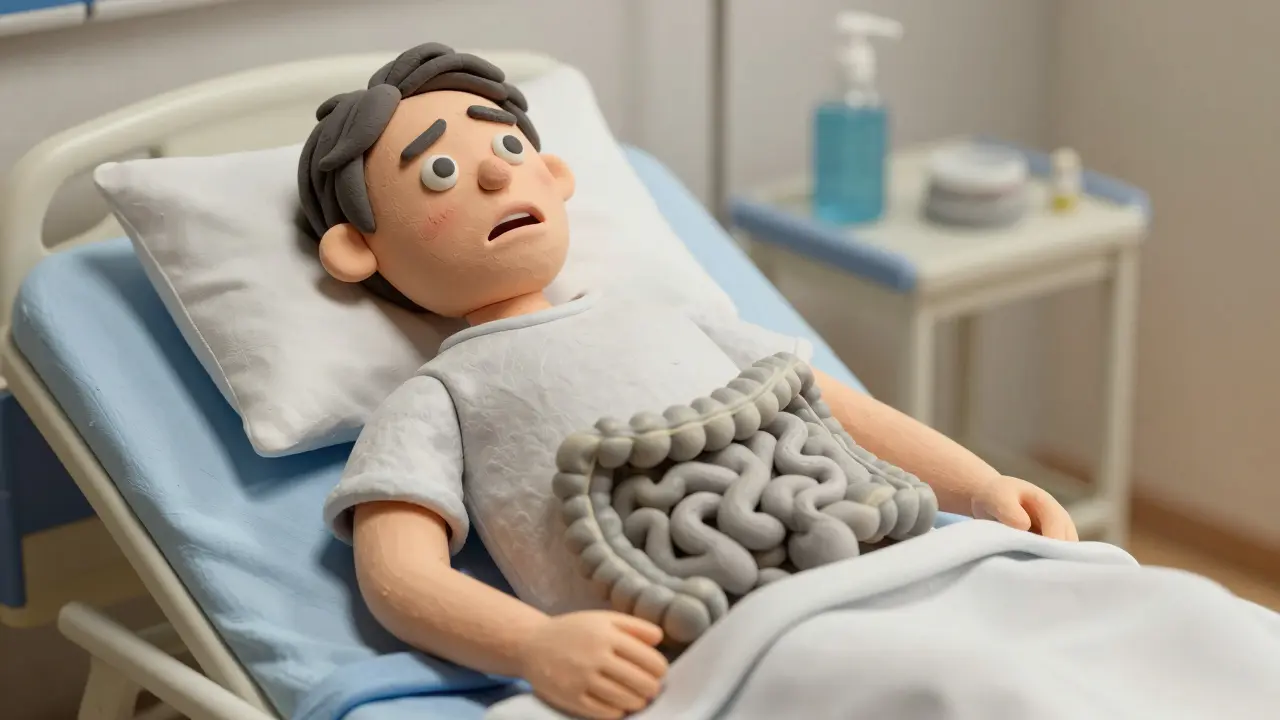
Imagine waking up from a successful surgery, feeling a bit sore but otherwise okay, only to realize your digestive system has completely stopped working. You feel bloated, nauseated, and can't pass gas or have a bowel movement. This is Postoperative Ileus, and for many patients, it's a frustrating extension of their hospital stay. While surgical trauma plays a part, the heavy hitters in this scenario are often the very medications used to kill the pain: opioids.
When your gut goes on strike after surgery, it doesn't just make you uncomfortable. It can lead to longer hospital stays-adding an average of 2 to 3 days to recovery-and costs the healthcare system billions every year. The real challenge is the balancing act: you need pain relief to heal, but too much of the wrong kind of relief can paralyze your intestines. Let's look at why this happens and how modern medicine is fixing the problem.
What Exactly Is Postoperative Ileus?
Postoperative Ileus is an abnormal pattern of slow or absent gastrointestinal motility that occurs after a surgical procedure. Essentially, the muscles in your gut stop contracting in the coordinated way they need to move food and gas through your system.
It's not just a "slow stomach." You'll likely experience abdominal distension, vomiting, and an inability to tolerate eating or drinking. While a bit of sluggishness is common after surgery, clinicians start worrying when the ileus lasts more than three days. At that point, it's no longer a standard recovery hurdle; it's a clinical complication that requires active intervention.
How Opioids Paralyze the Gut
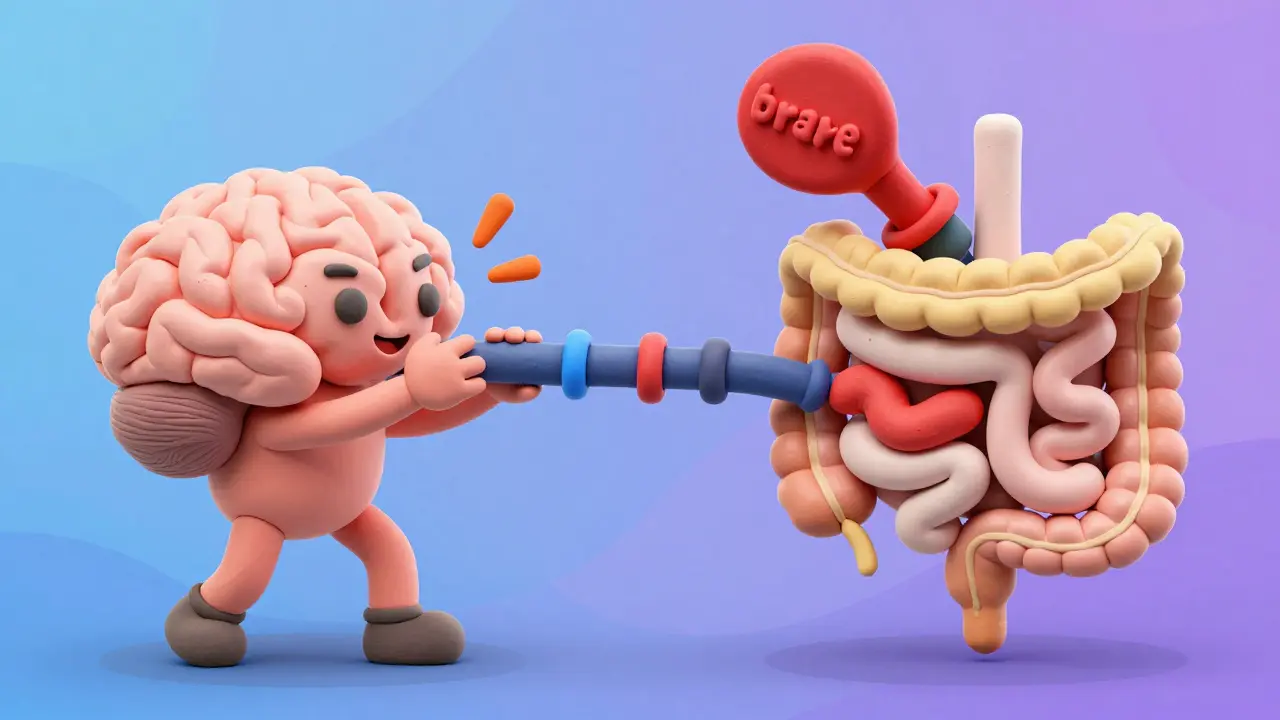
To understand why opioids are the primary culprits, we have to look at the receptors in your body. Opioids are designed to hit receptors in your brain and spinal cord to block pain, but those same receptors-specifically the mu-opioid receptors-are scattered all over your gastrointestinal tract. When these receptors are activated, they act like a brake pedal for your intestines.
This shutdown happens through three main channels:
- The Neurogenic Path: Opioids increase sympathetic nerve activity (the "fight or flight" response), which naturally suppresses the "rest and digest" functions of the parasympathetic system.
- The Inflammatory Trigger: Surgery itself causes trauma, releasing cytokines that irritate the gut. Opioids can exacerbate this inflammatory environment.
- The Pharmacologic Block: High doses of opioids directly inhibit the neurons in the myenteric plexus-the "brain" of the gut-reducing colonic motility by as much as 70% in some cases.
This isn't just about a few pills. Even the body's own endogenous opioids, released during the stress of surgery, compound the effect. When you add a Patient-Controlled Analgesia (PCA) pump into the mix, the constant stream of medication can keep the gut in a state of total paralysis.
Prevention: The Move Toward Multimodal Analgesia
The old way of doing things was simple: if it hurts, give more opioids. The new way, championed by the ERAS Society (Enhanced Recovery After Surgery), is called multimodal analgesia. This means using a cocktail of different types of pain relief to keep the total opioid dose low.
A typical "opioid-sparing" bundle might include:
- Scheduled Acetaminophen: Using 1g of IV acetaminophen every 6 hours to provide a baseline of pain control.
- Regional Anesthesia: Using epidurals or nerve blocks to numb the specific surgical site, which can reduce the duration of an ileus from over 5 days down to less than 4.
- NSAIDs: Using medications like ketorolac (30mg IV) to target inflammation directly.
The goal is to keep the total dose under 30 morphine milligram equivalents (MME) in the first 24 hours. When doctors hit this target, the incidence of ileus can drop from 30% down to about 18%. It's a game of precision: enough medication to keep the patient comfortable, but not so much that the gut stops moving.
Treatment Options: Getting the Gut Moving Again
If prevention fails and the gut remains frozen, doctors have several tools. The old-school method of inserting a nasogastric tube to suck out fluids (decompression) is mostly outdated; research shows it only reduces the duration of the ileus by about 12%.
Modern treatment focuses on peripheral opioid receptor antagonists. These are drugs that block the "brake pedal" in the gut but don't cross into the brain, meaning they don't stop the pain relief.
| Medication | Typical Dose | Primary Effect | Best For... |
|---|---|---|---|
| Alvimopan | 0.5-12mg | Reduces recovery time by 18-24 hours | Abdominal surgery patients |
| Methylnaltrexone | 8-12mg (SubQ) | 30-40% faster return of bowel function | Opioid-tolerant patients |
While these drugs are powerful, they aren't for everyone. For instance, if a patient has a physical blockage in their bowel (gastrointestinal obstruction), these medications are strictly contraindicated because forcing the gut to contract against a blockage can be dangerous.

Practical Tips for Faster Recovery
Medical intervention is key, but there are behavioral strategies that actually work. If you or a loved one are recovering from surgery, focus on these three pillars:
- Early Ambulation: Don't stay in bed. Getting up and walking within 4 to 6 hours of surgery can reduce the duration of a frozen gut by an average of 22 hours. Walking physically stimulates the intestines.
- The "Sham Feeding" Trick: Some hospitals use a "POI bundle" that includes chewing gum four times a day. This tricks the brain into thinking food is coming, which triggers the release of digestive hormones and stimulates motility.
- Hydration and Small Steps: Once cleared by a doctor, transitioning to small sips of water and clear liquids helps test the gut's readiness without overwhelming it.
The Economic and Systemic Impact
The ripple effect of opioid-induced ileus is massive. It's not just about the patient's discomfort; it's a huge financial burden. In the U.S. alone, this complication adds an estimated $1.6 billion in annual costs. Because of this, many hospitals are now facing penalties if their readmission rates for general surgery are too high.
We're seeing a divide in care. Academic medical centers, which often use full ERAS protocols, see an average ileus duration of 3.2 days. Meanwhile, rural facilities that still rely on traditional opioid-heavy management see durations of 5.1 days. This gap shows that the problem isn't the surgery itself, but how we manage the recovery process.
How do I know if I have postoperative ileus or just normal slow digestion?
While some sluggishness is normal, an ileus is characterized by a complete inability to pass gas or stool, significant abdominal bloating, and nausea or vomiting that prevents you from drinking water. If these symptoms persist beyond 72 hours after surgery, it is clinically significant and requires a doctor's evaluation.
Can I stop taking opioids entirely to fix my gut?
Stopping opioids abruptly can be dangerous and may cause withdrawal symptoms or uncontrolled pain. In some cases, pain scores increase by 2-3 points on a 10-point scale if doses drop too low. The safest approach is a "multimodal" transition-adding non-opioid painkillers while gradually reducing the opioid dose under medical supervision.
Is chewing gum actually a proven medical treatment?
Yes, it is part of many "POI bundles" in modern hospitals. Chewing gum mimics the act of eating, which stimulates the cephalic phase of digestion. This triggers the release of gastrointestinal hormones that help the bowel start moving again more quickly than if the patient remained sedentary.
What are the risks of using peripheral opioid antagonists like Relistor?
The biggest risk is using these drugs when there is a physical obstruction in the bowel. Because these medications force the muscles in the gut to contract, they can cause severe complications if there is a blockage. They are also quite expensive, often costing around $147 per dose.
Why do some people get ileus and others don't?
It's usually a combination of factors: the type of surgery (abdominal surgery has a higher risk), the amount of opioids administered, the patient's previous history with opioids (opioid-naive patients can react differently), and how quickly they start moving after the procedure.


