
MAO Inhibitors: Dangerous Interactions with Common Medications
Mar, 20 2026
MAO inhibitors are among the oldest antidepressants still in use today, but they come with some of the most dangerous drug interactions in modern medicine. While they can be life-changing for people with treatment-resistant depression, taking even one common over-the-counter medication or eating a normal meal can trigger a medical emergency. These aren’t hypothetical risks-they’re real, documented, and sometimes fatal. If you or someone you know is on an MAOI, understanding these interactions isn’t optional. It’s a matter of survival.
How MAO Inhibitors Work (And Why They’re So Risky)
MAO inhibitors block the enzyme monoamine oxidase, which normally breaks down key brain chemicals like serotonin, norepinephrine, and dopamine. By preventing their breakdown, these drugs boost mood. But this same mechanism makes them dangerous when combined with other substances that also increase these chemicals. The body can’t regulate the flood of neurotransmitters, and that’s when things go wrong.
There are two main dangers: hypertensive crisis and serotonin syndrome. Both can develop within minutes to hours after taking a contraindicated substance. Neither is rare. Between 1998 and 2003, 19 people died from MAOI interactions in the U.S. alone. Even today, with better warnings and electronic health record blocks, these reactions still happen.
Deadly Drug Combinations You Must Avoid
Some medications are absolutely off-limits with MAOIs. Here are the most common and dangerous ones:
- SSRIs (like fluoxetine, sertraline, citalopram): Combining these with MAOIs can cause serotonin syndrome. A 14-day washout period is required before switching, but for fluoxetine, you need five weeks because it lingers in the body so long.
- Linezolid (an antibiotic): This drug also inhibits monoamine oxidase. When taken with an MAOI, it’s like doubling the dose. A 2008 case report described a 65-year-old woman who died after taking linezolid while on phenelzine.
- Tramadol, meperidine, methadone: These opioids are especially risky. A 2019 report detailed a 32-year-old man who needed intubation after taking tramadol while on selegiline. He had no idea it was dangerous.
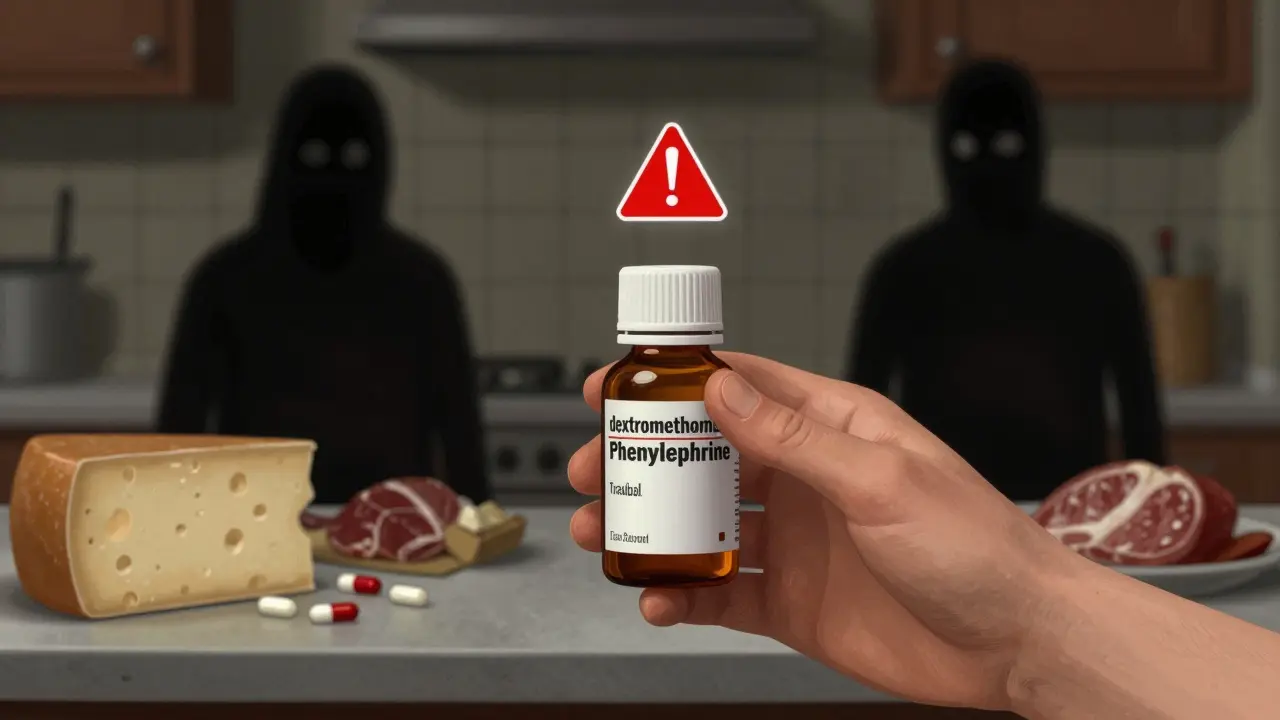
- Dextromethorphan: Found in more than 100 cough syrups and cold medicines. The FDA issued a warning in 1992 after a 26-year-old woman developed severe hyperthermia and agitation from just 30mg of dextromethorphan while on phenelzine. Many people still don’t know this ingredient is deadly with MAOIs.
Even some prescription painkillers and sleep aids carry hidden risks. Always check with your pharmacist before taking anything new.
Over-the-Counter Medications That Can Kill
You don’t need a prescription to put yourself in danger. Common OTC products are responsible for many MAOI-related emergencies:
- Phenylephrine: Found in Sudafed PE, Claritin-D, and many nasal sprays. It directly raises blood pressure, and with an MAOI, that spike can be extreme-sometimes over 200 mmHg systolic.
- Ephedra and ephedrine: Though banned in dietary supplements by the FDA in 2004, some products still contain them. Even small amounts can cause hypertensive emergencies requiring ICU admission.
- Decongestants and antihistamines: Many cold and allergy meds contain hidden sympathomimetics. Read labels carefully. Look for ingredients like pseudoephedrine, oxymetazoline, or phenylephrine.
There’s no safe dose. One tablet, one spray, one capsule-enough to trigger a crisis.
Supplements and Herbal Products That Are Just as Dangerous
Just because something is labeled "natural" doesn’t mean it’s safe. Many supplements affect serotonin or norepinephrine levels and are just as risky as prescription drugs.
- St. John’s Wort: Used for mild depression, but it increases serotonin. A 2018 case report described a patient who developed serotonin syndrome after combining it with phenelzine. Blood pressure hit 220/110.
- 5-HTP: A precursor to serotonin. Taking it with an MAOI is like pouring gasoline on a fire. The same 2018 case involved 200mg of 5-HTP.
- SAMe: S-adenosylmethionine, often used for joint pain or mood, also raises serotonin. It’s not safe.
- Ginseng: A 1985 case linked ginseng to mania and tremors in someone on phenelzine. While caffeine contamination may have played a role, the risk is still real.
These aren’t "maybe" dangers. They’re documented causes of hospitalization and death.
Food Risks: The Tyramine Trap
MAOIs also interact with tyramine, a compound found in aged and fermented foods. Normally, your body breaks down tyramine using monoamine oxidase. With an MAOI, it builds up and triggers a massive release of norepinephrine-leading to a hypertensive crisis.
High-tyramine foods include:
- Aged cheeses (blue cheese, cheddar, parmesan-anything aged over six months)
- Tap beer, draft beer, and some wines (Chianti, red wine)
- Cured meats (pepperoni, salami, pastrami)
- Fermented soy products (soy sauce, miso, tempeh)
- Pickled or smoked fish
It doesn’t take much. One ounce of aged cheese (containing about 15mg of tyramine) has been enough to raise systolic blood pressure by 60-100 mmHg in patients on MAOIs. Symptoms include severe headache, chest pain, vomiting, blurred vision, and a pounding heartbeat. Left untreated, it can cause stroke or heart attack.
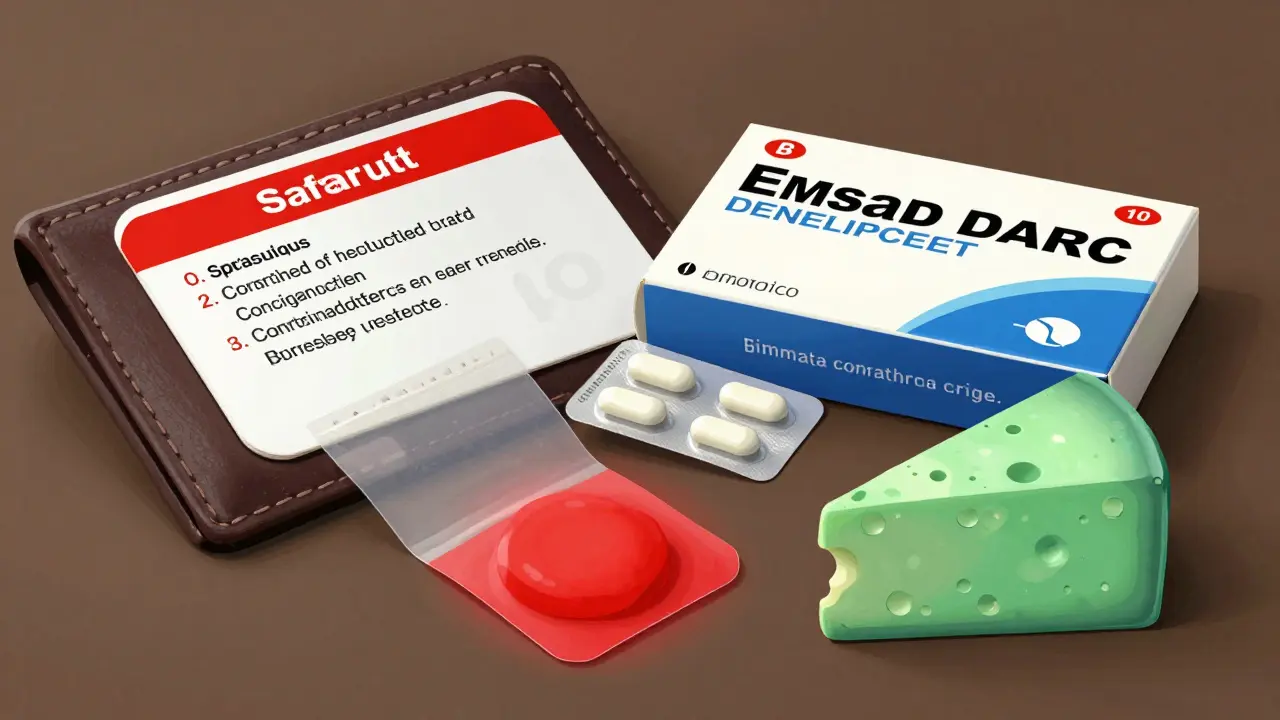
There’s one exception: the selegiline patch (Emsam). At the lowest dose (6mg/24hr), studies show it doesn’t interact with tyramine. That’s why 68% of current MAOI prescriptions are for this patch. But higher doses still require dietary restrictions.
What Happens During a Crisis?
Two types of emergencies can occur:
- Hypertensive crisis: Blood pressure spikes suddenly. Systolic readings can hit 200-250 mmHg. Symptoms: pounding headache, chest pain, nausea, sweating, blurred vision, seizures. This can cause stroke, heart attack, or organ damage.
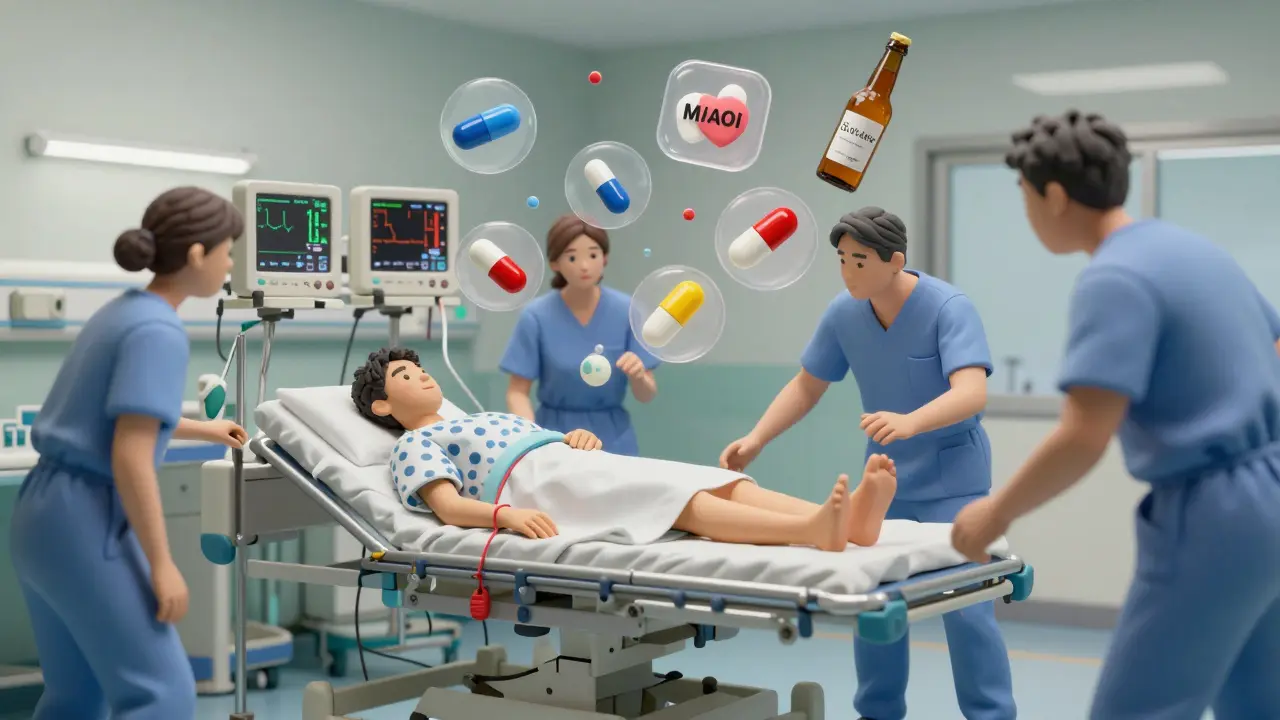
- Serotonin syndrome: Too much serotonin in the brain. Symptoms: shivering, diarrhea, muscle rigidity, fever over 104°F, confusion, seizures, loss of coordination. In severe cases, body temperature exceeds 106°F, leading to organ failure and death. Mortality rates range from 2% to 12% in serious cases.
Both require immediate emergency care. Delaying treatment increases the risk of permanent damage or death.
How to Stay Safe
If you’re on an MAOI, here’s what you must do:
- Never start a new medication-prescription or OTC-without checking with your psychiatrist or pharmacist.
- Carry a wallet card listing all contraindicated drugs. A 2020 survey found 78% of psychiatrists give these to patients.
- Read every medication label. Look for dextromethorphan, phenylephrine, pseudoephedrine, and ephedrine.
- Avoid all aged, fermented, or cured foods if you’re on an oral MAOI. If you’re on the Emsam patch at 6mg/24hr, you’re safe-but double-check your dose.
- Inform all your doctors and dentists. Many primary care providers still don’t know the risks. A 2021 study found 34% of them were unaware dextromethorphan was dangerous with MAOIs.
There’s no room for guesswork. One mistake can be fatal.
Why MAOIs Are Still Prescribed
Despite the risks, MAOIs are still used because they work when nothing else does. About 0.7% of all antidepressant prescriptions in the U.S. are for MAOIs, and nearly all are written by psychiatrists. They’re often the last option for people with severe, treatment-resistant depression, atypical depression, or panic disorder.
The transdermal selegiline patch has made them safer. It delivers the drug slowly through the skin, reducing side effects and interaction risks. That’s why it now accounts for 68% of MAOI prescriptions.
But even with improvements, the danger remains. Newer drugs like moclobemide (used in Europe) have fewer interactions, but they were never approved in the U.S. because they weren’t strong enough in clinical trials.
Final Warning
MAOIs aren’t like other antidepressants. You can’t just take them and forget about them. Every pill, every food, every cold medicine you take must be checked against a list of contraindications. There are no second chances here. A single interaction can kill.
If you’re on an MAOI, treat every new medication and supplement like a potential landmine. If you’re unsure, don’t take it. Call your doctor. Wait. Verify. Then proceed-only if you’re certain it’s safe.
Can I take ibuprofen with an MAOI?
Yes, ibuprofen is generally safe to take with MAOIs. It doesn’t affect serotonin or norepinephrine levels. However, always check with your doctor before combining any pain reliever with an MAOI, especially if you have high blood pressure or kidney issues.
Is it safe to drink alcohol while on an MAOI?
No. Alcohol can interact with MAOIs and cause a dangerous spike in blood pressure. It can also worsen drowsiness and dizziness. Even small amounts can be risky. Avoid all alcoholic beverages, including beer and wine, unless your doctor specifically says otherwise.
How long do I have to wait after stopping an MAOI before taking an SSRI?
You must wait at least 14 days after stopping an irreversible MAOI before starting an SSRI. For fluoxetine (Prozac), wait five weeks because it stays in your system longer. This washout period is critical to prevent serotonin syndrome.
Can I use the Emsam patch and eat aged cheese?
Only if you’re on the lowest dose (6mg/24hr). Studies show this dose doesn’t interact with tyramine, so you can eat aged cheese and drink moderate amounts of beer or wine. But if your dose is higher (12mg or 18mg), you must still avoid high-tyramine foods.
What should I do if I accidentally take a contraindicated drug?
Call 911 or go to the nearest emergency room immediately. Do not wait for symptoms. Symptoms of a hypertensive crisis or serotonin syndrome can appear within 30 minutes. Bring the medication you took with you. Time is critical.


