
Drug Interactions Discovered Post-Market: What It Means for Your Safety
Jan, 16 2026
Most people assume that if a drug is approved by the FDA, it’s completely safe to use. But here’s the truth: drug interactions often don’t show up until millions of people are taking the medicine. That’s when the real danger emerges - not in the lab, but in your kitchen, your medicine cabinet, or your doctor’s office.
Why Clinical Trials Miss Dangerous Interactions
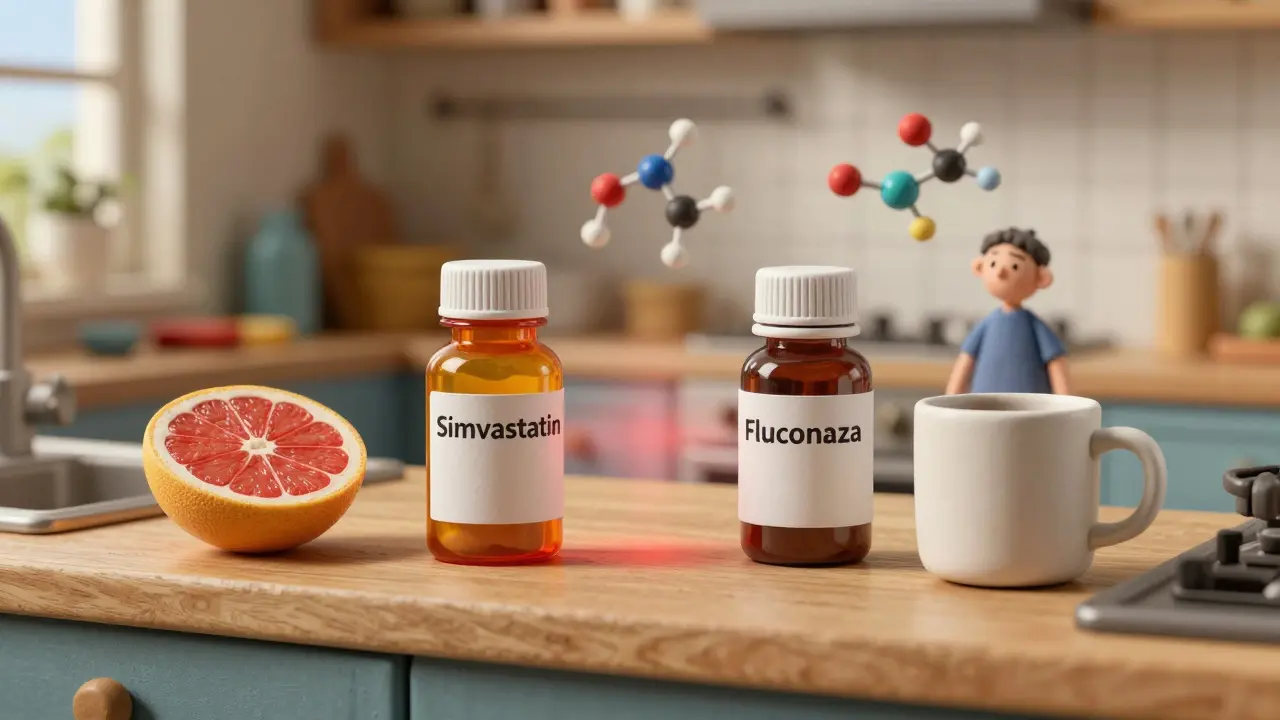
Clinical trials are tightly controlled. Participants are usually healthy adults, with one main condition, taking only one or two medications. They’re monitored closely for months, not years. That’s fine for spotting common side effects like nausea or dizziness. But it’s terrible for catching interactions that only happen when you’re 72, on five different pills, eating grapefruit every morning, and have kidney disease. Take simvastatin and fluconazole. In trials, maybe 200 people took both. No one got sick. So the label didn’t warn about it. But after millions of prescriptions, doctors started seeing patients with severe muscle breakdown - rhabdomyolysis - leading to kidney failure. The reason? Fluconazole blocks the liver enzyme (CYP3A4) that breaks down simvastatin. Blood levels of simvastatin spiked 3 to 10 times higher than normal. That’s not a glitch. That’s a silent killer hiding in plain sight. Same thing with grapefruit juice and atorvastatin. The juice blocks the same enzyme. One glass can raise atorvastatin levels by up to 15 times. People didn’t know. Their doctors didn’t know. The label didn’t say enough. By the time the warning came, hundreds had ended up in the ER.What Happens After a Drug Hits the Market
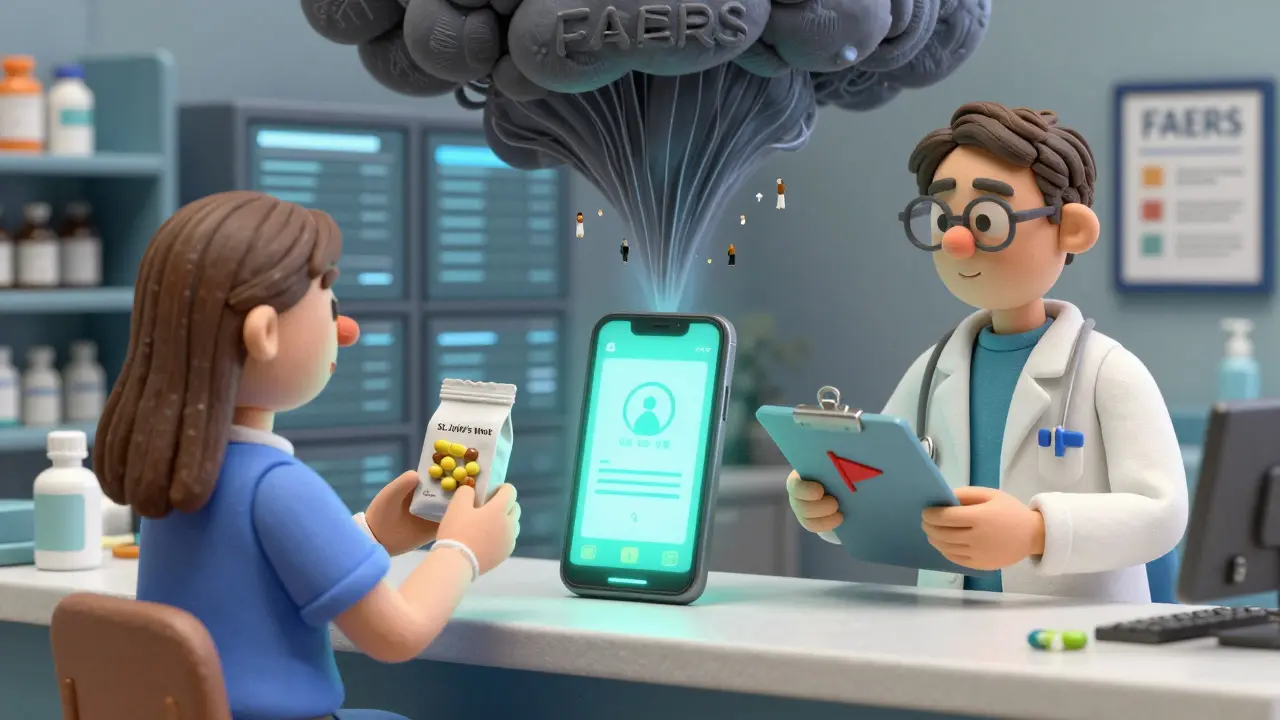
Once a drug is sold to the public, it enters a system called post-marketing surveillance. It’s not glamorous. No press releases. No TV ads. Just databases - millions of anonymous reports from doctors, pharmacists, and patients. The FDA’s FAERS system collects over 2 million reports a year. The EU’s EudraVigilance gets another 2.1 million. These aren’t perfect. Most adverse events go unreported - estimates say 90 to 95% never make it in. But enough slip through to trigger alarms. When a pattern emerges - say, 50 reports of sudden heart rhythm problems in people taking drug A with drug B - regulators dig deeper. They cross-check hospital records, pharmacy logs, even social media threads. That’s how they found out that terfenadine (Seldane), a popular antihistamine, could cause fatal arrhythmias when taken with ketoconazole. The drug was pulled from shelves in 1998. That’s post-market surveillance in action.Three Types of Hidden Risks
Post-market discoveries fall into three buckets:- Drug-drug interactions: Two or more medications clashing. Like warfarin and trimethoprim-sulfamethoxazole. One boosts the blood-thinning effect of the other. Result? Internal bleeding. This combo caused over 1,200 ER visits in 2020 alone.
- Drug-condition interactions: A health problem makes a drug dangerous. For example, giving metformin to someone with worsening kidney disease. The drug builds up in the body and causes lactic acidosis - a life-threatening buildup of acid. Trials rarely include patients with advanced organ damage.
- Drug-food interactions: Grapefruit juice is the classic, but it’s not alone. St. John’s Wort, a common herbal supplement, reduces the effectiveness of birth control pills, antidepressants, and even blood thinners like apixaban. One FDA report from 2022 described a 78-year-old man who bled internally after starting apixaban while continuing St. John’s Wort. His doctor never asked about supplements.
The Human Cost
It’s not just numbers. It’s people. A Reddit user named u/MedSafety456 wrote in 2022: “My doctor didn’t warn me about the grapefruit interaction with my Lipitor - ended up in the ER with kidney damage from rhabdomyolysis.” That’s not rare. FAERS data shows 2,847 reports of rhabdomyolysis tied to statin interactions between 2015 and 2020. Simvastatin-azole combos made up 37% of those cases. On Trustpilot, users praise apps like GoodRx for catching these risks. One person wrote: “The interaction warning prevented me from taking ciprofloxacin with my blood pressure meds - my pharmacist confirmed it could have caused dangerous QT prolongation.” That’s the power of accessible tools. But many never get warned. A 2021 Duke University study found that 15 to 20% of hospital admissions in the U.S. are caused by preventable drug interactions. That’s over 1 million people a year. And the cost? Around $1 billion annually in the U.S. alone.How We’re Fighting Back
The system isn’t broken - it’s just slow. But it’s getting better. The FDA’s Sentinel Initiative now tracks over 300 million patient records from hospitals, insurers, and clinics. It uses AI to spot unusual patterns - like a spike in liver failure among people taking a new diabetes drug with a common antibiotic. In 2023, the FDA approved its first AI-powered pharmacovigilance platform that can analyze 10,000 reports a day with 92.7% accuracy. The EU’s EudraVigilance now cuts signal detection time from 18 months to 45 days. That’s huge. It used to take years to confirm a dangerous interaction. Now, it can happen in weeks. Pharmacists are also stepping up. The Naranjo Algorithm helps them rate how likely a reaction is caused by a drug interaction. It’s not magic - it’s a checklist. Did the reaction happen after starting the drug? Did it get worse when the drug was restarted? Was there another possible cause? Answer those, and you get a score. A high score means action is needed.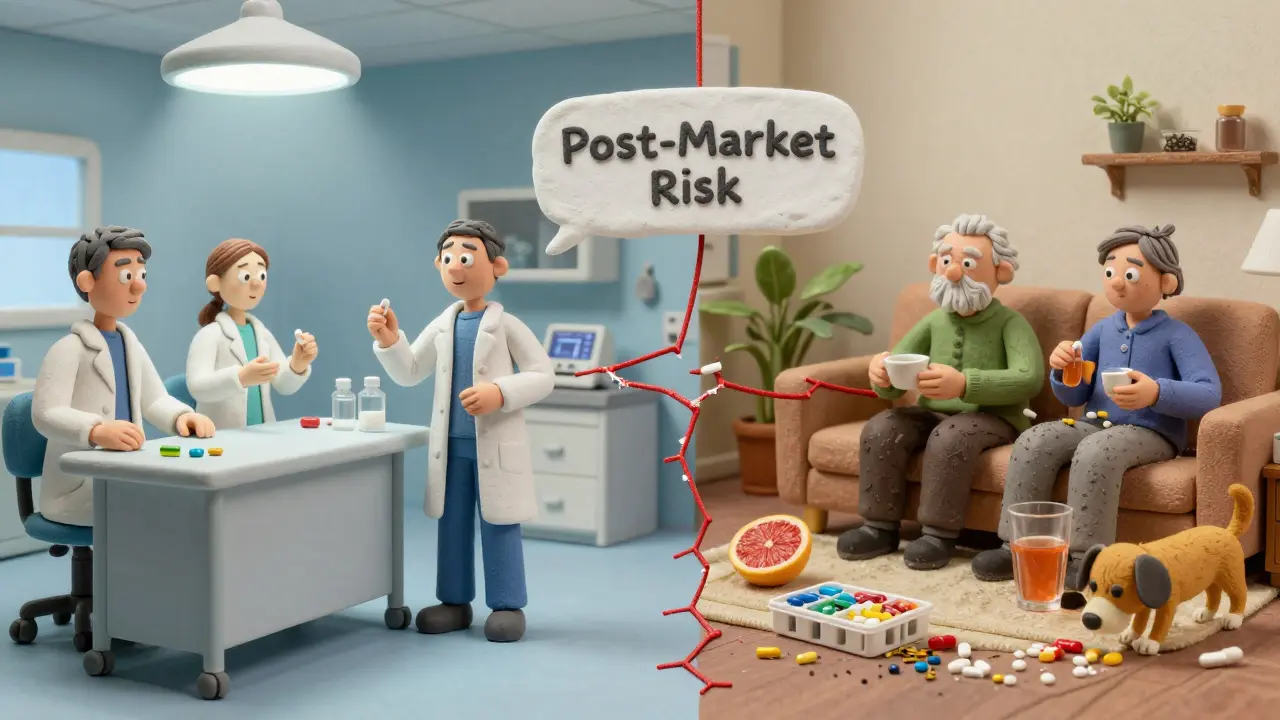
What You Can Do
You don’t have to wait for a warning. You can protect yourself.- Always tell your doctor and pharmacist every medication you take - including vitamins, herbs, and over-the-counter painkillers. St. John’s Wort isn’t “just a supplement.” It’s a drug with real effects.
- Ask: “Could this interact with anything else I’m on?” Don’t assume they know. Many doctors have 10 minutes per visit. They rely on you to give full info.
- Use free tools. GoodRx, Medscape, or the FDA’s Drug Interaction Checker can flag risks in seconds. If your pharmacy app shows a warning, don’t ignore it.
- Know your triggers. Grapefruit juice? Avoid it if you’re on statins, blood pressure meds, or some anti-anxiety drugs. Alcohol? Never mix it with extended-release opioids like Exalgo. That combo can cause “dose dumping” - a full dose released at once. People have died from that.
The Future Is Here - But It’s Not Perfect
The future of drug safety includes genetic testing. The NIH’s Pharmacogenomics Research Network is already studying how your DNA affects how you process drugs. Some people naturally break down certain medications slower. That’s why one person gets sick on a standard dose while another feels fine. By 2025, 68% of big pharma companies plan to use blockchain to track adverse events. That means faster, more accurate reporting. Less lost data. Fewer missed signals. But here’s the catch: labeling hasn’t kept up. Even when we know a drug interaction is dangerous, the label might still say “rare” or “possible.” It’s not bold. It’s not clear. Patients miss it. Doctors miss it. That’s why the most powerful tool isn’t AI or blockchain. It’s you - asking questions, reading labels, and speaking up. Because drugs are never truly safe until they’ve lived in the real world. And the real world? It’s messy. It’s complex. And it’s full of people like you - taking pills, eating fruit, and hoping for the best.What does it mean when a drug interaction is discovered post-market?
It means the dangerous interaction between two medications - or between a medication and food, supplement, or health condition - wasn’t found during clinical trials. It only became clear after thousands or millions of people started using the drug in everyday life. These discoveries lead to updated warnings, label changes, or even drug withdrawals.
Why weren’t these interactions found in clinical trials?
Clinical trials are small - usually 1,000 to 5,000 people - and last only 6 to 12 months. They exclude children, the elderly, pregnant women, and people with multiple health problems. They also don’t test combinations with common foods, herbs, or over-the-counter drugs. Real-world use involves far more complexity, and that’s where hidden interactions surface.
Can I trust my doctor to know about all drug interactions?
Your doctor is trained to know common interactions, but no one remembers every possible combo. There are over 1,000 known drug interactions, and new ones are found every year. That’s why you need to be an active participant - tell your doctor everything you take, and ask specifically about interactions when a new drug is prescribed.
Are herbal supplements safe to take with prescription drugs?
No - not without checking. St. John’s Wort can reduce the effectiveness of birth control, antidepressants, and blood thinners. Garlic and ginkgo can increase bleeding risk when taken with warfarin. Even green tea can interfere with some chemotherapy drugs. Just because something is “natural” doesn’t mean it’s safe with your meds.
How can I check for drug interactions myself?
Use free, reliable tools like the FDA’s Drug Interaction Checker, GoodRx, or Medscape’s Drug Interaction Checker. Enter all your medications - including supplements and OTC drugs - and get an instant alert. Always double-check with your pharmacist before starting anything new.
What should I do if I think I’m having a drug interaction?
Stop the new medication immediately and call your doctor or pharmacist. If you have symptoms like severe muscle pain, unusual bleeding, dizziness, chest pain, or confusion, go to the ER. Report the event to the FDA through MedWatch. Your report could help prevent others from being harmed.


