
How to Audit Your Medication Bag Before Leaving the Pharmacy to Avoid Dangerous Errors
Jan, 22 2026
Every year, over 1.5 million people in the U.S. are harmed by medication errors - and most of them happen right at the pharmacy counter. You pick up your prescription, grab the bag, and walk out. But what if the pill in that bottle isn’t the one your doctor ordered? What if the dose is ten times higher than it should be? These aren’t rare mistakes. They’re preventable - if you take just 30 seconds before leaving the pharmacy to audit your medication bag.
Why This 30-Second Check Saves Lives
Pharmacists are trained professionals, but they’re human. They’re juggling dozens of prescriptions, dealing with similar-looking drug names, and sometimes working under time pressure. A 2024 study in JAMA Internal Medicine found that 87% of dispensing errors are caught only when patients double-check their meds before walking out. That’s not luck. That’s a system failure - and you’re the last line of defense.The Institute for Safe Medication Practices (ISMP) reports that nearly one in five serious errors involve the wrong dose. A patient might get 50 mg instead of 5 mg. Another might receive a blood thinner meant for someone else with a similar name. These aren’t hypotheticals. In January 2025, a Pennsylvania man prevented a fatal warfarin overdose by noticing the label said “10 mg” while his doctor had prescribed “1 mg.” He asked the pharmacist to check - and the error was corrected.
The Seven-Point Medication Audit Checklist
You don’t need to be a doctor to catch mistakes. You just need to know what to look for. The American Pharmacists Association (APhA) and the FDA recommend this seven-point audit every time you pick up a new prescription:- Check your name - Is it exactly yours? No nicknames, no misspellings. A 2024 NCPA audit found 12.7% of errors involved the wrong patient because names were too similar - like “John Smith” vs. “Jon Smith.”
- Verify the drug name - Look at both the brand and generic name. Is it “Lisinopril” or “Zestril”? Does it match what your doctor told you? Look-alike, sound-alike drugs like “Hydralazine” and “Hydroxyzine” cause over 1,800 errors a year, according to the FDA’s MedWatch system.
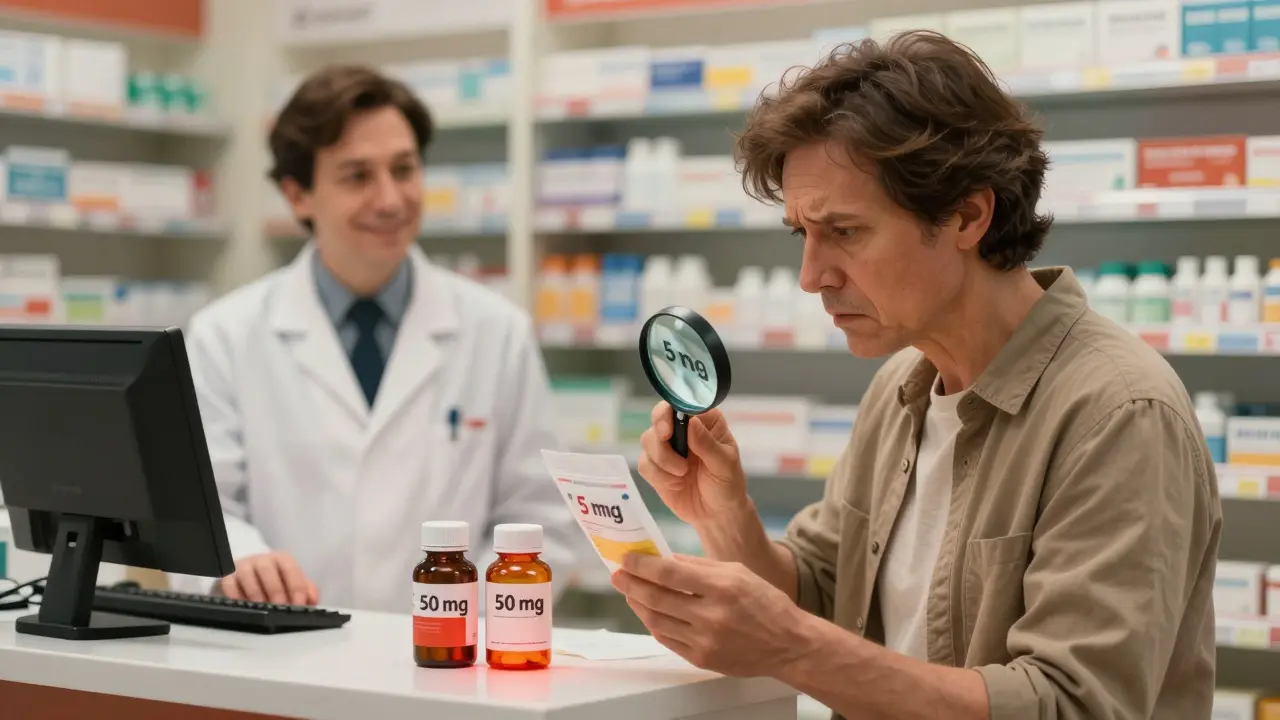
- Confirm the strength - Is it “5 mg” or “50 mg”? Units matter. A 2023 ISMP report says strength errors cause 32% of all serious mistakes. If the label says “5” without units, stop. Ask for clarification.
- Count the pills - If your prescription says “30 tablets,” count them. CMS data shows 8.3% of errors involve wrong quantities. A bottle with 60 pills instead of 30 could mean double the dose - and that’s dangerous with medications like opioids or blood thinners.
- Check the expiration date - For chronic meds like high blood pressure or diabetes drugs, make sure the date is at least six months away. The U.S. Pharmacopeia (USP) says expired meds can lose potency or even break down into harmful substances.
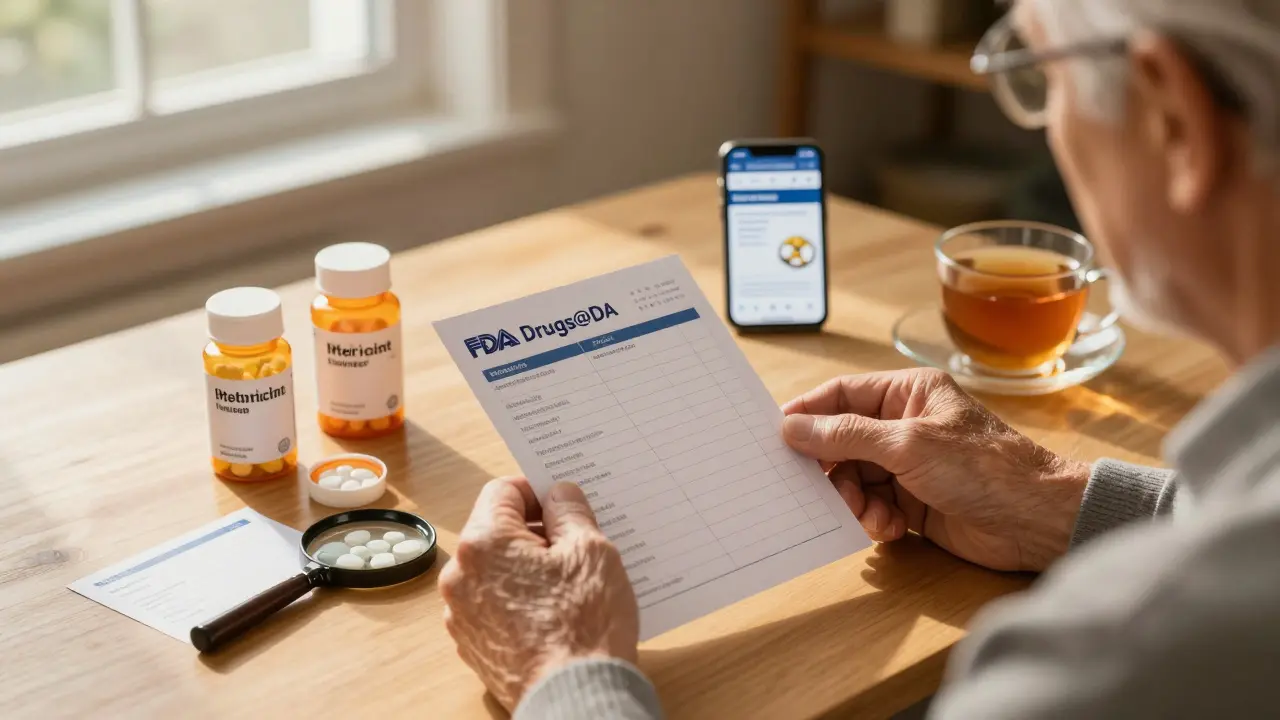
- Match the appearance - Does the pill look right? Color, shape, and markings matter. If your usual blue oval pill suddenly looks like a white round one, don’t take it. Use the FDA’s Drugs@FDA database or ask the pharmacist for a reference image. Many pharmacies now offer printed pictures on the label.
- Review the instructions - “Take one by mouth daily” sounds simple. But what if it’s supposed to be “take one with food” or “take at bedtime”? A 2023 APhA report found 14.2% of errors involve wrong directions. Did your doctor say “every 8 hours” or “three times a day”? Make sure the label matches.
What to Do If Something Doesn’t Look Right
If you spot a red flag - a mismatched name, wrong dose, or strange-looking pill - don’t just ask. Ask to speak with the pharmacist directly. Most errors happen because patients hesitate, assuming the pharmacist already checked. But the truth? Pharmacists rely on your eyes. A 2024 Johns Hopkins study showed that when patients asked for a second review, errors were caught 73% faster.Bring your phone. Take a picture of the label and the pill. Compare it to your old prescription bottle or a trusted source like the FDA’s website. If you’re unsure, say: “Can you walk me through this? I want to make sure I’m taking this right.” Pharmacists are trained to help - and they’ll appreciate you for it.
Why Mobile Apps Aren’t Enough
You might think: “I’ll just scan the barcode with my phone.” Apps like MedSafe (version 3.2, released Jan 2025) can verify 98.7% of National Drug Codes - but they’re useless if you can’t see the screen. Pew Research found that 42% of seniors don’t use smartphone verification tools. And even if you can use them, apps can’t catch everything. They won’t tell you if the pill color changed or if the instructions say “take twice daily” when your doctor said “once.”Barcodes verify the drug, but they don’t verify the context. That’s why the seven-point audit still beats technology. It’s human, flexible, and catches the mistakes machines miss.
What If You Can’t Read the Label?
If you have vision problems, arthritis, or trouble reading small print, you’re not alone. A 2024 AARP survey found that only 41% of adults over 65 consistently check their meds - and they’re the ones most at risk for serious errors. The good news? Most pharmacies now offer free help:- Ask for a large-print label - many pharmacies now print labels in 18-point font.
- Request a magnifying card - Walgreens and CVS have handed out over 2 million since March 2024.
- Ask for a voice-guided verification - Amazon Pharmacy’s Alexa integration (launching Q2 2025) will read labels aloud.
- Bring a family member - even a quick second pair of eyes cuts error rates in half.
Don’t be embarrassed. You’re not failing - you’re protecting yourself.
What Pharmacies Are Doing to Help
Pharmacies aren’t just handing out pills anymore. California’s SB 793 law (effective Jan 1, 2025) requires pharmacists to verbally prompt patients to verify their meds. At Mayo Clinic pharmacies, staff now say: “Before you leave, can you confirm the name, dose, and instructions match what your doctor told you?”That simple phrase reduced errors by 73% in pilot programs. And it’s spreading. The 2024 Pharmacy Quality Alliance report shows 78% of chain pharmacies now have formal verification protocols. CMS even ties pharmacy reimbursement rates to how well they help patients verify meds - starting in 2026.
Some pharmacies now include QR codes on labels that link to short videos explaining how to check your meds. The FDA’s new 2025 label standard will make this mandatory. That means in a few months, scanning your pill bottle could show you a 30-second video: “Check your name. Check the dose. Count the pills.”

Real Stories, Real Consequences
On Reddit, a mother named u/MedSafetyMom shared how she caught a 10-fold overdose in her child’s antibiotic. The label said “give 5” - but the bottle was labeled “50 mg/5mL.” She asked: “What does ‘5’ mean?” The pharmacist realized he’d forgotten to write “mL.” That mistake could have sent her child to the ER.On Drugs.com, a caregiver wrote: “I’ve almost taken the wrong pill twice. The print is too small. I don’t trust myself.” That’s not weakness - it’s a system flaw. And it’s fixable.
These aren’t outliers. They’re examples of what happens when people skip the audit. And they’re why you shouldn’t either.
How to Get Started Today
You don’t need to memorize a 10-page guide. Just remember this: Stop. Look. Ask.- Stop before you walk out.
- Look at all seven points - even if you’ve taken this med before. Doses change. Pills change. Names change.
- Ask the pharmacist: “Can you confirm this matches what my doctor ordered?”
Most pharmacies keep free wallet cards with the seven-point checklist. Ask for one. Keep it in your wallet or phone case. Use it every time.
The CDC’s 2024 Medication Safety Kit is available at 92% of U.S. pharmacies - free. No subscription. No cost. Just ask.
Final Thought: You’re Not Just a Customer - You’re a Safety Partner
Pharmacies have systems. But systems fail. People don’t. Your eyes, your questions, your hesitation - those are the things that stop errors before they hurt you. This isn’t about being suspicious. It’s about being smart.Thirty seconds. That’s all it takes. One bottle. One label. One question. And it could mean the difference between getting better - and getting worse.


