
OCD Medication Options: SSRIs, Clomipramine, and Dosing Protocols
Jan, 24 2026
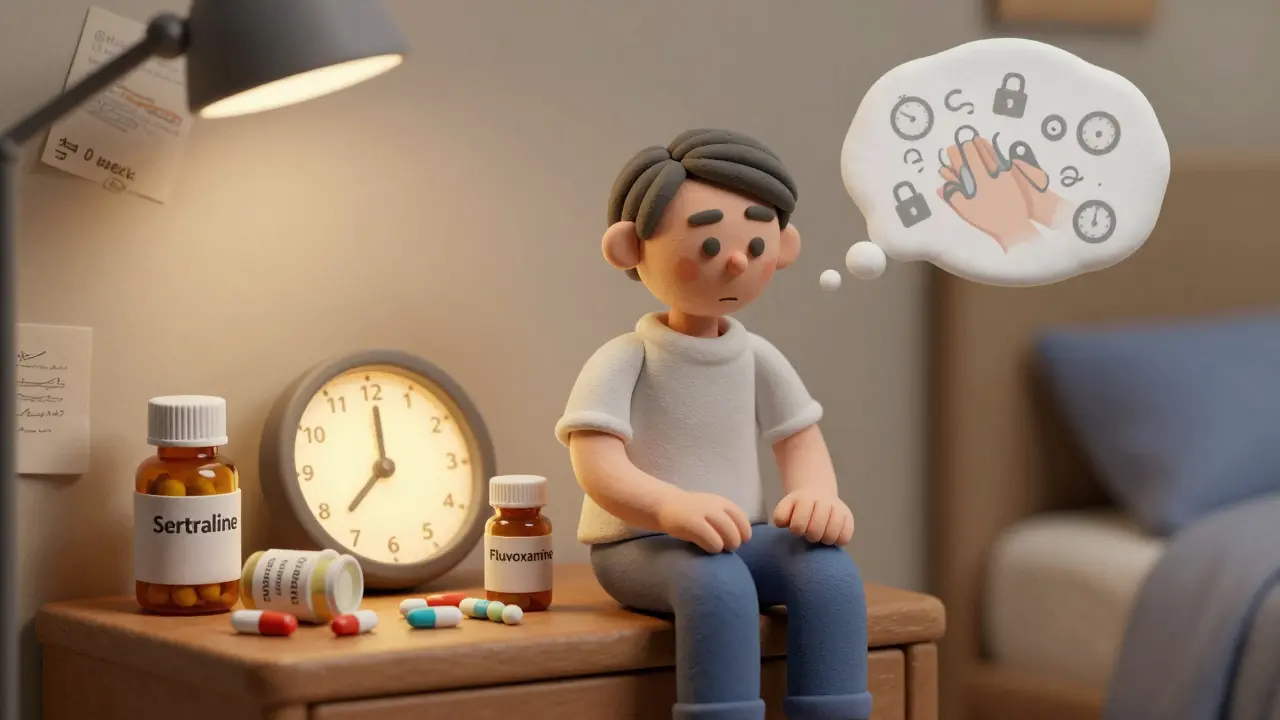
When you're struggling with obsessive-compulsive disorder, finding the right medication can feel like searching for a key in a dark room. You know it exists. You’ve heard others talk about it. But the right one? That’s the hard part. The truth is, not all OCD meds work the same way for everyone. Some people find relief with a low dose of sertraline. Others need to push clomipramine to 200 mg just to quiet the noise in their head. And for many, it’s not about picking one drug-it’s about understanding how these options stack up, how to dose them safely, and when to switch paths.
SSRIs: The First-Line Choice for Most People
Selective serotonin reuptake inhibitors-SSRIs-are the most common starting point for OCD treatment. That’s not because they’re perfect. It’s because they’re the safest bet. The American Psychiatric Association recommends them as first-line treatment, and for good reason. Compared to older drugs like clomipramine, SSRIs have fewer side effects, less risk to the heart, and don’t leave you feeling like you’re walking through molasses.
But here’s the catch: the doses you use for depression won’t cut it for OCD. If you’ve taken fluoxetine for low mood at 20 mg a day, you’ll need to bump it up to 40-60 mg to even start seeing results for OCD. Same with sertraline: 50 mg might help anxiety, but for OCD, most people need 150-200 mg. Some go as high as 300 mg. That’s not a typo. It’s standard.
Fluvoxamine, paroxetine, fluoxetine, and sertraline are all FDA-approved for OCD. Each has slightly different dosing patterns. Fluvoxamine often starts at 25 mg and climbs by 50 mg every 5-7 days, with a max of 300 mg. Sertraline typically starts at 25 mg, then increases by 25-50 mg weekly until hitting 200-300 mg. Paroxetine usually tops out at 40-60 mg. And fluoxetine? It’s slow to build up in your system, so doses are often kept high for longer periods.
It takes time. Eight to twelve weeks is the minimum to judge if an SSRI is working. Many people quit before week six because they feel worse at first. That’s normal. Anxiety spikes in the first 1-2 weeks as your brain adjusts. About 37% of patients consider stopping during this window-but 89% of those who stick it out see improvement by week 8.
Clomipramine: The Old Guard That Still Delivers
Clomipramine was the first drug ever approved by the FDA specifically for OCD back in 1989. It’s a tricyclic antidepressant, older and rougher around the edges than SSRIs. But it’s also one of the most potent. For some people-especially those who’ve tried three or four SSRIs and still can’t breathe-it’s the only thing that works.
The dosing is precise. Adults start at 25 mg a day, usually at night because it makes you sleepy. Every 4-7 days, the dose goes up by 25 mg. Most people reach a therapeutic range between 100 and 250 mg. The maximum is 250 mg. For kids aged 10 and older, the dose is 1-3 mg per kilogram of body weight, capped at 200-250 mg depending on the source. Elderly patients? Start at 10 mg. Go slow.
Clomipramine works differently than SSRIs. It doesn’t just block serotonin. It also hits norepinephrine, which might explain why it’s particularly strong for contamination and cleaning obsessions. Studies show it improves CY-BOCS scores by 37% in teens, outperforming sertraline and fluoxetine in pediatric cases. For adults, the results are about equal to SSRIs-but only if you give it enough time and enough dose.
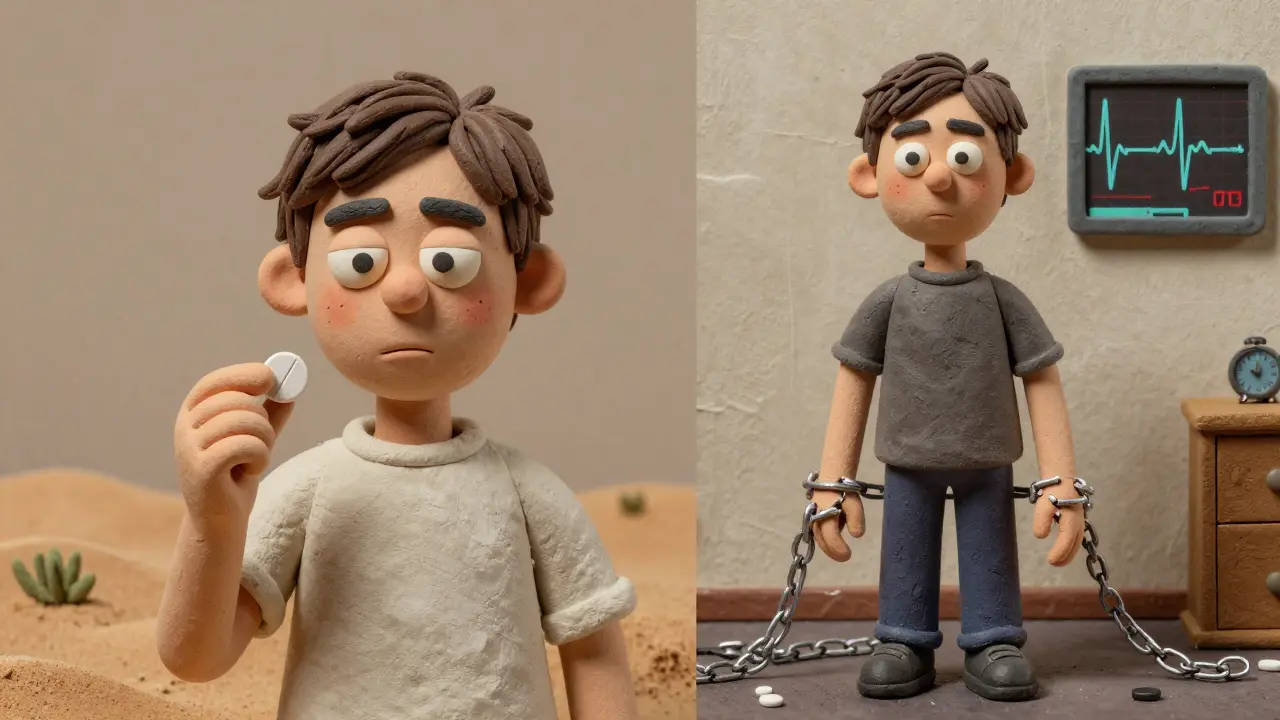
But the side effects? They’re real. Dry mouth so bad you need five glasses of water an hour. Weight gain of 15-25 pounds in six months. Dizziness. Blurred vision. Constipation. And yes-heart rhythm changes. At doses above 150 mg, doctors recommend an ECG to check your QTc interval. If it stretches too far, you’re at risk for dangerous arrhythmias.
That’s why most clinicians don’t start here. They save clomipramine for when SSRIs fail. But when it works? It can change everything. One Reddit user wrote: “Clomipramine at 175 mg stopped my checking rituals after five failed SSRIs. But the drowsiness made me switch to sertraline.” That’s the trade-off: power versus peace.
Dosing Protocols: Why Timing and Titration Matter
You can’t just take an SSRI or clomipramine and expect miracles. It’s not a light switch. It’s a slow dial. Dosing isn’t about what’s on the label-it’s about what your body can handle.
For SSRIs, the goal is to reach the therapeutic window as safely as possible. That means starting low and going slow. Fluvoxamine: 25 mg, then +50 mg every 5-7 days. Sertraline: 25 mg, then +25 mg weekly. Fluoxetine: 20 mg, then +20 mg every 1-2 weeks. Paroxetine: 10 mg, then +10 mg every 1-2 weeks. Most people reach their target dose in 4-6 weeks. But don’t rush. Pushing too fast increases side effects and the chance you’ll quit.
Clomipramine is even more delicate. Start at 25 mg. Wait four days. Go to 50 mg. Wait another four. Then 75, 100, 125, and so on. Many patients don’t feel better until they hit 150 mg. That can take 10-14 weeks. And yes, that’s a long time to wait. But the data shows: if you stop before 12 weeks, you’re not giving it a fair shot.
Monitoring is non-negotiable. Blood tests for liver function. ECGs for heart rhythm. And the CY-BOCS scale-used by clinicians to measure symptom severity-should be checked every 2-4 weeks. A 25-35% reduction in scores is considered a good response. Anything less? It’s time to reassess.
When to Choose Clomipramine Over SSRIs
Here’s the real question: when should you go for clomipramine?
Not because you’re desperate. Not because you’re tired of trying. But because the evidence says it might help.
The American Psychiatric Association’s guideline is clear: try two adequate SSRI trials before considering clomipramine. An “adequate trial” means 12 weeks at the maximum tolerated dose-with at least six weeks at a high dose. If both fail? Then clomipramine enters the picture.
Some people respond better to clomipramine for specific OCD subtypes. Contamination fears? Cleaning rituals? Repeated handwashing? Clomipramine at 150-250 mg shows stronger results here than SSRIs. It’s also more effective in kids and teens, according to meta-analyses.
But here’s the flip side: 28% of people stop clomipramine because of side effects. For SSRIs? Only 15-18%. That’s a big gap. And while clomipramine might work better for some, SSRIs work well enough for most. Plus, they’re cheaper. Generic sertraline costs $350 a year. Branded clomipramine? Up to $1,200. Insurance doesn’t always cover it.
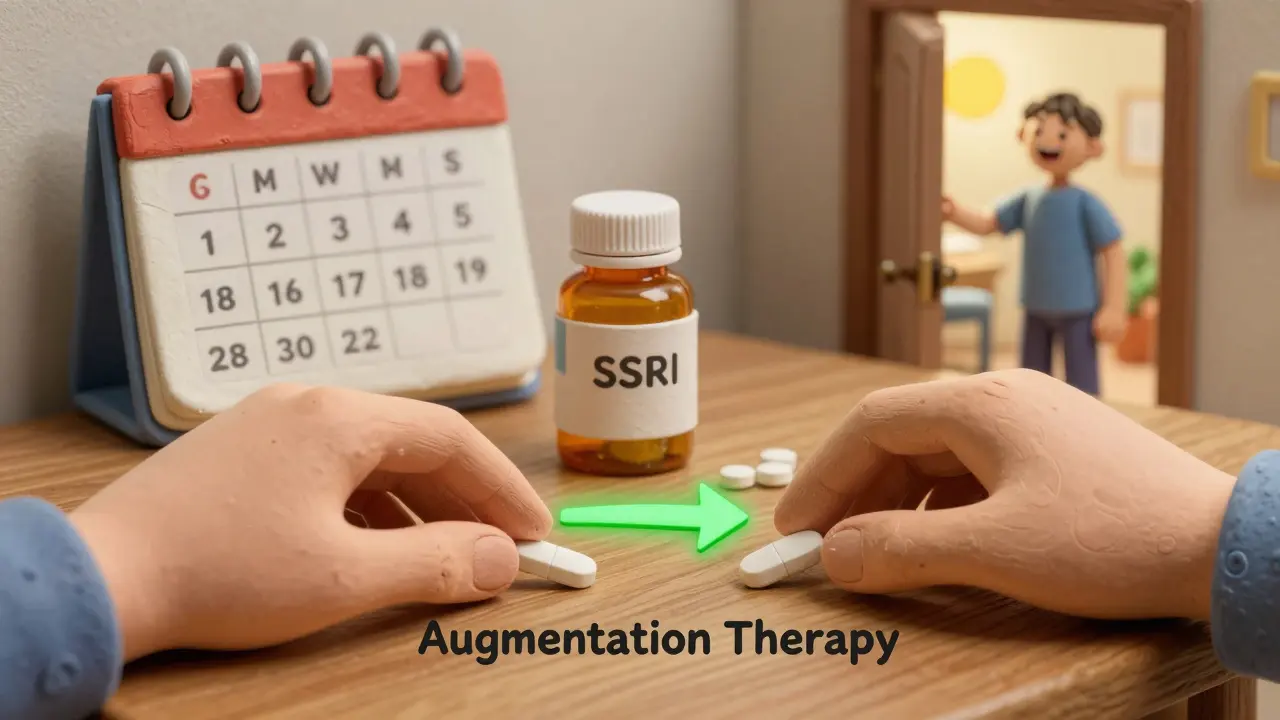
There’s also a growing trend: using low-dose clomipramine as an add-on. Instead of switching, doctors add 25-75 mg of clomipramine to an ongoing SSRI. Studies show this boosts response rates to 35-40% in people who only partially improved on SSRIs alone. It’s a smart middle ground-less risk than full-dose clomipramine, more power than SSRIs alone.
What Patients Actually Say
Real people, real experiences. That’s what matters when you’re deciding.
On OCD-UK’s forum, 62% of 1,247 respondents said SSRIs were easier to tolerate than clomipramine. Common complaints about clomipramine? “I couldn’t sleep unless I took half a pill.” “My mouth felt like sandpaper.” “I gained 20 pounds and felt like a zombie.”
On Reddit’s r/OCD, 78% of 856 users who tried clomipramine said they only saw real improvement at 150 mg or higher. But 43% quit because of side effects. One user wrote: “It stopped my rituals. But I couldn’t function. I missed work. I stopped seeing friends. I switched back to sertraline. It didn’t fix everything-but I could live with it.”
On Drugs.com, clomipramine got a 7.2/10 for effectiveness. SSRIs got 6.8. But satisfaction? Clomipramine: 5.1/10. SSRIs: 6.2/10. The gap isn’t about results. It’s about quality of life.
That’s the core truth: the best medication isn’t the one that works the hardest. It’s the one you can actually live with.
What’s Next? New Treatments on the Horizon
Medication isn’t the only path forward. In March 2023, the FDA gave Breakthrough Therapy status to SEP-363856, a new serotonin modulator. In a phase 2 trial, 45% of treatment-resistant OCD patients responded to just 50 mg a day. That’s huge.
At the same time, psilocybin-assisted therapy is being tested in phase 3 trials. Early results show 60% of patients reached remission after six months with psilocybin plus SSRIs-compared to 35% with SSRIs alone. It’s not available yet. But it’s coming.
Even clomipramine is getting an upgrade. Researchers are testing a skin patch that delivers the drug slowly, avoiding the dangerous blood spikes that cause side effects. Early trials show it works just as well at lower doses-with 40% fewer dry mouth and dizziness complaints.
The future of OCD treatment isn’t just about picking one pill. It’s about combining approaches: medication, therapy, and new tools that make treatment more tolerable, more precise, and more human.
What’s the best SSRI for OCD?
There’s no single “best” SSRI for OCD. Sertraline is the most commonly prescribed because it’s effective and well-tolerated. Fluvoxamine and paroxetine also have strong evidence. But response varies by person. The key is reaching a high enough dose-200-300 mg for sertraline, 300 mg for fluvoxamine-and giving it 8-12 weeks to work. If one doesn’t help, try another. Most people find success after testing two or three.
Can you take clomipramine and an SSRI together?
Yes, but only under close medical supervision. Combining clomipramine with an SSRI increases serotonin levels significantly, which can lead to serotonin syndrome-a rare but dangerous condition. Low-dose augmentation (25-75 mg clomipramine added to an SSRI) is used for partial responders and has shown 35-40% improvement rates. Blood levels and heart monitoring are essential. Never combine these without a psychiatrist’s guidance.
How long does it take for OCD meds to work?
At least 8-12 weeks. Many people expect results in 2-4 weeks, like with antidepressants for depression. But OCD is different. The brain needs time to adapt to higher serotonin levels. The first 1-2 weeks often feel worse. That’s normal. If you stick with it, improvement usually starts around week 6-8. Don’t quit before 12 weeks unless side effects are unbearable.
Is clomipramine safe for teens?
Yes, for patients aged 10 and older. Dosing is based on weight: 1-3 mg per kilogram per day, with a maximum of 200-250 mg. It’s more effective than SSRIs in adolescents for some OCD subtypes, but side effects like weight gain, drowsiness, and heart rhythm changes require careful monitoring. Regular ECGs and liver tests are recommended. Always start low and go slow.
What if my OCD meds stop working?
It’s not uncommon. Tolerance can develop, or your symptoms may change. First, confirm you’ve been on the highest tolerated dose for at least 12 weeks. Then, consider switching to another SSRI or adding low-dose clomipramine. If that fails, therapy like ERP (exposure and response prevention) may need to be intensified. New options like psilocybin-assisted therapy and novel serotonin modulators are in trials and may become available in the next few years.
If you’re on medication and still struggling, you’re not alone. OCD is stubborn. Medication helps, but it’s rarely the whole answer. Pair it with therapy. Track your symptoms. Talk to your doctor. And remember: the goal isn’t perfection. It’s enough. Enough peace. Enough control. Enough days where the thoughts don’t take over.


