
Hormone Therapy Combinations: Generic Choices and Considerations

Mar, 22 2026
When women start menopause, their bodies stop making estrogen and progesterone. This shift can bring hot flashes, night sweats, trouble sleeping, and mood swings. For many, these symptoms are more than just annoying-they disrupt work, relationships, and daily life. Hormone therapy (HRT) is one of the most effective ways to manage them. But not all HRT is the same. The type you need depends on your medical history, your symptoms, and whether you still have your uterus. And when it comes to choosing between brand-name and generic options, cost and safety matter just as much as effectiveness.
What Hormone Therapy Combinations Actually Do
HRT doesn’t just relieve symptoms. It replaces the hormones your body no longer makes after menopause. But here’s the catch: if you still have a uterus, you can’t take estrogen alone. It will make the lining of your uterus grow too thick. That raises your risk of endometrial cancer by 2 to 12 times. That’s why combined therapy exists-estrogen to manage symptoms, and progestogen to protect your uterus.
There are two main ways to combine them: sequential and continuous. Sequential means you take estrogen every day and add progestogen for 10 to 14 days each month. This mimics a natural cycle. If you’re still having periods, this is usually the first choice. You’ll likely get a withdrawal bleed each month, which feels familiar but isn’t a real period.
Continuous combined therapy means you take both hormones every single day. No breaks. This is for women who haven’t had a period for a full year. It’s less likely to cause bleeding over time, which many find more convenient. Both types are available in pills, patches, gels, and even intrauterine systems like the Mirena coil, which releases progestogen directly into the uterus while you take estrogen elsewhere.
Generic Options You Can Actually Buy
Most HRT prescriptions today are generic. About 78% of all HRT fills in the U.S. are for generics, according to GoodRx data from 2023. Why? Because they work just as well as brand-name versions but cost a fraction of the price.
Common generic estrogen options include:
- Conjugated estrogens (0.3mg, 0.45mg, 0.625mg tablets)
- Estradiol (0.5mg, 1mg tablets, or as patches and gels)
For progestogen, the most common generic is:
- Medroxyprogesterone acetate (2.5mg, 5mg, 10mg tablets)
But there’s another option gaining traction: micronized progesterone. This is a bio-identical form of progesterone, made from plant sources and chemically identical to what your body makes. Studies from the European Menopause and Andropause Society show it has a better safety profile than synthetic progestins like medroxyprogesterone. Breast cancer risk increases by 2.7% per year with synthetic progestins, but only 1.9% per year with micronized progesterone. It’s not always the first choice because it’s more expensive and sometimes harder to find, but it’s worth asking your doctor about.
Costs vary. In the U.S., a month’s supply of generic oral HRT can range from $4 to $40, depending on insurance and dosage. Transdermal options (patches, gels) are often pricier but may be covered under different pharmacy tiers. Some pharmacies offer $10-month generics through discount programs.
Delivery Methods: More Than Just Pills
Pills aren’t the only way. In fact, for many women, they’re not the best.
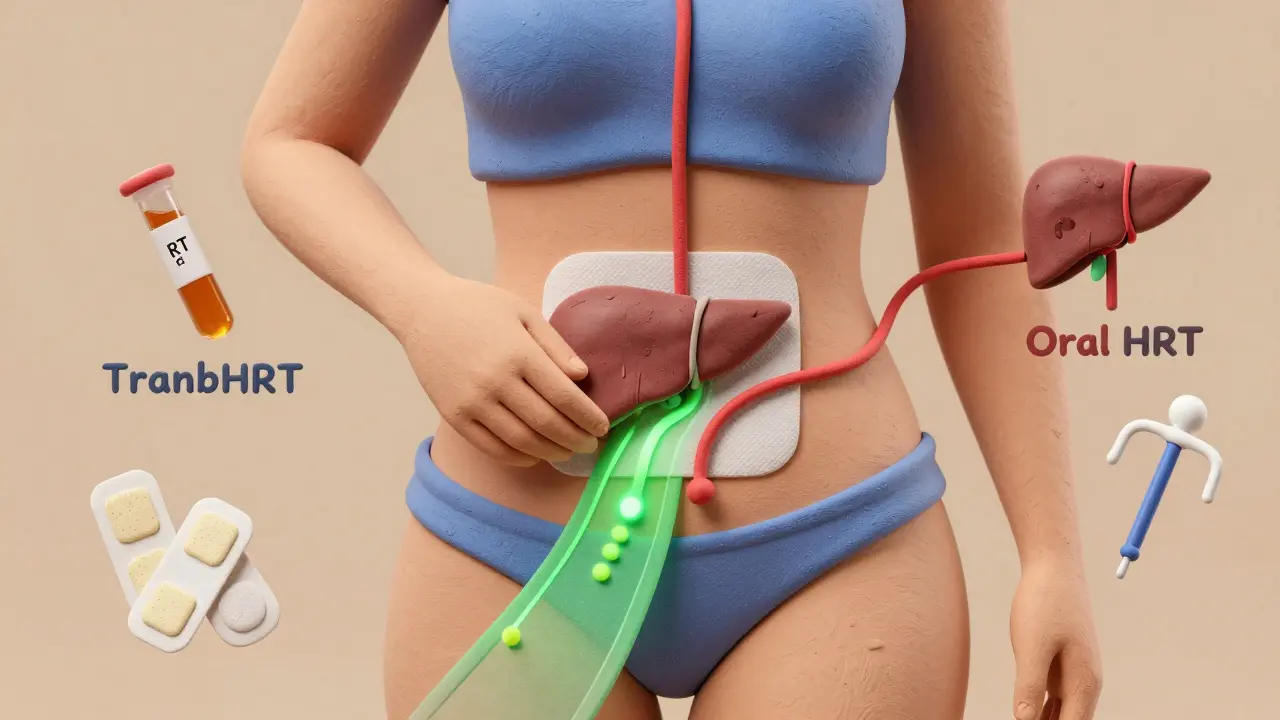
Oral estrogen is processed by the liver. That triggers changes in clotting factors and increases the risk of blood clots and stroke. Research from the National Institutes of Health shows oral HRT raises the risk of venous thromboembolism (VTE) by 2 to 3 times compared to transdermal methods. The absolute risk is still low-for a healthy woman under 60, it’s less than 1 in 1,000 per year-but it’s real.
Transdermal options-patches, gels, and sprays-deliver hormones directly through the skin. They bypass the liver. That means:
- Lower risk of blood clots
- Lower risk of stroke
- More stable hormone levels
For women with a history of migraines, high blood pressure, or a family history of clots, transdermal is often the preferred route. A 2023 FDA-approved combination patch (estrogen + progesterone) is now available, and early data suggests it may carry even lower breast cancer risk than older oral combinations.
But there’s a learning curve. Patches need to be applied to clean, dry skin and changed twice a week. Gels require daily application, and you can’t shower or swim for an hour afterward. Skin-to-skin contact (like hugging or sex) right after applying gel can transfer hormones to your partner. These aren’t deal-breakers, but they require discipline.
Who Should and Shouldn’t Use HRT
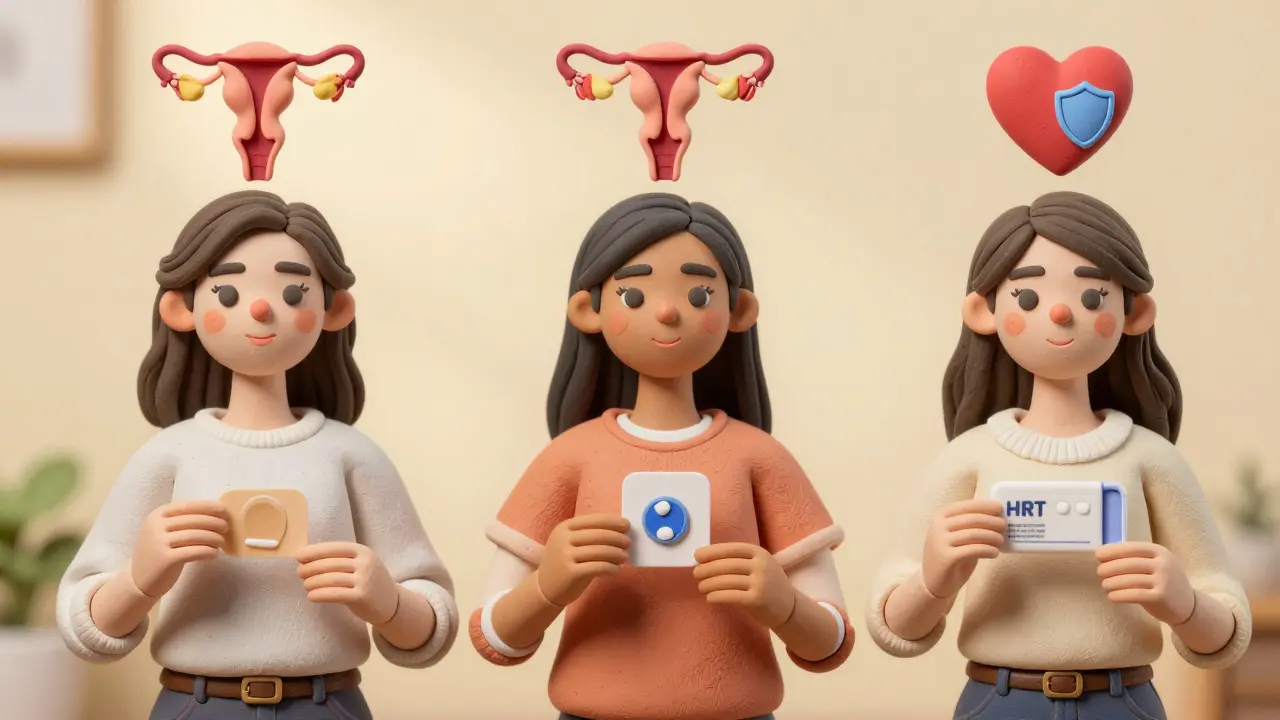
Not everyone is a candidate. The key rule? Start early. If you’re under 60 or within 10 years of your last period, and you’re otherwise healthy, the benefits of HRT usually outweigh the risks. The Women’s Health Initiative (WHI) originally scared many women away from HRT, but follow-up studies since 2010 have clarified the picture: HRT doesn’t cause heart disease in younger women-it may even protect against it.
But if you’re over 60, or you started HRT more than 10 years after menopause, the risks climb. Oral estrogen increases stroke risk by about 39% in women over 60. And if you’ve had breast cancer, blood clots, liver disease, or unexplained vaginal bleeding, HRT is usually off the table.
Women who’ve had a hysterectomy don’t need progestogen. They can take estrogen-only therapy. This has a better breast cancer profile than combined therapy. But again-only if the uterus is gone. Taking estrogen without progestogen when you still have a uterus? That’s dangerous.
What About Long-Term Use?
There’s no magic number for how long you should stay on HRT. The goal is to use the lowest dose for the shortest time needed to control symptoms. Most women stop after 3 to 5 years. But some need it longer-especially if symptoms are severe or if they started early (like in surgical menopause).
Long-term use (5+ years) does slightly increase breast cancer risk. The Cleveland Clinic estimates less than 1 in 1,000 women will develop breast cancer due to HRT after 5 years. That’s small, but it’s real. That’s why annual check-ins with your doctor matter. Are your symptoms still bad? Are you still at risk for osteoporosis? Has your heart health changed? These aren’t one-time decisions.
Emerging research from the Kronos Early Estrogen Prevention Study (KEEPS, 2022) suggests that starting transdermal estradiol within 3 years of menopause may actually slow the buildup of plaque in arteries. That’s not just symptom relief-it’s long-term heart protection.
Common Problems and How to Handle Them
Breakthrough bleeding is the most common issue. Up to 20% of women on sequential or continuous HRT will have spotting or bleeding in the first 6 months. It’s usually harmless and goes away. But if it continues past 6 months, get checked. It could mean your dose is too low, too high, or you need a different formulation.
Other side effects include breast tenderness, bloating, mood swings, and headaches. These often settle in 2 to 3 months. If they don’t, your doctor might switch you from a tablet to a patch, or from medroxyprogesterone to micronized progesterone. It’s trial and error, but you’re not alone. About 1.4 million women in the U.S. are on HRT right now, and most of them are managing well.
Don’t let fear stop you. The WHI study made headlines in 2002, but it studied older women-many over 65-taking high-dose oral pills. Today’s guidelines are completely different. We know more. We have better options. And we treat you as an individual, not a statistic.
What’s Next for Hormone Therapy
The future of HRT is personalization. New compounds like tissue-selective estrogen complexes (TSECs) and selective progesterone receptor modulators (SPRMs) are in late-stage trials. These aim to deliver estrogen’s benefits to bones and skin without stimulating breast or uterine tissue. Some may offer relief without the cancer risks we’ve worried about for decades.
Meanwhile, the market is growing. The global HRT market is expected to hit $2.95 billion by 2030. More women are choosing transdermal options, especially in Europe, where they make up 65% of prescriptions. In the U.S., that number is still 35%, but it’s climbing.
One thing won’t change: the need for careful, individualized care. There’s no universal formula. Your body, your history, your goals-they all matter.
Can I take generic hormone therapy instead of brand-name?
Yes. Generic hormone therapies are just as effective as brand-name versions and are often much cheaper. Most prescriptions in the U.S. are for generics. The active ingredients are identical. What changes are the inactive fillers, which rarely affect how the medicine works. Always check with your pharmacist to confirm the generic matches your prescribed dose and form (tablet, patch, gel).
Is transdermal HRT safer than pills?
For most women, yes. Transdermal estrogen (patches, gels, sprays) avoids the liver, which means lower risk of blood clots and stroke. The risk of venous thromboembolism is 2 to 3 times higher with oral estrogen. If you have a history of clots, migraines with aura, high blood pressure, or are over 55, transdermal is usually the safer choice. It’s also more stable-no spikes or dips in hormone levels.
Do I need progesterone if I had a hysterectomy?
No. If your uterus was removed, you don’t need progesterone. Estrogen alone is safe and effective for symptom relief. Adding progesterone when you don’t need it can cause unnecessary side effects like bloating or mood changes. Always confirm your hysterectomy status with your doctor before starting any combination therapy.
How long should I stay on hormone therapy?
There’s no fixed timeline. Most women take HRT for 3 to 5 years, until symptoms improve. But if you’re still struggling with hot flashes or bone loss after that, continuing is reasonable-especially if you started under age 60 or within 10 years of menopause. Annual reviews with your doctor are key. If you’re over 65, the risks start to outweigh the benefits for most women.
Does HRT cause breast cancer?
Combined HRT (estrogen + progestogen) slightly increases breast cancer risk after 5 years of use. The increase is small-less than 1 in 1,000 women per year. Micronized progesterone carries lower risk than synthetic progestins. Estrogen-only therapy (for women without a uterus) has little to no increased risk. The biggest risk factor is duration: the longer you take it, the higher the risk. Stopping HRT reduces the risk over time.


