
Biosimilar Safety Monitoring: How Adverse Event Surveillance Works

Feb, 5 2026
Biosimilars aren't like regular generic drugs. They're made from living cells, so even tiny manufacturing differences can affect safety. Unlike small-molecule generics, which are chemically identical to their reference drugs, biosimilars are highly similar but not exact copies. This means they need special safety checks after approval. How does that work? Let's break it down.
Why biosimilars need special safety monitoring
The European Medicines Agency approved the first biosimilar, Omnitrope, in 2006. The U.S. followed in 2015 with Zarxio. Since then, more than 35 biosimilars have been approved in the U.S. alone. But because they're complex biological products, regulators treat them differently than generics. Unlike chemical generics that are exact copies, biosimilars are made from living cells. Even small changes in manufacturing can affect how they interact with the body. This is why immunogenicity - the body's immune response to the drug - is a major safety concern for biosimilars. Unlike generics, where such issues are rare, biosimilars need close monitoring for this.
How adverse event monitoring systems work
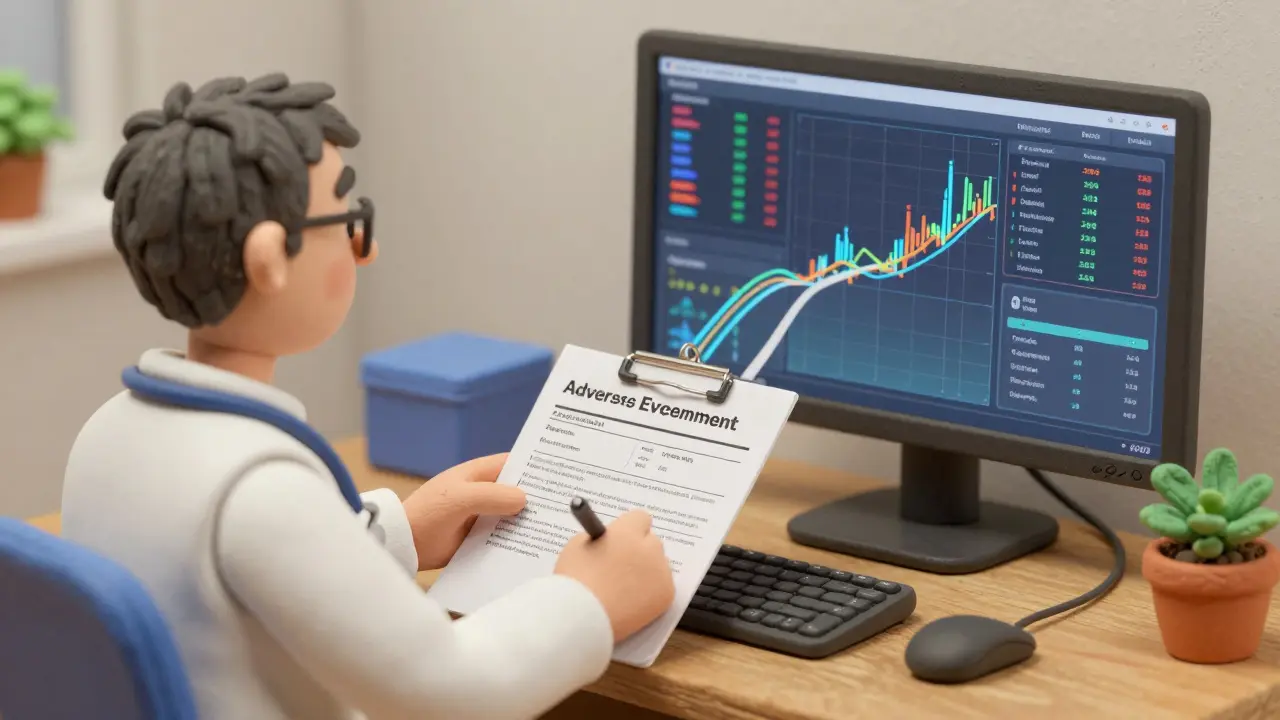
Most countries use two main methods: spontaneous reporting and active surveillance. Spontaneous reporting relies on healthcare providers and patients to report adverse events. In the U.S., serious side effects must be reported to the FDA's FAERS system within 15 days. Non-serious events have a 90-day window. Europe uses EMA's EudraVigilance for similar reporting. Active surveillance systems like the FDA's Sentinel Initiative analyze electronic health records and insurance claims data to proactively spot safety issues. This helps catch rare problems that spontaneous reports might miss.
Regulatory differences across key regions
The EU treats biosimilars the same as other biologics for safety monitoring. EMA's 2021 guide states there's no separate system for biosimilars - they follow the same pharmacovigilance rules as all biologics. The U.S. takes a different approach. Starting in 2017, the FDA added four-letter suffixes to biosimilar names (like 'abp21' for Amjevita) to track them separately. Health Canada requires brand name reporting, with 87.3% of biologic adverse event reports in 2022 using brand names. This helps distinguish between reference products and biosimilars. Health Canada's 2022 Handbook explicitly requires biosimilar Risk Management Plans to include detailed immunogenicity monitoring protocols.
Common challenges in tracking biosimilar safety
A 2022 survey of 1,247 U.S. physicians found 63.4% struggled to document adverse events correctly for biosimilars. Why? Similar naming conventions and lack of clear product identification. For example, a pharmacy might substitute a biosimilar without documenting the specific manufacturer. Dr. Sarah Chen from Johns Hopkins Hospital explained on Medscape in March 2023: 'I've had three cases where the pharmacy substituted the biosimilar without documentation, making adverse event attribution impossible - this is why I now document both the brand and the specific manufacturer.' Patient advocacy groups like the Arthritis Foundation report 41.2% of biosimilar users were unsure which product they received during treatment.
Current best practices for effective monitoring
Health Canada mandated clear manufacturer identification in adverse event reports starting January 1, 2023. Spain's system since 2020 improved reporting accuracy from 58% to 92% by integrating biosimilar tracking in electronic health records. AI tools like EMA's VigiLyze process 1.2 million new reports annually with 92.4% accuracy in signal detection. These tools scan unstructured clinical notes to find safety signals faster. The International Society for Pharmacoeconomics and Outcomes Research recommends mandatory lot/batch number reporting to improve signal detection capabilities.
What's next for biosimilar safety surveillance
The WHO and ICH are pushing for a global unique identifier system for biologics by 2026. Pilot studies in Switzerland show this could cut attribution errors by 73.5%. With 300+ biosimilars expected to target 30 reference products by 2030, current monitoring frameworks will need to scale up. Experts predict major redesigns by 2030 to handle this growth. The FDA's 2023 draft guidance on interchangeability requires enhanced pharmacovigilance for interchangeable biosimilars, including mandatory post-marketing studies to assess switching effects.
How do biosimilars differ from generics in terms of safety monitoring?
Biosimilars are complex biological products made from living cells, so they can't be exact copies like chemical generics. This means they require specialized safety monitoring systems. Unlike generics, which are chemically identical to their reference drugs, biosimilars need ongoing surveillance for issues like immunogenicity (immune reactions) and differences in manufacturing processes. Regulatory agencies like the FDA and EMA track biosimilars separately using suffixes or brand names to ensure accurate adverse event reporting.
What is immunogenicity, and why is it a concern for biosimilars?
Immunogenicity occurs when a patient's immune system reacts to a drug, potentially causing allergic reactions or reduced effectiveness. For biosimilars, this is a major concern because even minor manufacturing differences can trigger immune responses. Unlike generics, where immunogenicity is rare, biosimilars require close monitoring for this issue. The FDA and EMA mandate specific immunogenicity protocols in Risk Management Plans to track these reactions post-approval.
Why is product identification important in biosimilar reporting?
Accurate product identification ensures adverse events are correctly attributed to the right drug. Without clear labeling, it's impossible to tell if a reaction came from a biosimilar or the reference product. This is critical for detecting safety issues specific to biosimilars. Health Canada's system shows 87.3% of biologic reports use brand names, making attribution easier. In contrast, U.S. physicians report 63.4% confusion due to similar naming conventions.
How do regulatory agencies handle biosimilar safety data?
Regulatory agencies use integrated systems combining spontaneous reporting and active surveillance. The FDA analyzes FAERS data and uses Sentinel Initiative to scan electronic health records. EMA's EudraVigilance collects reports from all EU member states. Health Canada requires manufacturers to submit Risk Management Plans with detailed immunogenicity monitoring protocols. These systems share data through global networks like WHO's VigiBase, which contains 28 million case reports.
Are there specific challenges in tracking biosimilars in electronic health records?
Yes. As of 2022, only 42.6% of U.S. hospitals fully implemented systems to capture specific biosimilar manufacturer names in electronic health records. This leads to attribution errors when documenting adverse events. Spain's 2020 integration of biosimilar tracking in EHRs improved reporting accuracy from 58% to 92%. The lack of standardized data fields across health systems remains a key challenge for accurate tracking.
What role does AI play in biosimilar safety monitoring?
AI tools like EMA's VigiLyze process 1.2 million new case reports annually with 92.4% accuracy in signal detection. These systems scan unstructured clinical notes to find safety signals faster than manual review. Pharmaceutical companies use natural language processing to analyze patient records, reducing the time to detect issues by 30-40%. However, AI requires high-quality data input - inaccurate or incomplete records can lead to false signals.
How can healthcare providers improve adverse event reporting accuracy?
Healthcare providers should always document both the brand name and specific manufacturer of biosimilars. Training on proper documentation practices is critical - a 2021 study found only 37.8% of U.S. pharmacists correctly identified required elements for biosimilar adverse event reporting. Using electronic health records with dedicated fields for biosimilar identifiers and participating in regional pharmacovigilance networks also improves accuracy. The Arthritis Foundation recommends patients ask their doctors to note the exact product name on prescriptions.


