
Drug Absorption: How Your Body Takes in Medications and Why It Matters
When you swallow a pill, it doesn’t just disappear and start working. Drug absorption, the process by which medications enter your bloodstream from the site of administration. It’s the first step that decides whether your drug will do anything at all. If absorption is slow, weak, or blocked, even the strongest medicine becomes useless. That’s why timing, food, and even your gut health matter more than most people realize.
Take fiber supplements, bulk-forming agents like psyllium used for constipation. They’re great for digestion—but if you take them right before or after your thyroid pill, they can trap levothyroxine like a sponge and stop it from entering your blood. Same goes for antibiotics, blood thinners, and even some blood pressure meds. Studies show that taking levothyroxine with fiber can cut its absorption by up to 40%. That’s not a small drop—it can mean your thyroid levels stay out of range for weeks.
Then there’s stomach acid, the natural chemical environment that helps break down and dissolve pills. Proton pump inhibitors like omeprazole, used for heartburn, can reduce acid enough to mess with drugs that need an acidic environment to dissolve—like ketoconazole or certain HIV meds. Even coffee, antacids, or calcium supplements can interfere. And it’s not just about what you take—it’s when. A pill taken on an empty stomach might absorb fast. The same pill after a big meal could take hours, or not at all.
Pharmacokinetics, the science of how drugs move through the body isn’t just for doctors. It’s your personal roadmap to getting the most from your meds. Your age, weight, liver function, and even your gut bacteria play a role. Some people absorb drugs faster. Others barely get any into their system. That’s why two people on the same dose can have totally different results.
And here’s the thing: you don’t need to be a scientist to fix this. You just need to know the basics. If your doctor tells you to take something on an empty stomach, do it. If your pill says "avoid dairy," don’t take it with yogurt. If you’re on fiber, space it out by at least two hours. These aren’t suggestions—they’re science-backed rules that keep your meds working.
The posts below dive into real cases where absorption went wrong—and how people fixed it. You’ll find guides on timing fiber with thyroid meds, why some antibiotics fail when taken with food, how stomach acid blockers interfere with other drugs, and what to do if your medication just doesn’t seem to work anymore. No fluff. No theory. Just what you need to know to make sure your pills actually do what they’re supposed to.
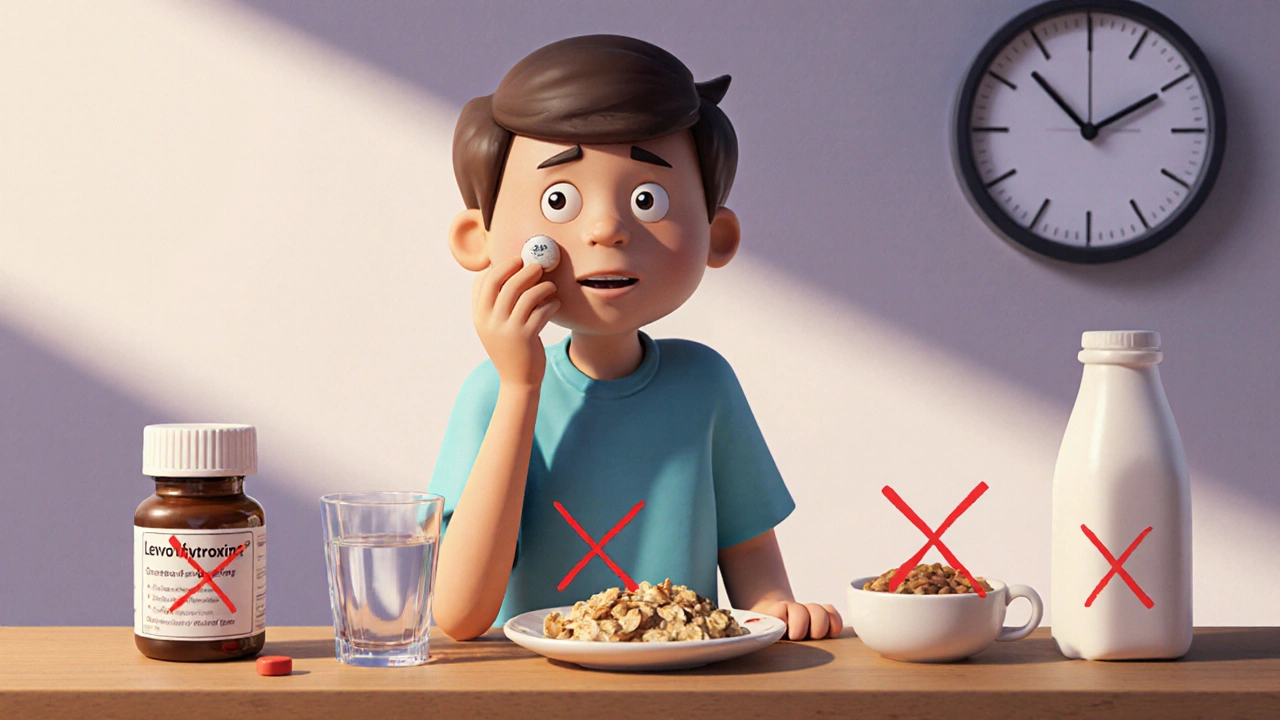
Taking Prescription Medicine with Food vs. on an Empty Stomach: What You Really Need to Know
Harrison Greywell Nov, 29 2025 12Learn when to take prescription meds with food or on an empty stomach, why it matters, and how to avoid common mistakes that reduce effectiveness or cause side effects.
More Detail