
Printing Medication Guides at Pharmacies: Know Your Rights and How to Request Them
Dec, 1 2025
Medication Guide Checker
Check if your prescription medication requires an FDA-mandated Medication Guide. Over 150 prescription drugs require these guides due to serious safety risks.
Enter a drug name to check if it requires a Medication Guide.
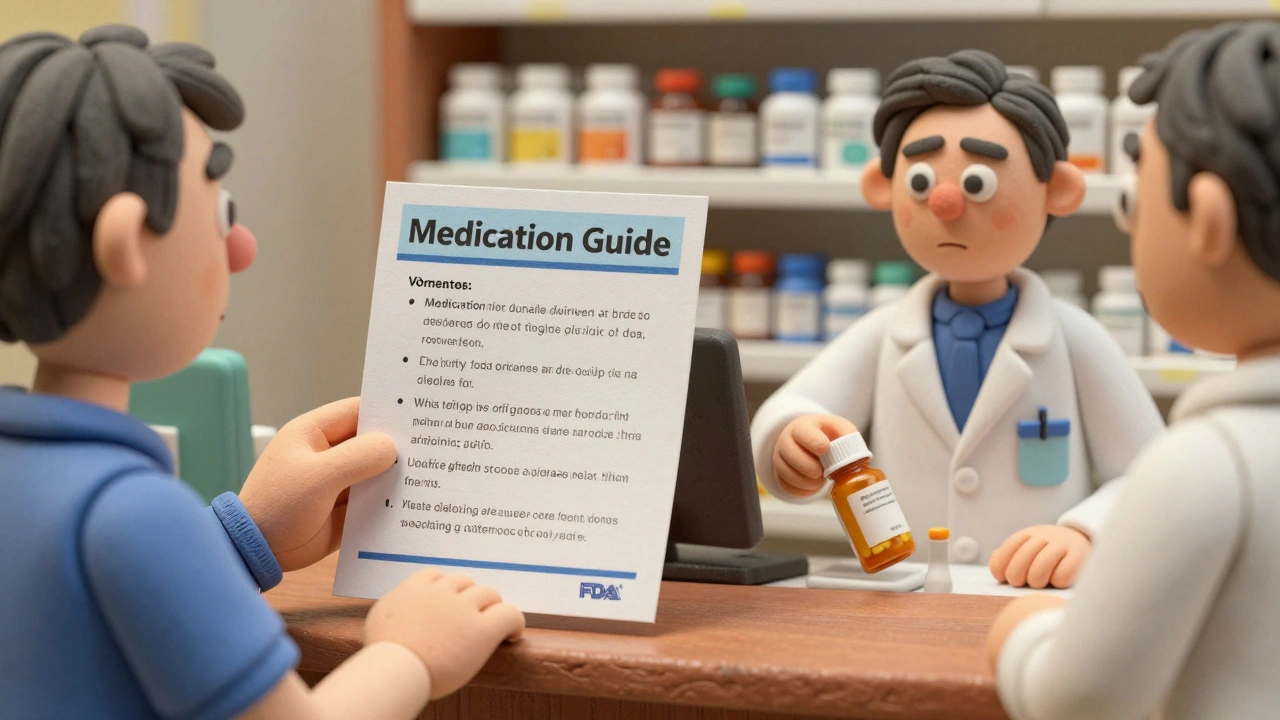
When you pick up a prescription, you might not think to ask for a Medication Guide. But if your drug requires one, you have a legal right to receive it-in print-unless you specifically ask for it electronically. Many patients never get these guides, even when they’re required by law. And that’s not just a paperwork issue. It’s a safety issue.
What Exactly Is a Medication Guide?
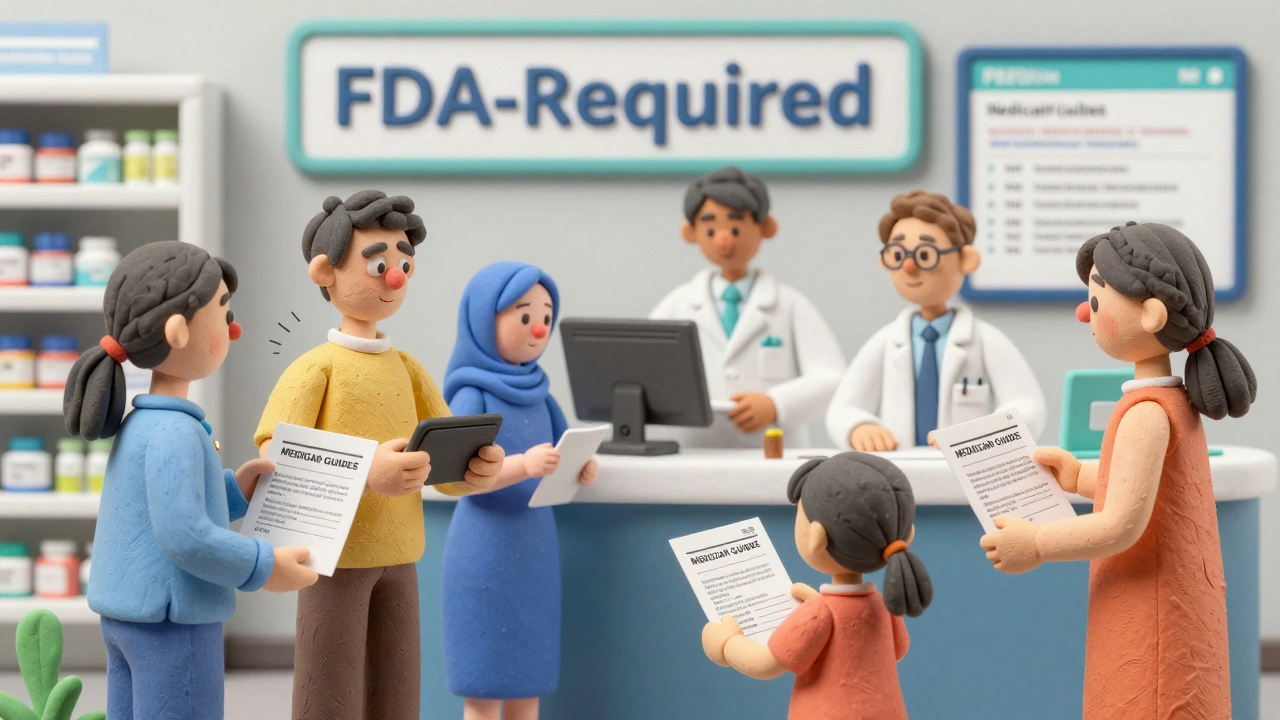
A Medication Guide is not the same as the small leaflet that comes with your pills. It’s a government-approved, FDA-mandated document designed to warn you about serious risks tied to specific prescription drugs. The FDA requires these guides for about 150 medications out of thousands on the market-roughly 5% of all prescriptions. These aren’t optional. They’re legally required when a drug carries risks that could cause serious harm if you don’t understand how to use it safely.The FDA decided these guides were necessary because some drugs can cause life-threatening reactions, require strict dosing schedules, or interact dangerously with other medications. For example, drugs used to treat blood clots, certain cancers, or severe mental health conditions almost always come with a Medication Guide. The guide tells you what to watch for, what to avoid, and when to call your doctor.
These documents aren’t written by the pharmacy. They’re created by the drug manufacturer, reviewed and approved by the FDA, and must follow strict rules: no marketing language, no jargon, and a minimum 10-point font size. The words “Medication Guide” must appear at the top, followed by the brand and generic name of the drug. At the bottom, it must say verbatim: “This Medication Guide has been approved by the U.S. Food and Drug Administration.”
Why You Might Not Get One-Even When You Should
You’d think if the FDA says you must get it, you’d get it. But that’s not always the case.A 2022 audit by the Department of Health and Human Services found that 31% of pharmacy sites had no reliable system to track whether patients received their Medication Guides. Independent pharmacies often struggle to keep printed copies on hand. Chain pharmacies like CVS or Walgreens usually have electronic systems that print them on demand-but even then, staff may forget during busy hours.
Pharmacists say they’re stretched thin. A 2021 study showed it takes 15 to 20 seconds per prescription to verify and hand out a Medication Guide. In a rush, that time gets cut. Patients often don’t ask. And pharmacists, assuming you don’t want it, don’t offer it.
Surveys tell a troubling story: 43% of patients said they never received a Medication Guide when they should have. Another 28% said the guide they got was “not helpful at all,” mostly because the font was too small or the language was confusing. Some guides read like a legal document, not a patient warning. Despite FDA rules requiring plain language, many still exceed an 11th-grade reading level.
Your Legal Right to a Printed Copy
Here’s the key point: you have the right to a printed Medication Guide every time you fill a prescription for a drug that requires one. The FDA’s regulation (21 CFR §208.24) says the guide must be dispensed to you-or your caregiver-at the time you receive the medication. That means the pharmacist can’t just say, “It’s on the website,” or “We don’t have any left.”They must have them available. Manufacturers are required to supply pharmacies with enough printed copies-or provide the tools to print them on-site. If your pharmacy doesn’t have a copy, they’re not complying with federal law.
And here’s something many people don’t know: you can ask for it in digital form instead. In May 2023, the FDA officially clarified that patients can request an electronic version-via email, text, or a secure patient portal-instead of a paper copy. But the pharmacy can’t force you to accept it. If you want paper, you get paper. No pushback allowed.
What to Do If You Don’t Get Your Guide
If you’re filling a prescription for a drug that should come with a Medication Guide and you don’t get one, say something. Don’t wait until you’re out the door.Here’s what to do:
- Ask: “Is there a Medication Guide for this drug?”
- If they say no, ask: “Is this drug on the FDA’s list of medications requiring a guide?”
- If they’re unsure, ask them to check the FDA’s website or their internal system.
- If they still refuse or say they don’t have it, ask to speak to the pharmacist in charge.
- If you still don’t get it, note the pharmacy name, date, and drug name-and file a complaint with the FDA.
You can report missing Medication Guides directly to the FDA through their MedWatch program. It’s quick, anonymous, and helps the agency track compliance. In 2023, complaints about missing guides made up 12.7% of negative reviews about pharmacies on Trustpilot-ranking third after long waits and wrong prescriptions. Your report matters.
What’s Changing in 2027
The FDA isn’t keeping things the same. They’re replacing Medication Guides with something new: Patient Medication Information, or PMI. By 2027, the current guides will be phased out.Why? Because the old system was messy. Every drug had a different format, length, and style. Some were five pages long. Others were one. Some used bold text. Others didn’t. Patients got confused. Studies showed only 30% of people read them fully.
The new PMI will be a single-page, standardized document for every drug that needs one. It will have the same layout: clear headings, bullet points, simple language, and consistent icons. The FDA tested prototypes and found patient understanding improved by 37%.
But here’s the catch: until 2027, the old rules still apply. That means your right to a printed Medication Guide is still in effect. Don’t wait for the new system to start asking. Start now.
When a Medication Guide Actually Saved Someone
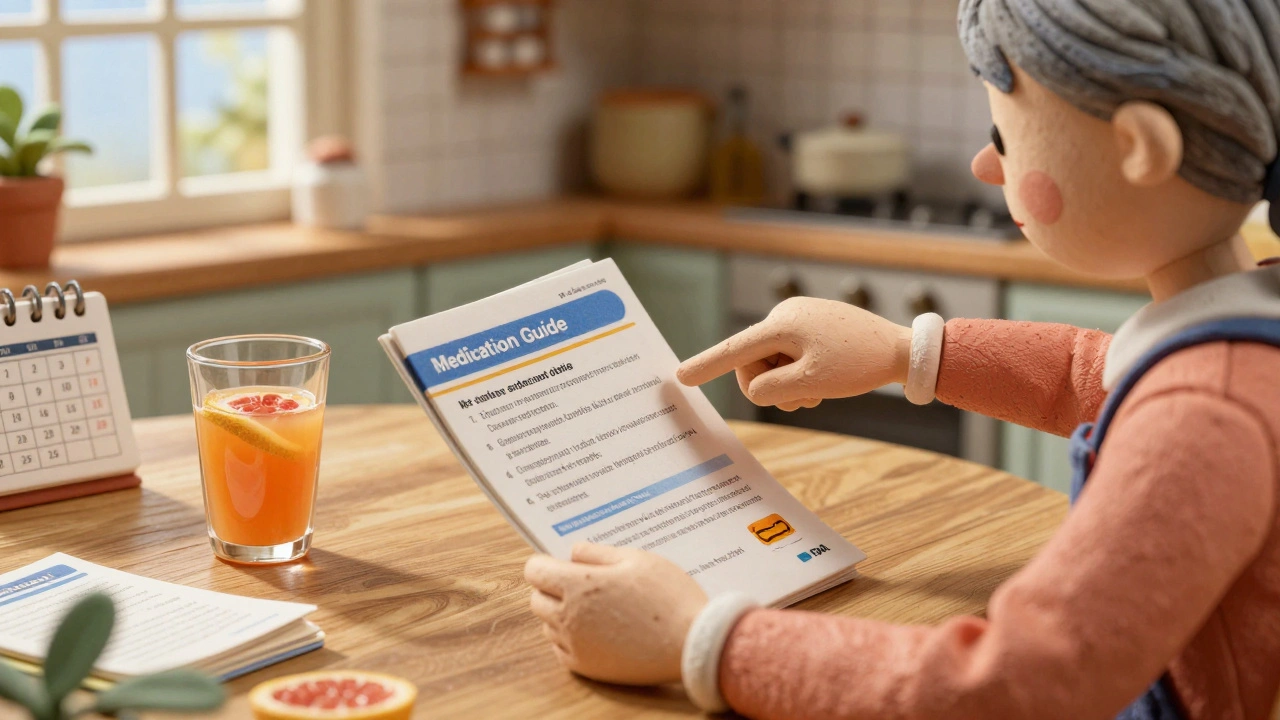
It’s easy to think these guides are just more paper to throw away. But real people have used them to avoid disaster.One patient, a 68-year-old woman in Ohio, filled a prescription for a blood thinner. She didn’t read the label. But she noticed the Medication Guide had a warning about grapefruit juice. She’d been drinking it daily. She called her doctor and stopped-avoiding a potentially fatal interaction.
In another case, a man in Florida was prescribed a psychiatric drug. The guide warned about suicidal thoughts in the first weeks of use. He showed it to his daughter, who checked in on him daily. He didn’t attempt self-harm.
Patients for Safer Drugs collected 347 stories like these. In 22.5% of them, the guide directly helped prevent harm. That’s more than 75 people who avoided serious injury or death because they read the paper in their hand.
What You Can Do Today
You don’t need to be a medical expert to protect yourself. Here’s your simple action plan:- Always ask for the Medication Guide when you pick up a new prescription.
- If you’re on a long-term medication, ask every time you refill-guides can change.
- If you’re given an electronic version, make sure you can access it. Print a copy if you need to.
- Keep the guide with your other medical records. Bring it to doctor visits.
- If you don’t get one, say something. File a report with the FDA if needed.
These guides aren’t perfect. But they’re one of the few tools that give you direct, official safety info from the FDA-not from a sales rep, not from a website, not from a pharmacist trying to rush you. It’s your right. Use it.
Do I have to pay for a Medication Guide?
No. Medication Guides are provided at no cost to the patient. They are required by the FDA and funded through the drug manufacturer’s obligations. Pharmacies cannot charge you for printing or handing you the guide.
Can I get a Medication Guide for an over-the-counter drug?
No. Medication Guides are only required for certain prescription drugs that carry serious risks. Over-the-counter medications don’t require them. However, some OTC drugs come with printed leaflets-those are not FDA-mandated Medication Guides.
What if the guide is hard to read because of small print?
By law, the font size must be at least 10-point. If it’s smaller, the guide doesn’t meet FDA standards. You can ask for a printed copy from the pharmacy’s system, or request a digital version you can zoom in on. If the guide is consistently illegible, report it to the FDA.
Can I refuse to take the Medication Guide?
Yes. You can decline to receive it. But the pharmacy must still offer it to you. They can’t assume you don’t want it. If you say no, they should note it in your file-but they still have to make the offer.
How do I know if my drug needs a Medication Guide?
Check the FDA’s list of drugs requiring Medication Guides at fda.gov/drugs/informationondrugs. You can also ask your pharmacist or look up your drug’s name on the FDA’s website. If the drug has a black box warning, it almost certainly requires a guide.


