
Penicillin Allergies: What Patients Need to Know for Safety
Jan, 31 2026
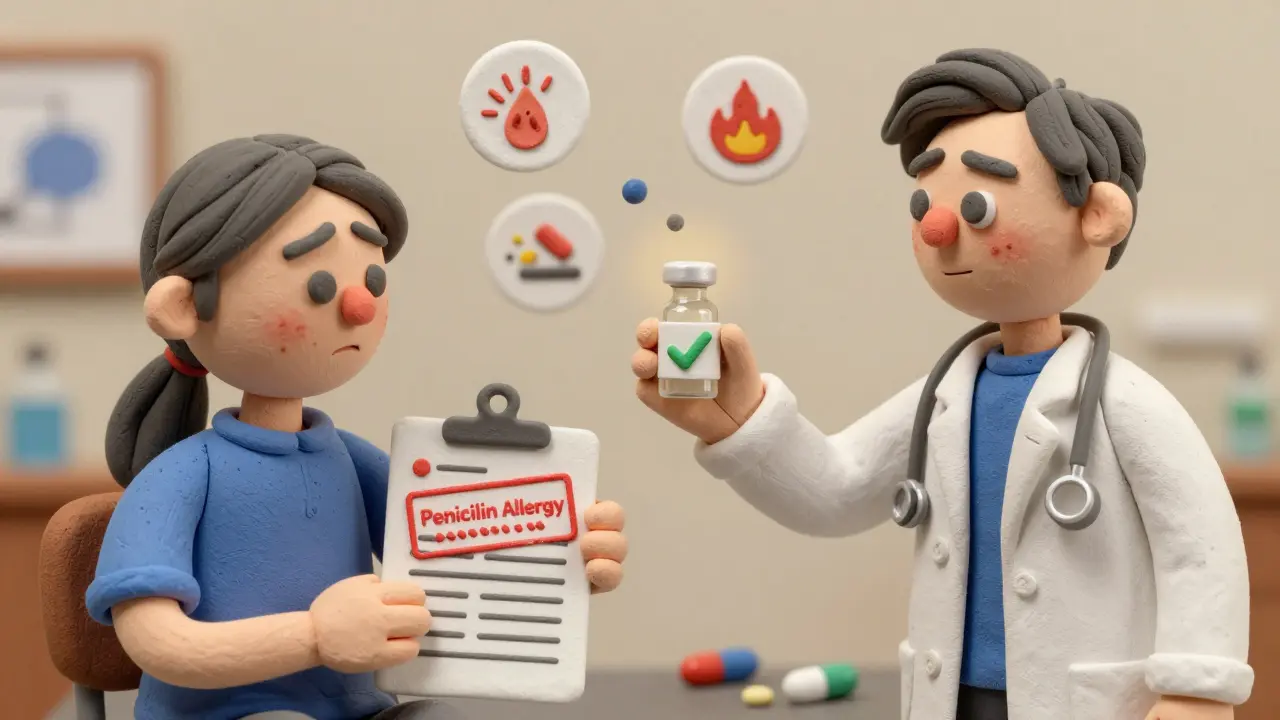
More than 10% of people in the U.S. say they’re allergic to penicillin. But here’s the truth: 9 out of 10 of them aren’t. That’s not a typo. Most people who think they have a penicillin allergy don’t actually have one - and carrying that label around can put their health at risk.
Why So Many People Think They’re Allergic (But Aren’t)
Penicillin was discovered in 1928, and since the 1940s, it’s saved millions of lives. But over time, people started reporting reactions - rashes, nausea, itching - and got labeled “allergic.” Many of those reactions were never allergies at all. A stomach upset from antibiotics? That’s a side effect, not an allergy. A mild rash that went away on its own? Often just a viral coincidence. A family member had a reaction, so you were told you have one too? That’s not how allergies work. Studies show that only about 1% of the population has a true penicillin allergy. Yet because of mislabeling, doctors avoid using penicillin and its close relatives - like amoxicillin and ampicillin - even when they’re the best, safest, and cheapest option. Instead, patients get broader-spectrum antibiotics like vancomycin or clindamycin. These drugs are more expensive, harder on the gut, and more likely to cause dangerous infections like C. difficile. They also contribute to antibiotic resistance, a growing global crisis.What a Real Penicillin Allergy Looks Like
True penicillin allergies are immune responses. They’re not just discomfort - they’re your body attacking the drug as if it’s a threat. There are two main types: immediate and delayed. Immediate reactions happen within an hour. These are the dangerous ones. Symptoms include hives, swelling of the lips, tongue, or throat, wheezing, dizziness, and a sudden drop in blood pressure. This is anaphylaxis - a medical emergency. Without epinephrine right away, it can be fatal. Delayed reactions show up hours or days later. The most common is a flat, red rash that spreads over the body. It’s usually not life-threatening but can be mistaken for something worse. In rare cases, delayed reactions can lead to severe conditions like Stevens-Johnson Syndrome (SJS), Toxic Epidermal Necrolysis (TEN), or DRESS syndrome. These affect the skin, organs, and can be deadly. But they’re extremely rare.Testing Is Safe - and Life-Changing
If you think you’re allergic, don’t assume. Get tested. The process is simple, safe, and widely available. First, a skin test. A tiny amount of penicillin is placed under your skin. If you’re truly allergic, a raised bump appears within 15 to 20 minutes. If that’s negative, you’ll get a small oral dose of amoxicillin - usually 250 mg - and be watched for an hour. No reaction? You’re not allergic. The results are clear: if both tests are negative, your risk of anaphylaxis drops to near zero. It’s the same as someone who’s never claimed an allergy. That’s not a guess. That’s science. And here’s the kicker: even if you had a reaction 20 years ago, you’ve probably outgrown it. About 80% of people who had IgE-mediated penicillin allergies lose their sensitivity after 10 years without exposure. That means if you were told you were allergic as a kid for a rash you got with an ear infection, you’re likely fine now.
Who Should Get Tested
Not everyone needs testing - but many more should than do. Low-risk patients: If your only symptom was a mild rash that faded on its own, or you had nausea or a headache after taking penicillin, you’re likely not allergic. You can probably take penicillin or a first-generation cephalosporin like cefazolin without testing - but only after a doctor confirms it’s safe. Moderate-risk patients: If you had hives, swelling, or trouble breathing within the last five years, you should get tested before taking any beta-lactam antibiotic again. High-risk patients: If you’ve had anaphylaxis, SJS, TEN, or organ damage from penicillin, you need to avoid these drugs entirely and see an allergist. Don’t take a chance.What Happens After You’re De-Labelled
Getting your allergy label removed isn’t just about feeling better - it’s about better care. If you’re cleared, your medical record gets updated. Your doctor knows they can now prescribe penicillin or amoxicillin if you get pneumonia, a sinus infection, or need surgery. That means fewer side effects, lower costs, and less risk of resistant infections. Hospitals that have implemented formal de-labeling programs have removed incorrect allergy labels from 80% to 90% of eligible patients. One study found that just 112 to 124 patients tested could prevent one surgical infection. That’s not just good for you - it’s good for the whole system.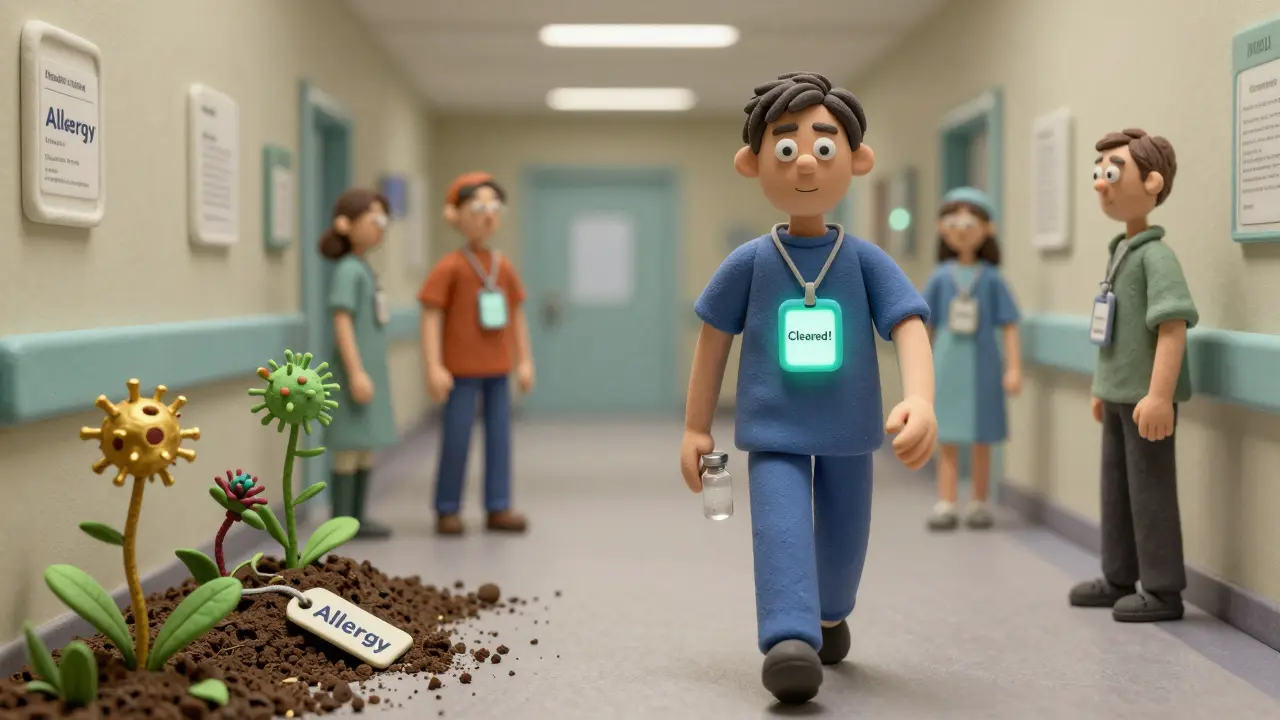
What You Should Do Right Now
If you’ve ever been told you’re allergic to penicillin, ask yourself: What exactly happened? When? Did a doctor confirm it? Or was it just assumed? If you’re not sure, or if you’ve had a reaction more than five years ago, talk to your doctor about testing. You don’t need to wait until you’re sick. You can get tested during a routine visit. If you’ve already been tested and cleared, make sure it’s in your medical record. Ask for a copy of the test results. Wear a medical alert bracelet if you still have any uncertainty - better safe than sorry. If you’ve never been tested but carry the label, don’t let fear stop you. A simple test could open up safer, simpler, more effective treatment options for the rest of your life.What to Do in an Emergency
If you’re ever given penicillin and develop swelling of the face or throat, trouble breathing, or feel like you’re going to pass out - call 911 or go to the nearest emergency room immediately. Don’t wait. Epinephrine works fast. Delaying it can be deadly. And if you’re ever in a hospital or clinic, always tell staff about any suspected drug allergy - even if you think it’s old or minor. They need to know.Why This Matters Beyond Your Own Health
Mislabeling penicillin allergies isn’t just a personal issue. It’s a public health problem. Patients with a penicillin allergy label are 50% more likely to get MRSA and 35% more likely to get C. difficile. They stay in the hospital longer. They cost the system more. And every time a broad-spectrum antibiotic is used unnecessarily, we lose ground in the fight against superbugs. The CDC estimates that fixing this one issue could save the U.S. healthcare system $1.2 billion a year. That’s money that could go toward better care, better research, better prevention. You’re not just protecting yourself when you get tested. You’re helping protect everyone else too.Can I outgrow a penicillin allergy?
Yes, most people do. About 80% of those with a true IgE-mediated penicillin allergy lose their sensitivity after 10 years without exposure. Even if you had a reaction as a child, you’re likely no longer allergic. Testing can confirm this.
Is a rash always a sign of penicillin allergy?
No. Many rashes that appear after taking penicillin are not allergic. They can be caused by viruses, other medications, or even random skin reactions. Only a doctor can tell the difference. A rash that appears more than 72 hours after taking the drug is usually not IgE-mediated and less likely to be dangerous.
Can I take cephalosporins if I’m allergic to penicillin?
For most people, yes. Third- and fourth-generation cephalosporins (like ceftriaxone or cefdinir) are safe for patients without a history of IgE-mediated symptoms. Even first-generation cephalosporins like cefazolin are often safe for low-risk patients. Testing clears up uncertainty and allows safer choices.
How long does penicillin allergy testing take?
The full process usually takes about 2 to 3 hours. Skin testing takes 20 to 30 minutes. If that’s negative, you’ll take a small oral dose of amoxicillin and be monitored for 60 to 90 minutes. Most people leave the same day with a clear answer.
What if I’m allergic but need penicillin for surgery?
If you’re scheduled for surgery and have a confirmed allergy, your care team will use alternatives like vancomycin or clindamycin. But if you’re unsure or have an old label, ask for a pre-op allergy evaluation. Many hospitals now offer same-day testing. Getting cleared before surgery reduces infection risk and improves outcomes.
Are there any risks to penicillin allergy testing?
Testing is very safe when done under medical supervision. Skin testing uses tiny, non-reactive doses. Oral challenges start with a very small amount and are closely monitored. Emergency equipment, including epinephrine, is always on hand. The risk of a reaction during testing is far lower than the risk of using the wrong antibiotic later.
Can I test for penicillin allergy at home?
No. Penicillin allergy testing requires medical supervision. Skin tests and oral challenges must be done in a clinical setting with trained staff and emergency equipment. Never try to test yourself or take penicillin without medical oversight.
Will my insurance cover penicillin allergy testing?
Most insurance plans cover allergy testing when ordered by a doctor. The cost is typically much lower than the long-term cost of using broader-spectrum antibiotics. Ask your provider or allergist for pre-authorization if needed.


