
Medication-Induced Delirium in Older Adults: How to Spot the Signs and Prevent It
Dec, 21 2025
What Is Medication-Induced Delirium?
Medication-induced delirium is a sudden, often reversible change in mental function caused by certain drugs. It’s not dementia. It’s not just being tired. It’s a medical emergency that shows up fast-sometimes within hours-after starting or changing a medication. Older adults, especially those over 85, are at highest risk. About 20% of hospitalized seniors over 65 develop it, and up to 80% of those in intensive care units do. What makes it dangerous isn’t just the confusion-it’s that it doubles the chance of death, adds nearly a week to hospital stays, and can leave lasting memory and mobility problems even after recovery.
How It Shows Up: The Three Faces of Delirium
Delirium doesn’t look the same in everyone. There are three types, and one of them is dangerously easy to miss.
- Hyperactive delirium looks like agitation: pacing, yelling, hallucinating, or fighting with staff. It’s obvious-and often treated as behavioral issues.
- Hypoactive delirium is quieter but far more common in older adults. It shows up as staring blankly, not responding when spoken to, lying still for hours, or seeming "depressed." This form makes up 72% of medication-induced cases. Doctors and even family members often mistake it for normal aging or depression.
- Mixed delirium flips between the two-calm one minute, agitated the next.
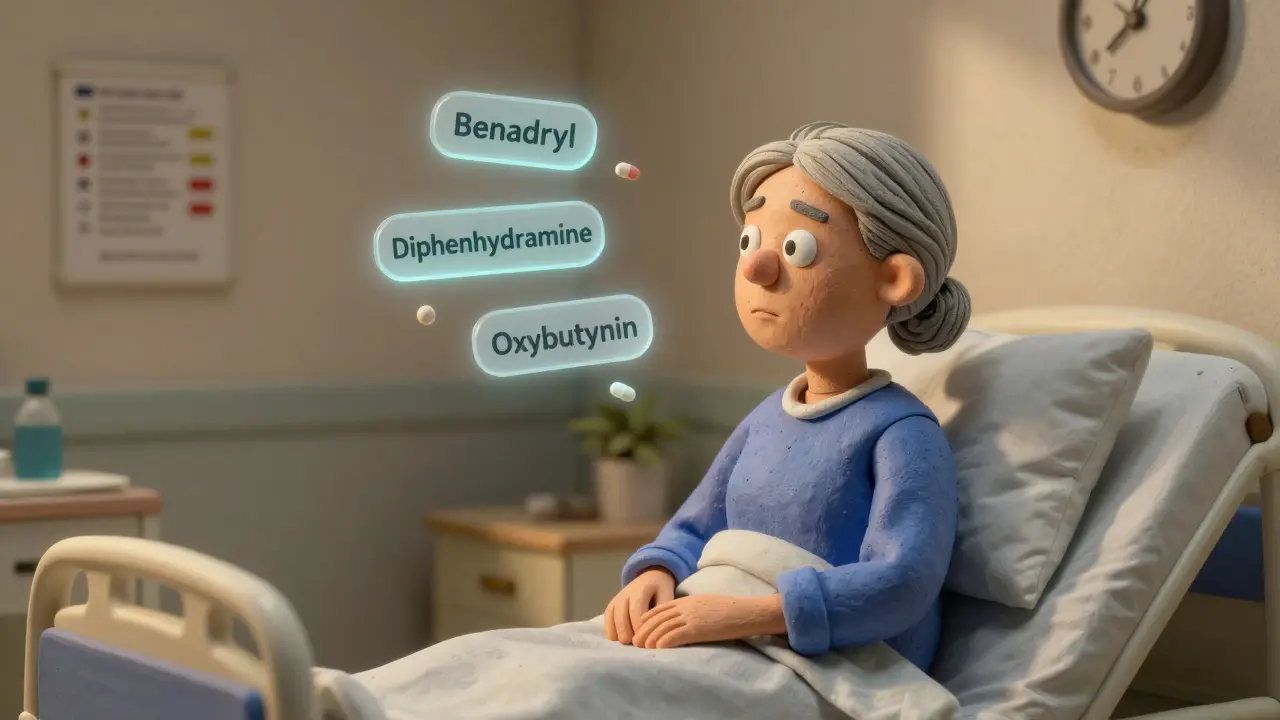
One caregiver described it this way: "My mom was always sharp and chatty. Three days after they gave her Benadryl for sleep, she didn’t recognize me. She just sat there, staring at the wall. It wasn’t her. It was like someone switched her out."
The Top Culprits: Which Medications Cause It?
Not all drugs are equal when it comes to delirium risk. The biggest offenders are those that block acetylcholine, a brain chemical critical for memory and attention.
Anticholinergic drugs are the #1 cause. These include:
- Diphenhydramine (Benadryl, Tylenol PM)
- Oxybutynin (Ditropan) for overactive bladder
- Amitriptyline (Elavil) for pain or depression
- Hyoscyamine (Levsin) for stomach cramps
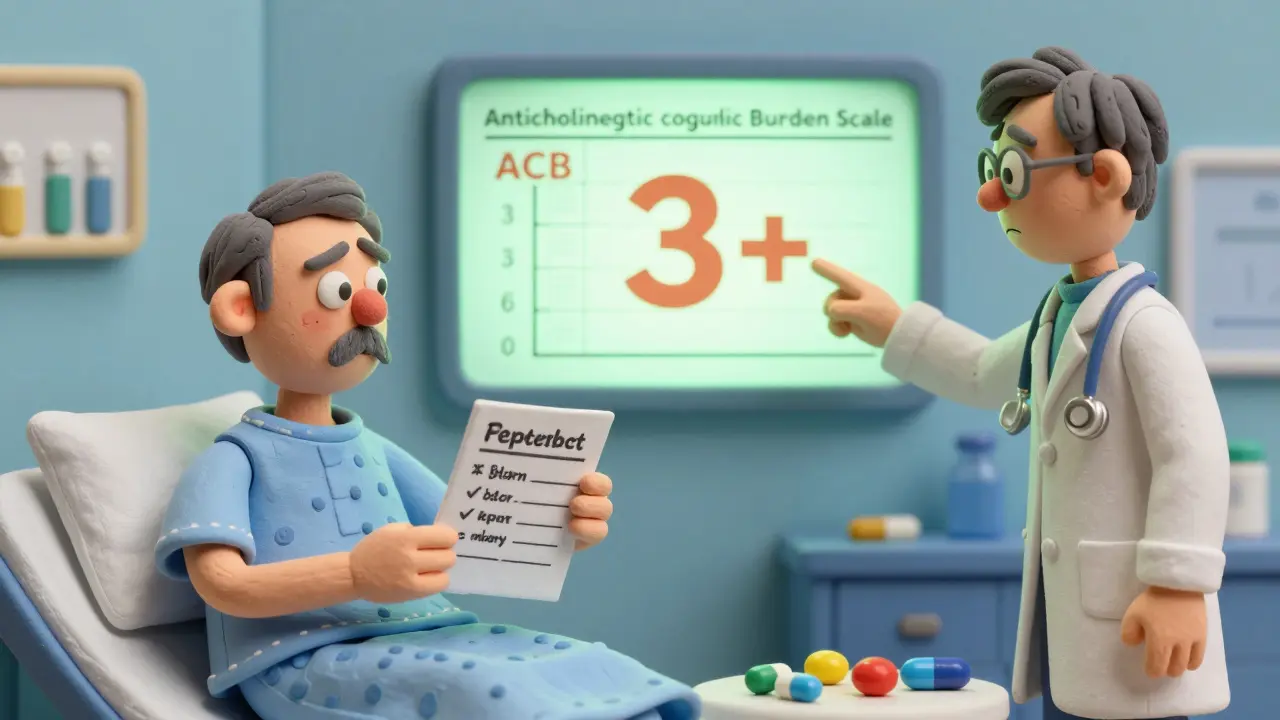
The Anticholinergic Cognitive Burden Scale (ACB) scores how much a drug affects the brain. A score of 3 or higher means a 67% higher risk of delirium. Many older adults are on multiple drugs that add up to this score-sometimes without anyone realizing it.
Benzodiazepines like lorazepam (Ativan) and diazepam (Valium) are next. They increase delirium risk by three times. Even short-term use in hospitals can trigger it. The risk spikes if the patient already has dementia or is on other sedatives.
Opioids like morphine and meperidine can also cause confusion, especially at high doses. Meperidine is especially risky because its breakdown product, normeperidine, overstimulates the brain. Hydromorphone is a safer alternative-it causes 27% less delirium at the same pain-relieving dose.
The American Geriatrics Society Beers Criteria® (2023) lists 56 medications that should be avoided in older adults because of delirium risk. Many are still prescribed routinely.
Why It’s So Often Missed
Doctors and nurses are busy. Families expect aging to bring memory lapses. So when an older person suddenly seems confused, it’s easy to blame dementia-or just say, "She’s getting older."
But here’s the truth: Medication-induced delirium is the most common reversible cause of sudden confusion in seniors. If you catch it early, removing the drug can clear it up in days. If you don’t, the brain can suffer lasting damage.
Studies show 70% of hypoactive delirium cases go undiagnosed. Why? Only 35% of hospital staff can correctly spot the signs. Many think the person is just tired, depressed, or "not themselves today." But the change is sudden-usually within 48 hours of a new medication. That’s the red flag.
Who’s Most at Risk?
Not every older adult will get medication-induced delirium. But some are far more vulnerable:
- Those over 85 (2.3 times more likely than those 65-74)
- People with existing dementia (delirium lasts nearly twice as long)
- Those taking three or more anticholinergic drugs (4.7 times higher risk)
- Patients with infections, dehydration, or electrolyte imbalances
- Those with a history of previous delirium
It’s not just about age. It’s about brain resilience. As we age, our brains become less able to handle chemical disruptions. A drug that was fine at 60 can become dangerous at 80.
How to Prevent It
Prevention isn’t complicated-but it requires vigilance.
- Review all medications every 3-6 months. Ask the doctor: "Is this still necessary?" and "Does this have anticholinergic effects?" Use the Beers Criteria® as a reference.
- Replace high-risk drugs with safer options. Swap diphenhydramine for loratadine (Claritin). Swap oxybutynin for mirabegron. Swap morphine for hydromorphone. Swap diazepam for short-acting alternatives if absolutely needed.
- Use non-drug approaches first. For sleep, try light therapy and sleep hygiene. For bladder issues, try pelvic floor exercises. For pain, use acetaminophen and heat/cold therapy before opioids.
- Ask about the Hospital Elder Life Program (HELP). This Yale-developed program cuts delirium risk by 40% through simple steps: keeping seniors oriented, mobile, and well-hydrated. Ask if your hospital offers it.
- Use the STOPP/START criteria. This tool helps doctors identify inappropriate prescriptions and missing ones. It’s been shown to reduce delirium by 26%.
- Never stop benzodiazepines cold turkey. If a senior is on them, taper slowly over 7-14 days. Sudden withdrawal can cause delirium tremens-a life-threatening form of delirium.

What Families Can Do Right Now
You don’t need to be a doctor to protect a loved one.
- Keep a written list of every medication-including over-the-counter pills and supplements. Bring it to every appointment.
- If your parent suddenly seems different-withdrawn, confused, or agitated-ask: "Was a new medication started in the last 48 hours?"
- Ask the nurse: "Could this be delirium?" Many don’t screen unless prompted.
- Keep them oriented: remind them of the date, place, and who you are. Talk to them. Don’t assume they’re just "not with it."
- Encourage movement. Even walking to the bathroom helps. Immobility worsens delirium.
- Hydrate. Dehydration is a silent trigger.
The Bigger Picture: Why This Matters
Medication-induced delirium isn’t just a medical issue-it’s a system failure. In the U.S., it costs $164 billion a year in extra hospital stays, rehab, and long-term care. The Centers for Medicare & Medicaid Services now treat it as a "never event"-meaning hospitals don’t get paid if a patient develops it during a stay.
Yet, in 2023, 43% of hospitals still routinely give high-risk drugs to older patients. Only 18% check anticholinergic burden systematically. New tools are emerging: AI algorithms can now predict delirium risk from medication lists with 84% accuracy. The FDA now requires stronger warnings on labels. The National Institute on Aging is funding real-time EHR alerts.
But change moves slowly. That’s why your role as a family member or caregiver is more important than ever. You’re the one who knows what’s normal for your loved one. You’re the one who notices the change. You’re the one who can ask the question that saves a life.
When to Call for Help
If you suspect medication-induced delirium:
- Call the doctor immediately. Don’t wait for the next appointment.
- If the person is in the hospital, ask for a geriatric consult or a delirium screening.
- If they’re at home and worsening, go to the ER. Delirium can signal a life-threatening reaction.
There’s no time to wait. The sooner the drug is stopped or switched, the faster the brain recovers.


