
Diabetes Combination Medications: Generic Options and Substitution Guide
Jan, 23 2026
Managing Type 2 diabetes often means taking more than one medication. For many people, that means juggling several pills every day-until a doctor prescribes a diabetes combination medication. These pills combine two drugs into one tablet, cutting down the number of pills you swallow and making it easier to stick to your treatment plan. But here’s the real question: when your insurance pushes you to switch from a brand-name combo to a generic, does it actually work the same? And how do you know if it’s safe?
What Are Diabetes Combination Medications?
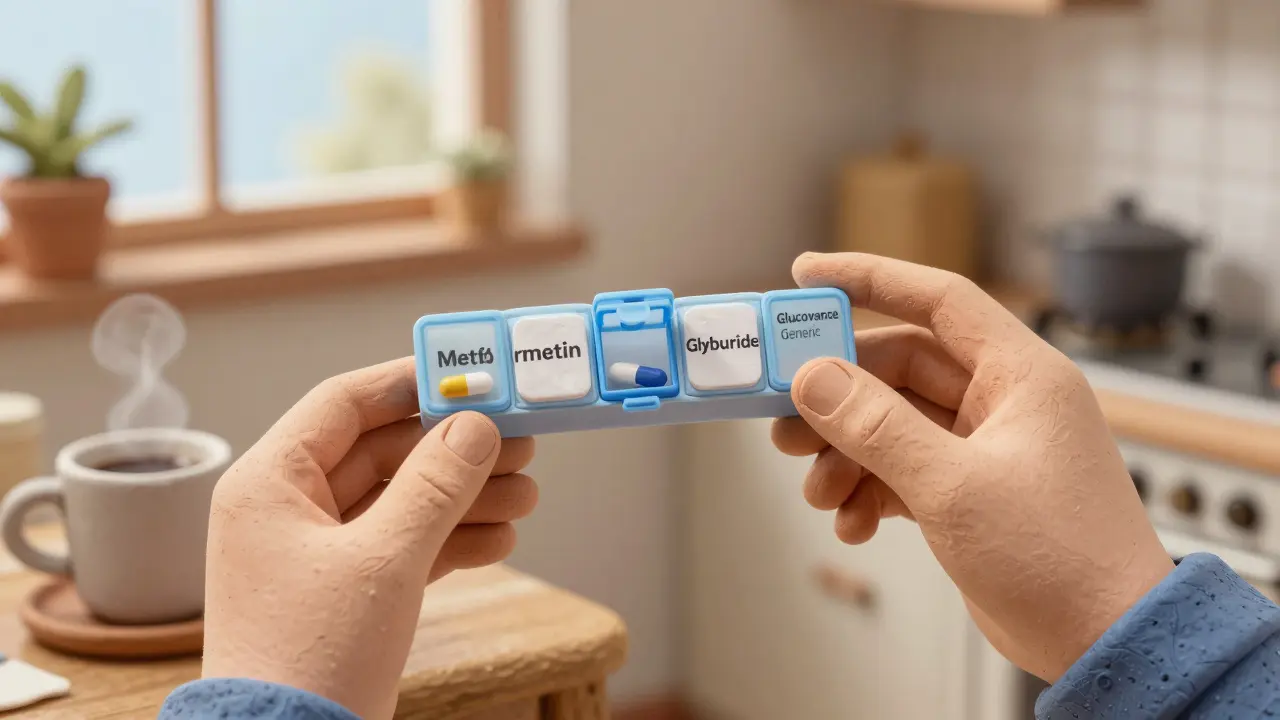
Diabetes combination medications are pills that contain two different diabetes drugs in a single tablet. Most commonly, they pair metformin-the first-line treatment for Type 2 diabetes-with another drug from a different class. Metformin helps your body use insulin better and reduces sugar production in the liver. The second drug works in a different way: some lower blood sugar by making your kidneys remove more glucose, others boost insulin release, and some help your body produce more insulin after meals.These combos were developed because most people don’t get enough control from metformin alone. Studies show that using two drugs together can drop HbA1c levels by 1.2% to 1.8%, compared to just 0.7% to 1.0% with one drug. That’s a big difference when your goal is to keep HbA1c under 7% to avoid complications like nerve damage, kidney problems, or vision loss.
The most common combinations you’ll see are:
- Metformin + DPP-4 inhibitor (like sitagliptin in Janumet)
- Metformin + SGLT2 inhibitor (like empagliflozin in Synjardy)
- Metformin + sulfonylurea (like glipizide in Metaglip or glyburide in Glucovance)
Some come in extended-release (XR) form, which means they release the medicine slowly over time, reducing stomach upset and allowing once-daily dosing. About 60% of current combination meds are XR versions.
Why Generic Diabetes Combos Are Becoming More Common
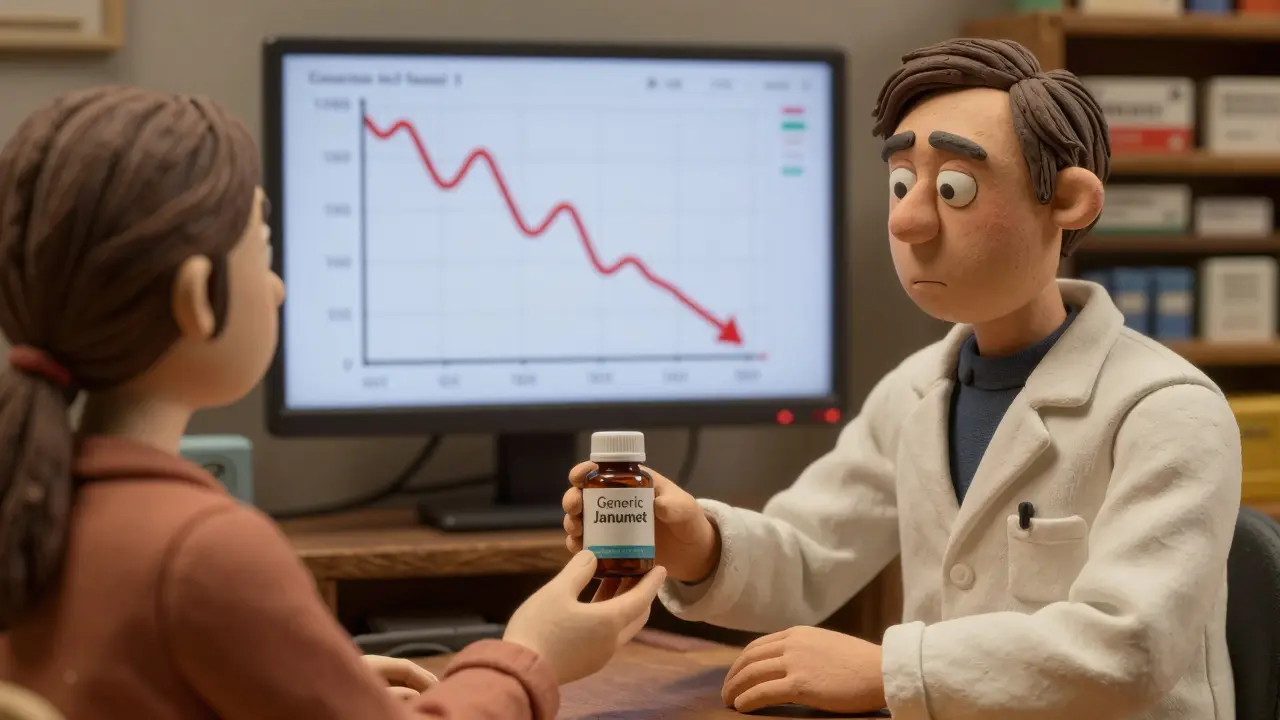
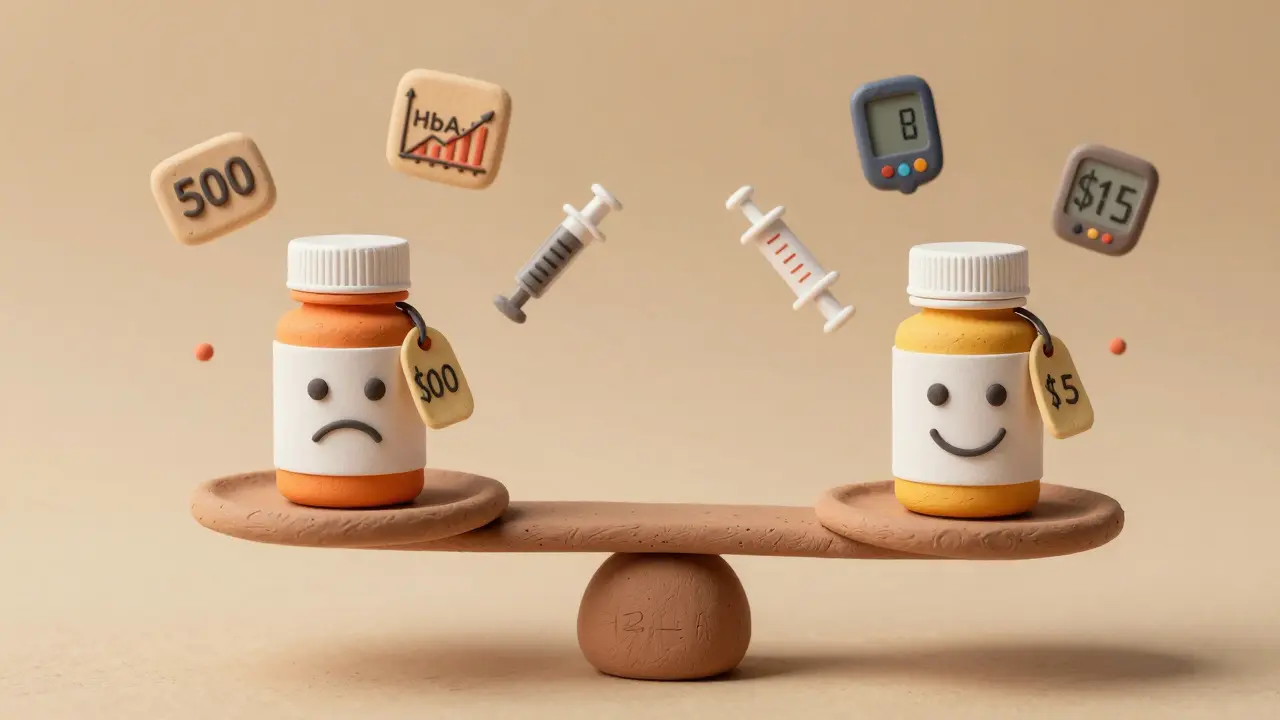
Brand-name combo pills can cost hundreds of dollars a month. Janumet, for example, used to run over $500 for a 30-day supply. But when patents expire, generic versions enter the market-and prices drop fast. Take Metaglip (glipizide + metformin): the brand was discontinued years ago, but the generic now costs around $18 for 60 tablets. Glucovance (glyburide + metformin) is even cheaper at $15 for the same amount.As of 2023, only 5 out of 25 diabetes combination medications in the U.S. have generic versions. But that’s changing. Patents for popular drugs like sitagliptin and linagliptin expired in 2023 and 2024, and generics are now hitting shelves. The FDA approved the first generic of Jentadueto (linagliptin/metformin) in May 2023, though it didn’t hit pharmacies until 2025 due to legal delays.
Generic combinations now make up 33% of all combination prescriptions filled in the U.S.-up from 24% just five years ago. That’s because insurance companies and Medicare Part D plans strongly prefer generics. If you’re on a plan with high copays, you might not even have a choice.
How Generic Substitution Works-and When It Goes Wrong
The FDA requires generics to be “bioequivalent” to the brand-name version. That means the amount of drug absorbed into your bloodstream must be within 80% to 125% of the brand. Sounds strict, right? But here’s the catch: for some diabetes drugs, even small changes in blood levels can affect your glucose control.Dr. John Buse from the UNC Diabetes Center pointed out in a 2022 study that this 80-125% range might be too wide for medications where precision matters. Sulfonylureas like glyburide and glipizide have narrow therapeutic windows. A slightly higher dose can cause dangerous low blood sugar. A slightly lower dose might leave your sugar too high.
Real-world reports back this up. On Reddit’s r/Diabetes forum, 31% of users who switched to generics reported noticing changes in their blood sugar patterns. One user, “Type2Warrior,” had repeated hypoglycemic episodes after switching from brand Glucovance to generic. The issue? The glyburide in the generic version released differently-faster-leading to a spike in insulin.
Another common complaint: pill size. Generic versions sometimes use different fillers or coatings, making pills bigger or harder to swallow. One in four negative reviews on GoodRx mention this. It’s not dangerous, but it’s annoying-and if you can’t swallow the pill, you won’t take it.
Which Generic Combos Are Safe to Switch To?
Not all combos are created equal when it comes to generics. Here’s what the data shows:| Brand Name | Active Ingredients | Generic Available? | Approx. Generic Cost (60 tablets) | Notes |
|---|---|---|---|---|
| Metaglip | Glipizide + Metformin | Yes (since 2012) | $18.75 | Stable, well-tolerated. 76% of users report seamless switch. |
| Glucovance | Glyburide + Metformin | Yes (since 2010) | $15.20 | Higher risk of hypoglycemia with generic due to release differences. |
| Janumet | Sitagliptin + Metformin | Yes (since 2024) | $25-$35 | First generic launched in 2024. No major safety issues reported yet. |
| Janumet XR | Sitagliptin + Metformin XR | No (patent until 2026) | $550+ | Extended-release version still brand-only. No generic XR version available. |
| Synjardy | Empagliflozin + Metformin | No (patent until 2026) | $587.40 | SGLT2 combo. No generics expected until 2026. |
| Jentadueto | Linagliptin + Metformin | Yes (since 2025) | $28 | Generic available but delayed by litigation. Low risk of side effects. |
For metformin + sulfonylurea combos like Metaglip and Glucovance, generics are widely used and mostly safe-especially if you’ve been on the same dose for months or years. But if you’re on an extended-release version like Janumet XR, you won’t find a generic yet. And if your doctor prescribed Synjardy because you have heart or kidney concerns, switching to a different combo without medical guidance could be risky.
What to Do When You’re Switched to a Generic
If your pharmacy switches your medication without asking, don’t panic-but don’t ignore it either. Here’s what you should do:- Check the pill. Does it look different? Is it bigger, smaller, or a different color? Take a photo and compare it to your old prescription.
- Test your blood sugar more often. For the first 2-4 weeks, check your levels 4 times a day-before meals and at bedtime. Look for patterns: are your highs higher? Are you getting more lows?
- Call your doctor. If your average glucose goes up by more than 15% or you have two unexplained low-blood-sugar episodes in a week, contact your provider. You may need to switch back or adjust your dose.
- Ask about patient assistance. Even if you’re on a generic, some brand manufacturers still offer copay cards. If your out-of-pocket cost is still high, ask your pharmacist about manufacturer programs.
Many people switch successfully. In fact, 42% of users on GoodRx say the generic worked just as well as the brand. But that’s only true if you monitor your response. Don’t assume it’s the same just because it’s cheaper.
When You Should Avoid Generic Substitution
There are times when sticking with the brand is the smarter move:- You’re on an extended-release combo (like Janumet XR) and need slow, steady release.
- You’ve had trouble with hypoglycemia in the past.
- Your kidney function is borderline (eGFR between 30-45 mL/min). Small changes in drug levels can be riskier.
- You’re on multiple medications that interact with metformin (like certain antibiotics or diuretics).
- Your insurance forces you to switch, but your doctor says it’s not right for you. Fight it. Ask for a prior authorization based on medical necessity.
According to the American Association of Clinical Endocrinology, 19% of endocrinologists have seen treatment failures after automatic pharmacy substitutions. That’s not rare. It’s a red flag.
What’s Coming Next?
More generics are on the way. Janumet XR could get a generic version after January 2026, when its formulation patent expires. SGLT2 combos like Synjardy and Invokamet are expected to follow by 2027. That could cut the average annual cost of these drugs from $2,850 to under $500 per year.But here’s the twist: newer combos involving GLP-1 agonists (like Ozempic or Mounjaro) are biologics, not small molecules. They won’t have generics for another 10-12 years. So while older metformin combos become cheaper, the most effective new drugs will still be expensive.
The trend is clear: generics are winning in volume, but not in innovation. For now, if you’re stable on a brand-name combo and doing well, there’s no rush to switch. If you’re on a generic and feeling fine? Keep going. Just keep checking your numbers.
Frequently Asked Questions
Are generic diabetes combination medications as effective as brand-name ones?
For most people, yes-especially with older combinations like metformin + glipizide (Metaglip). Generic drugs meet FDA bioequivalence standards, meaning they deliver the same amount of active ingredient into your bloodstream. But for drugs with narrow therapeutic windows-like sulfonylureas-small differences in absorption can affect blood sugar control. Always monitor your glucose closely after switching.
Can I switch from a brand-name combo to a generic without telling my doctor?
No. Even if your pharmacy automatically substitutes a generic, you should always inform your doctor. Automatic substitutions can lead to unexplained changes in blood sugar or side effects. A 2022 study found that 19% of endocrinologists saw treatment failures after pharmacy-led substitutions. Your doctor needs to know so they can adjust your plan if needed.
Why are some combination medications still brand-only?
Patents protect new drug combinations for 10-15 years. Drugs like Synjardy (empagliflozin/metformin) and Janumet XR are still under patent protection. Even after the active ingredient patent expires, formulation patents (like extended-release coatings) can delay generics for years. That’s why you can get a generic for Metaglip but not for Janumet XR.
Do generic diabetes pills have more side effects?
The active ingredients are the same, so side effects should be similar. But inactive ingredients (fillers, coatings, dyes) can differ. Some people report more stomach upset, bloating, or pill size issues with generics. These aren’t dangerous, but they can affect adherence. If you notice new side effects after switching, talk to your pharmacist or doctor.
How do I know if my generic diabetes med is working?
Check your blood sugar more often for the first 2-4 weeks after switching. Use a logbook or app to track fasting, pre-meal, and bedtime readings. If your average glucose increases by more than 15% or you have two unexplained low-sugar episodes, contact your doctor. Your HbA1c test in 3 months will also show if the switch is working long-term.


